Congo’s catholic church rejects constitutional reform efforts
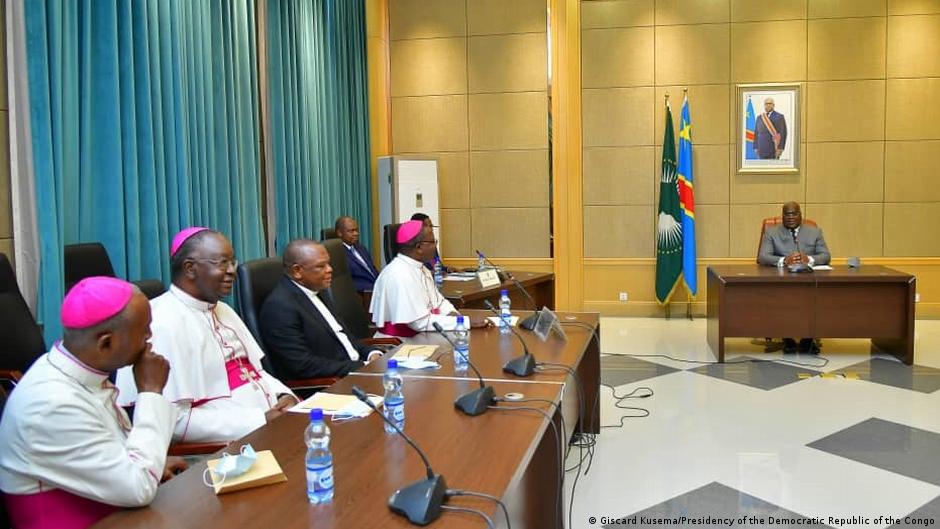
22 juin 2026While the political opposition has primarily championed the rejection of constitutional changes, the National Episcopal Conference of Congo (Cenco) has now lent its significant public influence to this cause. The voice of Cenco carries considerable weight among the Congolese population.
Abbé Donatien Nshole, Cenco’s Secretary-General, emphasized that the constitutional reform envisioned by the current administration is neither necessary, urgent, nor opportune.
“To the Ecclesiastics and Pastoral Agents, we urge wide dissemination of this message and the awakening, through various means, of the conscience of our faithful and all people of goodwill, to resist manipulations aimed at changing the Constitution. We reserve the right to return to you, when the time comes, to announce concrete actions to be taken.”
The prelates appear intent on influencing the political discourse by cautioning against initiatives that could further destabilize the nation, especially given the ongoing insecurity in the East and existing social tensions.
However, opinions on Cenco’s stance are varied among residents in Kinshasa.
“Many people focus on the President, thinking he’ll get another term. Yet, we need to consider the general interest because he is doing things for the people,” a young woman shared.
Another individual questioned, “If we look closely, the country itself is not in good shape. There’s a state of siege, a state of war in the East. How can the Constitution be changed under such circumstances?”
A young man offered a different perspective, suggesting that, “the Constitution must also be favorable for international engagement. If the Constitution is not adapted, we will not secure our place as a sovereign state capable of establishing treaties and so forth.”
Cenco’s significant influence
Although Cenco possesses no institutional power to directly block a potential reform, its social, political, and diplomatic influence remains immense. Politologist Christian Moleka underscored this point.
“The Catholic Church will certainly mobilize, but there’s a new factor: the mobilization of other forms of churches, notably the so-called ‘awakening churches.’ The Catholic Church’s advantage lies in its ability to mobilize across the entire country, which other churches cannot, and also its capacity to leverage diplomatic channels. Its voice is not only heard in the streets of Kinshasa but also internationally, where it can champion this issue.”
As the debate intensifies, the opposition has already announced a street mobilization for July 8, this time demanding the resignation of President Félix Tshisekedi. The Secretary-General of the presidential party, UDPS, has accused the opposition of attempting to incite a popular uprising across the country.