Senators clash over the origins of discretionary political funds
The debate over Senegal’s discretionary political funds has erupted across television studios, social media platforms, and parliamentary corridors. At its heart lies a critical question: who truly first controlled the special funds allocated to the Prime Minister’s office, and how were they used? This discussion unfolds as the National Assembly—now presided over by Prime Minister Ousmane Sonko—convenes in an extraordinary session to deliberate a bill on regulating these very funds, alongside proposals on asset declarations, labor codes, and the establishment of six parliamentary investigative committees.
The spark ignited by Aly Ngouille Ndiaye
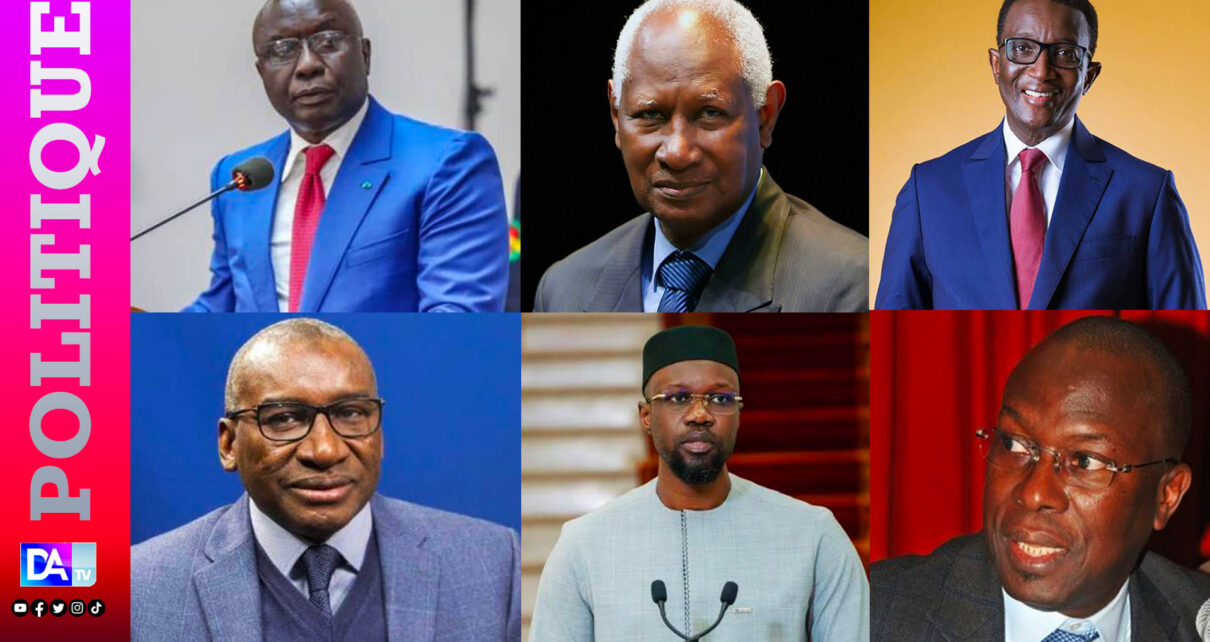
Tensions reached a boiling point following remarks by former Interior Minister Aly Ngouille Ndiaye during a television appearance. The outspoken politician claimed that Ousmane Sonko was the first Senegalese Prime Minister to receive exclusive political funds: “No previous prime minister had access to such funds. I was never Prime Minister myself, but several former leaders are listening to me now—and only one, Boun Abdallah Dionne, has passed away. I know he never had access to such funds. This system began with Sonko.” He further challenged the widely cited figure of 1.7 billion CFA francs, questioning whether it was allocated quarterly or annually and pointing to reports that the first tranche had been exhausted before Sonko requested additional allocations.
Former Prime Ministers push back with counter-narratives
These assertions triggered a wave of rebuttals, particularly from former government leaders. Souleymane Ndéné Ndiaye, the last Prime Minister under former President Abdoulaye Wade, revealed in a 2025 interview that he had received political funds even earlier—as Director of the Presidential Cabinet, long before assuming the premiership. His revelation suggests the practice predates Sonko’s tenure. Other testimonies, including those from former Prime Ministers Macky Sall and Idrissa Seck, reinforce the idea that discretionary funds were a longstanding feature of governance in Senegal.
Pastef dismisses claims as baseless
The ruling party, Pastef, responded sharply, with Elimane Pouye, CEO of SOGEPA SN, dismissing the allegations as “groundless.” He argued that comparisons of the Prime Minister’s office budgets from 2023 to 2025 show no significant changes beyond institutional adjustments. Instead of debating the existence of these funds, he insisted, the focus should be on their use in a transparent, democratic framework. Pastef has long advocated for reform, noting that their 2019 electoral program included proposals to regulate these funds—long before Sonko’s appointment in 2024.
A historical lens on political funds
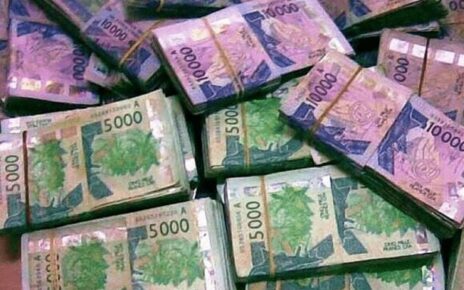
To understand the depth of this controversy, one must examine the evolution of these funds. Under former President Abdou Diouf, allocations hovered around 650 million CFA francs. By the Wade era (2000–2012), this figure ballooned to nearly 8 billion CFA francs. A 2008–2012 audit revealed that 108 billion CFA francs in discretionary funds were spent during that period, with 48 billion lacking proper accounting. High-profile cases, such as the misuse of the 100 billion CFA franc National Local Development Program (PNDL) under Idrissa Seck, further underscore the systemic challenges in tracking these resources.
Calls for legal oversight grow louder
Legislators are now pushing for stricter controls. Deputy Guy Marius Sagna revealed he submitted a bill in September 2025 to create a commission to audit political funds, though Sonko reportedly asked him to delay its introduction, preferring a government-led reform. Meanwhile, Deputy Thierno Alassane Sall condemned the funds as “theft,” criticizing their lack of parliamentary authorization. Others, like El Hadj Momar Samb of the RTA-S, accused the majority of hypocrisy, noting that many current leaders previously held high-ranking positions without advocating for reform.
Government stance: reform, not elimination
President Bassirou Diomaye Faye has defended the preservation of these funds, citing their role in intelligence operations and social solidarity. Ousmane Sonko, while rejecting calls for abolition, has emphasized the need for regulation, citing the 1.77 billion CFA franc allocation to the Prime Minister’s office. The ongoing extraordinary session, which began on August 10, 2026, reflects the unresolved tension between entrenched institutional practices and demands for accountability from Senegal’s new leadership.