Côte d’Ivoire: Laurent Gbagbo reshuffles PPA-CI leadership with five key appointments
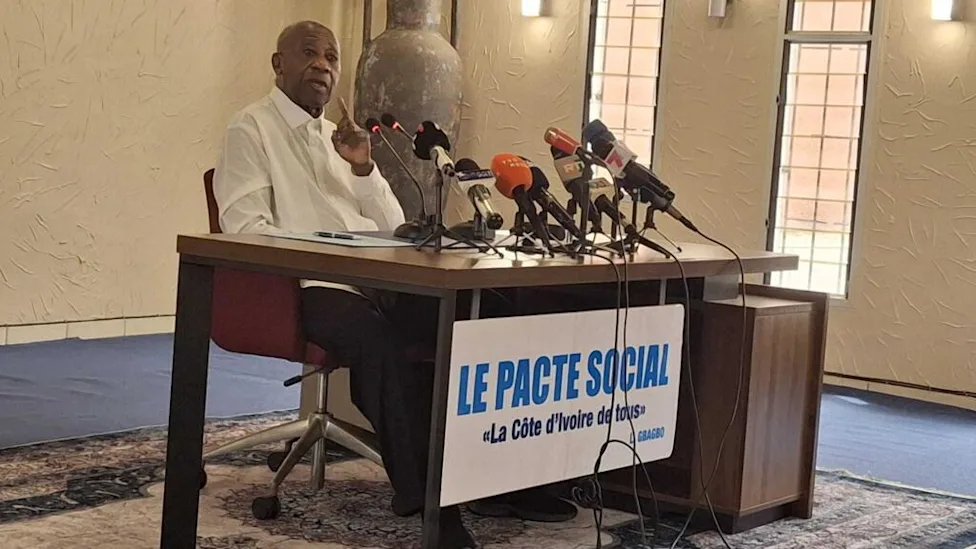
Laurent Gbagbo has reshuffled the leadership of the Popular Front of Côte d’Ivoire (PPA-CI), assigning five prominent figures to key positions within the party. This move, initially envisioned as a delegation of powers to a single individual, reflects a broader strategic shift toward a more collaborative governance model.
Assoa Adou has been appointed first vice-president, with a mandate to oversee strict adherence to the party’s core principles and directives. His role underscores the importance of preserving ideological consistency within the PPA-CI.
Hubert Oulaye takes on the position of second vice-president, tasked with managing the party’s internal affairs and presiding over meetings of the central committee. His responsibilities highlight the need for structured organizational operations.
Emmanuel Ackah, a former ambassador, has been named third vice-president, responsible for revitalizing and energizing the PPA-CI’s activities across the country. His appointment signals a renewed focus on grassroots engagement and party mobilization.
Justin Katinan Koné retains his position overseeing the party’s general policy framework, ensuring continuity in strategic decision-making processes.
Sébastien Dano Djédjé has been entrusted with leading the party’s Strategic and Political Council, a role that emphasizes long-term planning and policy formulation.
In announcing these changes, Laurent Gbagbo emphasized that the new leadership structure is designed to foster ‘greater collective governance’, grounded in the principles of ‘shared responsibility and unified action’.
Political analyst Abdourahmane Barry offers a more nuanced perspective, noting that while these appointments may appear significant, they primarily represent a delegation of day-to-day administrative duties. According to Barry, ‘the ultimate leadership and decision-making authority remain firmly in the hands of Laurent Gbagbo’, indicating that the structural adjustments are more about operational efficiency than a fundamental shift in power dynamics.

Related Articles