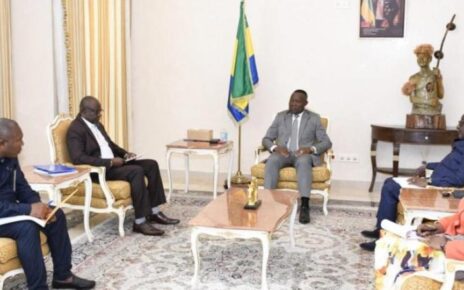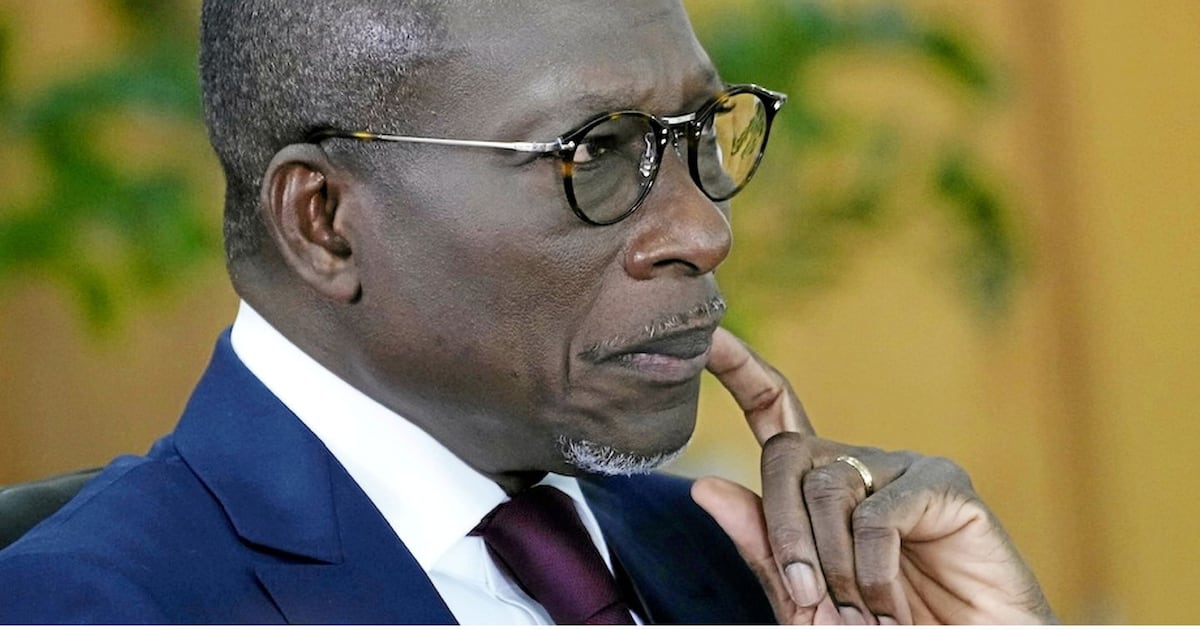
A brief but alarming mutiny rocked Bénin on Sunday, December 7, 2025, as a faction of soldiers seized control of the national broadcaster SRTB in Cotonou. The rebels, claiming to have ousted President Patrice Talon, declared his removal and announced the formation of a new military junta. However, the swift response by loyalist forces and foreign allies quickly reclaimed key installations, including the presidential palace and media outlets, restoring order before the day’s end.
president talon survives assassination attempt amid chaotic uprising
The mutiny unfolded in the early hours of the morning, beginning with an assault on the private residence of President Talon in the Guézo district. Security sources report that the rebels, reportedly including ex-military personnel, were repelled by elite guard units. By mid-morning, Cotonou was placed under heavy military control, with helicopters patrolling the skies and roadblocks sealing off major arteries. The president, aged 67 and set to conclude his second term in April 2026, was secured in a safe location as loyalist troops recaptured strategic sites.
In a televised address that evening, Talon condemned the uprising as an act of “extreme gravity,” vowing that the perpetrators would face justice. He also revealed that civilians, including the family of a high-ranking military official, had been caught in the crossfire, with the wife of General Bertin Bada, the president’s military chief of staff, killed during the raid on their home in Abomey-Calavi. The general’s daughter was also injured in the attack.
military loyalists crush rebellion with regional support
Interior Minister Alassane Seidou confirmed that a “small group” of soldiers had initiated the mutiny, intending to destabilize state institutions. The Bénin Armed Forces, however, remained steadfast in their constitutional duty, swiftly neutralizing the threat. Foreign Minister Olushegun Adjadi Bakari emphasized that the majority of the military had stayed loyal to Talon, reinforcing the government’s claim that the rebellion was an isolated incident.
Investigations revealed that at least a dozen soldiers had been arrested, including the alleged ringleaders and a former army officer. The crisis escalated when rebels, allegedly backed by external mercenaries, attempted to storm the presidential palace and seize the national television station. Their broadcast, aired under duress, declared the suspension of the constitution and the dissolution of all state institutions, appointing Lieutenant-Colonel Pascal Tigri as the head of a new “Military Committee for Refoundation.”
Tigri’s statement accused Talon’s administration of suppressing democratic rights, citing controversial laws and forced exile of political opponents. However, the mutineers’ proclamation was met with immediate resistance. Heavy gunfire erupted near the port and presidential palace, as the Republican Guard launched a counteroffensive. Nigerian fighter jets and ground troops, deployed at the government’s request, joined the operation to secure the television station and a captured military base.
regional condemnation and deployment of peacekeeping forces
The attempted coup drew swift condemnation from the African Union and the Economic Community of West African States (ECOWAS). The AU’s Chairperson, Mahamoud Ali Youssouf, denounced the rebellion as a blatant violation of constitutional order, urging the mutineers to stand down and return to their barracks. ECOWAS, in a statement, announced the immediate deployment of standby forces from Nigeria, Sierra Leone, Côte d’Ivoire, and Ghana to reinforce Bénin’s government and military, ensuring the preservation of democratic rule.
Analysts noted the timing of the coup attempt, coming just days after a similar upheaval in Guinea-Bissau and less than two months after the crisis in Madagascar. The unrest in Bénin underscores growing instability across West Africa, where military takeovers have surged since 2020, affecting nations such as Niger, Burkina Faso, Mali, and Guinea.
tensions rise ahead of Benin’s presidential election
With the April 2026 presidential election looming, President Talon’s administration faces mounting scrutiny. The northern regions of Bénin continue to grapple with jihadist attacks linked to Al-Qaeda, including a deadly ambush in April that claimed the lives of 54 soldiers. Politically, Talon, a former business magnate and cotton tycoon, is constitutionally barred from seeking a third term. His ruling coalition, the Bloc Républicain (BR) and UP-R, has already anointed Romuald Wadagni, the Finance Minister, as his successor, signaling a smooth transition of power.
However, recent constitutional reforms, which extend presidential and legislative terms from five to seven years and introduce a new Senate, have sparked controversy. Critics argue that these changes, combined with the exclusion of key opposition candidates, are exacerbating political tensions. As Bénin prepares for its electoral transition, the failed coup serves as a stark reminder of the fragile balance between stability and democratic resilience in the region.