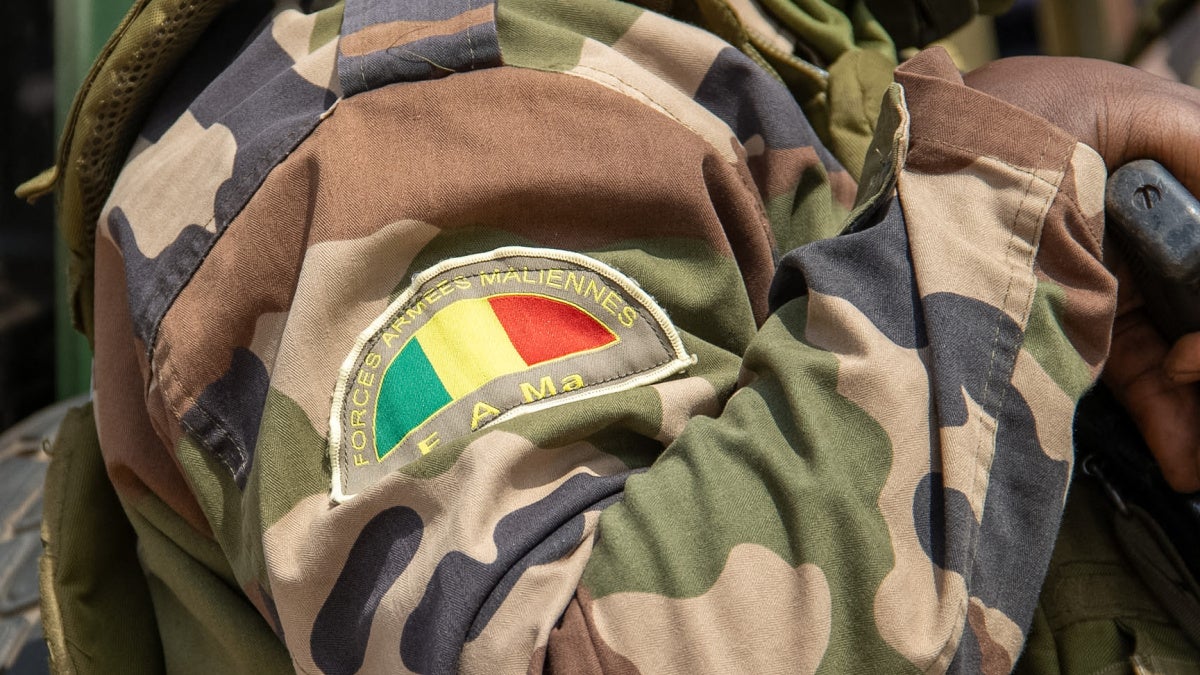
Military units and allied militias in Mali have been implicated in large-scale violence against civilians in the central region of Ségou. Over two separate incidents on October 2 and October 13, at least 31 people were killed, including women and children, while homes were torched and livestock stolen.
Mass killings linked to counterinsurgency operations
On October 2, soldiers from the Malian Armed Forces and dozos—traditional hunters predominantly from the Bambara ethnic group—launched a coordinated assault on the village of Kamona. According to local testimonies, the operation began around 10 a.m. when at least seven pickup trucks, three armored vehicles, and several dozos on motorcycles entered the village. The attackers accused residents of collaborating with the Group for the Support of Islam and Muslims (GSIM), an Al-Qaeda-affiliated jihadist faction controlling the area.
Witnesses reported that the GSIM fighters had earlier warned villagers of the approaching military forces, prompting many to flee. Those who remained were gathered and executed. At least 21 men were killed, and 10 homes were set ablaze. The victims, all males aged 20 to 65, were found shot at close range, with some bodies showing signs of severe trauma.
A 40-year-old herder recounted hiding in an abandoned house with his nine-year-old daughter. Upon returning, he discovered 17 bodies under a tree near the village center. “The victims were riddled with bullets, and one had a shattered skull,” he stated. “I saw spent cartridges scattered around the bodies.” A second villager, who helped bury the dead, described digging a mass grave for the 17 men under the tree, while four additional bodies were found further north, all with gunshot wounds to the head and torso.
Second attack leaves 10 more dead in Balle
Thirteen days later, on October 13, military forces and dozos struck again—this time in the village of Balle, approximately 55 kilometers from Kamona. Around 1 p.m., soldiers in five pickup trucks and militiamen on at least 30 motorcycles stormed the settlement. Some residents managed to escape, but others were subjected to violent searches and summary executions.
A 24-year-old man recalled witnessing soldiers going door-to-door, beating and kicking men before opening fire. By the time the attackers withdrew around 4 p.m., 10 civilians lay dead, including a 55-year-old woman. The attackers also stole over 100 cattle, leaving the community in ruins. A 33-year-old resident found the bodies in the village center: “They were lined up, shot at point-blank range, with broken limbs.“
The slain woman’s 21-year-old daughter reported that her mother had confronted the soldiers, shouting accusations of abuse before being dragged away and executed.
Military denies targeting civilians, claims counterterrorism success
In a statement issued on October 14, the Chief of Staff of the Malian Armed Forces asserted that the October 13 operation was a “proactive reconnaissance mission” near Balle. The military claimed to have “neutralized around twenty terrorists” and seized weapons. However, residents disputed this account, insisting that Balle had long been under GSIM control, functioning under the group’s governance with no presence of state security forces.
“We pay zakat to them every year, and disputes are settled by the jihadists,” one villager explained. “There are no soldiers, police, or gendarmes here. The army treats everyone as if they were part of the GSIM.”
Wider implications of Mali’s spiraling conflict
The recent violence in Ségou follows a surge in GSIM attacks, including a brazen assault on the Siribala sugar factory in August that disrupted regional supply chains. The escalation has further strained an already fragile humanitarian landscape in Mali, where successive governments have battled Islamist insurgencies since 2012. The conflict has claimed thousands of civilian lives and displaced over 402,000 people.
International humanitarian law prohibits attacks on civilians and mandates protections for non-combatants. Despite Mali’s withdrawal from the International Criminal Court (ICC) in September, the country remains under the court’s jurisdiction until September 2026. The ICC opened an investigation into alleged war crimes in Mali in 2013, focusing on abuses by both state forces and armed groups.
Calls for accountability have grown louder, with observers urging regional bodies like the African Union to take a more proactive stance. Human rights advocates stress the need for impartial investigations into these atrocities and the prosecution of those responsible for war crimes.