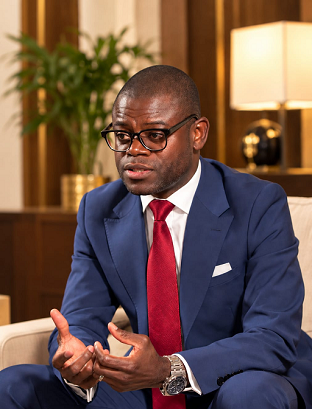
Kinshasa, October 2, 2026 – The national dialogue announced by President Félix Tshisekedi of the Democratic Republic of Congo must be designed as a political mechanism for consultation and pacification, aimed at seeking compromises on peace and national cohesion, a lawyer at the Paris Bar suggested on Friday during an interview.
“The national dialogue announced by President Félix Tshisekedi must be conceived as a political mechanism for consultation and pacification, not as a parallel institution. It can allow for seeking compromises on peace, national cohesion, institutional reforms and the functioning of the State. However, it must not become a shadow Parliament, a parallel Government, a political court, or a de facto constituent assembly,” said Me Ben Touere, a lawyer at the Paris Bar.
According to the doctor of public law and lecturer at Sorbonne Paris Nord University, any political conclusions emerging from the dialogue “could only produce lasting legal effects after their translation by the constitutionally competent institutions.”
“A legislative reform must go through Parliament; a public policy falls under the Government; a question of constitutionality falls under the Constitutional Court; and a question reserved for the direct decision of the people must be submitted to them in the forms provided by law,” he explained, adding that the proposed scheme thus rests on a succession between dialogue, consensus, intervention of competent institutions, constitutional review and, when required or legally warranted, popular consultation.
According to Me Elenga, the analysis recalls in this regard that Article 5 of the Constitution enshrines the principle that national sovereignty belongs to the people, who exercise it directly through elections or referendum and indirectly through their representatives.
“Neither the majority, nor the opposition, nor the participants in a dialogue can therefore claim national sovereignty,” he stressed, arguing that this approach must ultimately aim to reform and consolidate the State through dialogue, rather than create mechanisms likely to weaken or share its prerogatives, the analysis concludes.