The constitutional court’s endorsement of the referendum law has reignited fierce debates in the Democratic Republic of the Congo, with the opposition vowing to escalate its resistance and warning that political tensions are reaching a critical point.
The coalition behind Article 64 has condemned the ruling, calling it a direct threat to constitutional stability and a prelude to an attempt at unconstitutional reform. Spokesperson Prince Epenge has called on the public to remain on high alert, declaring that the movement will not back down until the law is permanently blocked.
“We will not rest until this scheme is dismantled,” Epenge stated. “The people are outraged and must stand firm—rejecting any attempt at a third term or the fragmentation of our nation.”
Kinshasa residents voice growing unease
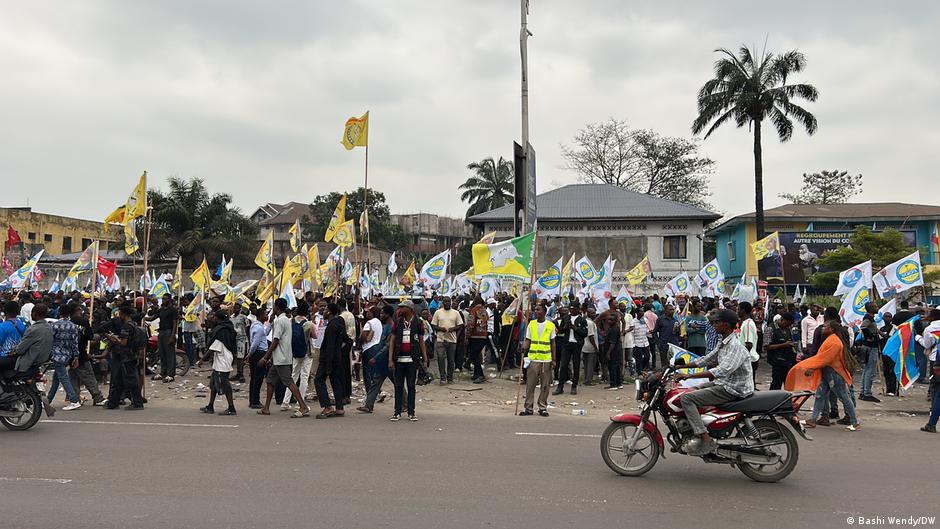
As opposition leaders convened in the capital to plot their next move, ordinary citizens expressed deep concern over the escalating political crisis. Many fear that renewed protests could spiral into unrest, disrupt daily life, and put lives at risk.
“Will their protests remain peaceful?” asked one resident, emphasizing the need to avoid bloodshed. Another voiced worries that the decision could plunge the country into deeper turmoil, with unpredictable consequences for stability.
A third resident placed blame squarely on the ruling power, accusing it of deliberately provoking instability by dispatching agitators to disrupt opposition rallies.
Dialogue at risk of collapse
Analysts warn that rushing to implement the new law could derail fragile political negotiations. Timo Roujean of the Konrad Adenauer Foundation cautioned that a swift presidential signature would severely undermine dialogue efforts and embolden factions advocating violent confrontation.
“If the law is enacted before August 15, all hopes for dialogue vanish,” Roujean said. He added that with political discourse already overheated and accusations of a constitutional coup flying, the court’s decision could further radicalize opposition groups and push them toward armed resistance.
The court’s ruling has not resolved the standoff. With the presidential camp now armed with a legal framework and the opposition refusing to yield, the coming weeks will be decisive in shaping the Democratic Republic of the Congo’s political future.