The International Organisation of La Francophonie (OIF) is set to elect its new Secretary-General during a summit in Phnom Penh, Cambodia, on November 15 and 16, 2026. This leadership role, which carries a four-year mandate, will shape the future of one of the world’s most influential cultural and diplomatic blocs.
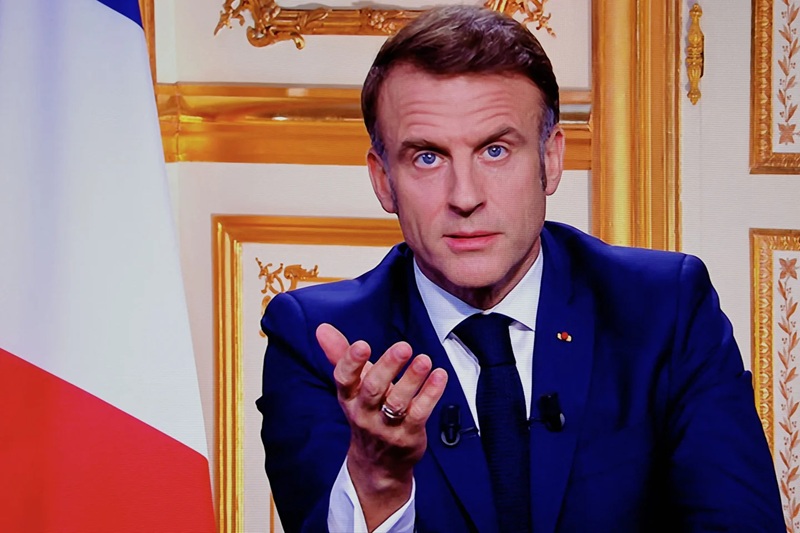
As the global spotlight turns to this pivotal election, unconfirmed reports suggest that the French government, under President Macron, is quietly pushing for the candidacy of former Romanian Prime Minister Dacian Cioloș to replace Rwanda’s Louise Mushikiwabo, whose term is concluding.
While Paris has publicly extended diplomatic courtesies to the Democratic Republic of the Congo’s candidate, Juliana Amato Lumumba—a former Minister of Culture and Arts—behind the scenes, France appears to be rallying its traditional allies in Africa and beyond to back Cioloș’s bid. The strategy raises questions about France’s true intentions in this high-stakes contest.
Why would France, already facing diplomatic embarrassment, consider positioning Cioloș as a compromise between the Congolese and Rwandan candidates? The move seems even more puzzling when examining the contrasting profiles of the two frontrunners.
Louise Mushikiwabo served two terms as Secretary-General, a period marked by her government’s controversial stance on the French language. Rwanda, under her influence, distanced itself from Francophonie’s core values, prioritizing English as its primary medium of communication. In contrast, the Democratic Republic of the Congo stands as the de facto heart of the Francophonie, with over 100 million French speakers, a thriving network of francophone universities, and a media landscape dominated by French-language outlets.
The irony is striking: a country that has systematically undermined the French language is poised to see one of its representatives lead an organization founded to promote it. Meanwhile, the DRC—home to the largest francophone population globally—finds itself sidelined by the very nation that claims to champion the Francophonie’s ideals.
If France’s covert maneuvers succeed in blocking Juliana Lumumba’s election, Kinshasa must reconsider its relationship with Paris. As the world’s leading francophone nation, the DRC deserves fair treatment from a country that has long positioned itself as the guardian of the French language. With 90 member states, the OIF is no mere ceremonial body; its Secretary-General wields considerable influence over the diplomatic balance between African, European, and American francophone nations.
A leader for the Francophonie must embody experience, neutrality, and unwavering commitment to its mission. Juliana Amato Lumumba meets these criteria, offering a vision that aligns with the organization’s founding principles. Her candidacy represents an opportunity for the Francophonie to reclaim its relevance on the global stage.