
Gabon and Ghana forge strategic economic partnership
Libreville, July 29, 2026 – By selecting Accra for one of his first major diplomatic engagements following his election, Gabonese President Brice Clotaire Oligui Nguema has sent a powerful signal that extends far beyond bilateral relations.
At a time when African economies are striving to accelerate their integration, Libreville is embracing a diplomacy focused on continental partnerships, with the goal of turning political relations into engines of growth, investment, and industrialization. The official visit to Ghana exemplifies this new approach, where African cooperation becomes both an economic development tool and a strategic influence mechanism.
Welcomed at the Ghanaian presidential palace by his counterpart John Dramani Mahama, the Gabonese head of state framed this meeting around economic complementarity. Both nations bring distinct yet complementary strengths to the table. Ghana has emerged in recent years as one of West Africa’s most diversified economies, while Gabon is determined to accelerate the local processing of its natural resources and enhance its economic appeal.
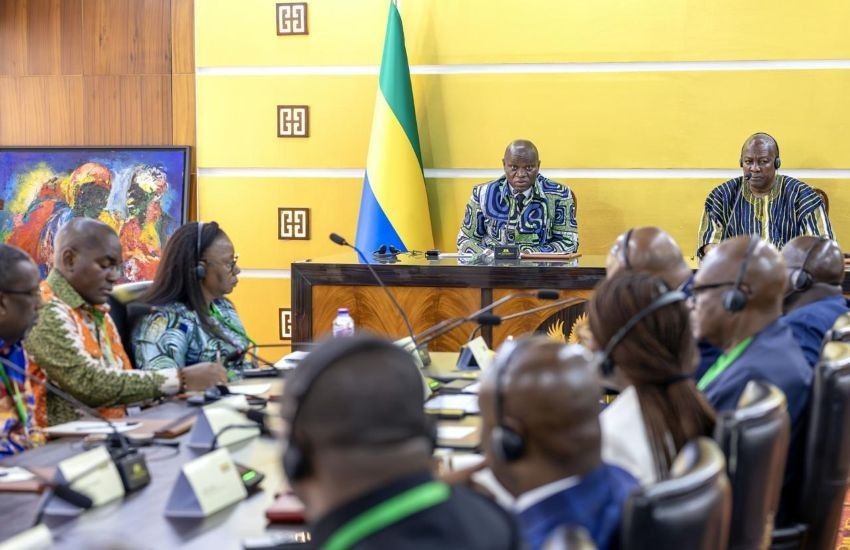
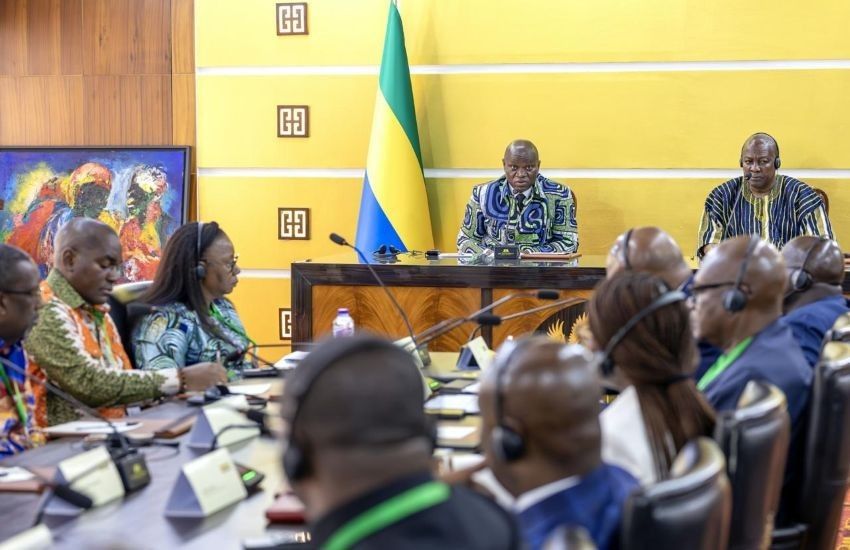
Beyond the ceremonial exchanges, the one-on-one discussions between the two leaders set the stage for a lasting partnership. The talks quickly expanded into a broader working session, uniting delegations from both countries around sectors identified as priorities for their respective development agendas.
A partnership rooted in tangible economic sectors
The selected focus areas reflect a distinctly productive vision of cooperation. Mining, agriculture, fishing, forestry, digital technology, education, and local raw material processing stand out as the core pillars of this collaboration. The stated ambition is clear: to move beyond mere cooperation agreements and instead foster cross-border investments, develop African value chains, and generate more jobs on the continent.
This approach aligns with President Oligui Nguema’s economic strategy, which prioritizes diversification, skills transfer, and industrialization. In this context, diplomacy evolves from a purely political function into a genuine tool for national development. Two landmark agreements emerged from the deliberations: the first establishes reciprocal training programs for diplomats to strengthen institutional capabilities, while the second creates a permanent framework for political consultation to better coordinate Gabon and Ghana’s positions in regional and international organizations.
The rise of African-led diplomacy
This visit also underscores a deeper shift in Africa’s international relations. After decades of economic diplomacy focused on external partners, African states are now turning inward to strengthen intra-continental exchanges.
The rapprochement between Libreville and Accra epitomizes this trend. Both capitals are committed to building partnerships rooted in shared interests rather than aid-based dynamics. This approach could help boost intra-African trade, which remains far below levels seen in other major global regions.
The symbolic gesture marking the conclusion of this visit encapsulates this ambition perfectly. The two presidents planted a friendship tree, a diplomatic act that transcends protocol. For two nations deeply committed to preserving their natural resources, this gesture underscores how African cooperation can also prioritize environmental protection, climate action, and green economic development.
Turning pledges into progress
The true impact of this visit will hinge on the implementation of the commitments made. The signed agreements must now translate into concrete projects—trade investments, university exchanges, industrial collaborations, and business opportunities for enterprises in both countries.
Yet beyond the Gabon-Ghana partnership itself, this diplomatic engagement signals a significant shift in African foreign policy. Facing global economic uncertainties, an increasing number of African states are choosing to anchor their growth in regional alliances, leveraging their neighbors’ strengths, and tapping into homegrown markets.
For Gabon, this marks a pivotal turning point. International engagement no longer relies solely on traditional partners but increasingly on forging African alliances capable of supporting industrialization, innovation, and value creation across the continent. If this momentum endures, the Accra visit may well be remembered as a foundational step toward a bolder, more assertive African economic diplomacy—one where nations don’t just engage in dialogue but actively build their shared future together.