Gabon and Monaco unite to pioneer climate-focused partnerships
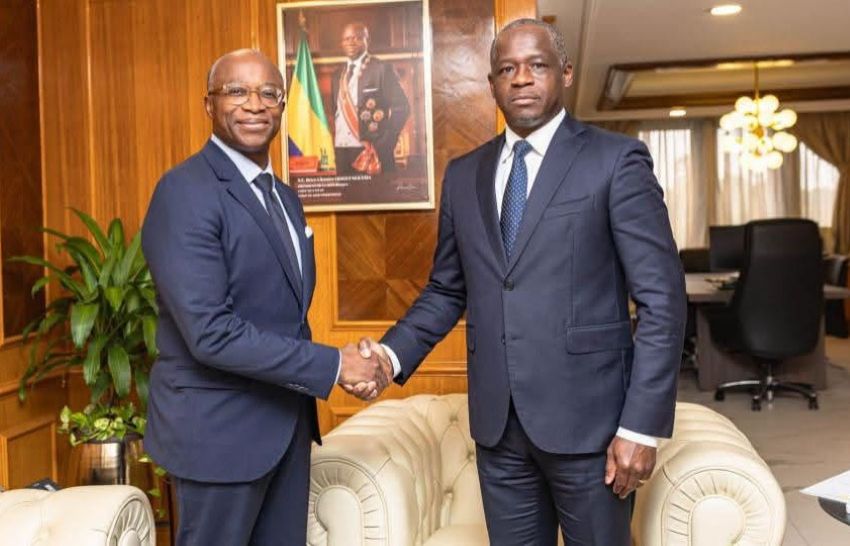
Libreville, August 9, 2026 – Gabon is redefining its global engagement by leveraging its natural wealth as a cornerstone for climate diplomacy, economic growth, and international collaboration. The landmark meeting held on August 5 between Gabonese Vice-President Hermann Immongault and a delegation from Monaco’s Prince Albert II Foundation underscores this strategic shift.
While the discussions centered on environmental protection, they also highlighted Gabon’s ambition to forge international alliances that can fund, safeguard, and monetize its vast forests, marine ecosystems, and biodiversity. Leading the Monegasque delegation was Charles Oula Siehe, Special Advisor for Africa at the Prince Albert II Foundation, who engaged in talks with Immongault alongside Aimé Martial Massamba, Gabon’s Minister of Fisheries, Maritime Affairs, and the Blue Economy.
The timing of this collaboration is no coincidence. With one of Africa’s most expansive forest covers, critical marine biodiversity, and a strategic position in the Congo Basin, Gabon holds immense ecological value that extends far beyond its borders. As global climate action intensifies, this natural capital represents both a moral obligation and a strategic asset capable of attracting foreign investment and fostering sustainable partnerships.
The Congo Basin: A global biodiversity hotspot
Monaco’s Foundation has set its sights on strengthening its footprint in the Congo Basin ahead of its 20th anniversary in September. The region, renowned as a vital carbon sink and biodiversity reservoir, offers unparalleled opportunities for climate-focused initiatives. For Gabon, aligning with this vision means prioritizing conservation efforts that align with international climate goals while advancing domestic economic priorities.
Key areas of potential cooperation include forest protection, biodiversity conservation, carbon financing mechanisms, and the development of a sustainable blue economy. The latter presents a particularly compelling opportunity. With extensive coastal and marine resources, Gabon can harness its blue economy to drive economic diversification—provided it balances resource utilization with ecosystem preservation and equitable benefit-sharing for local communities.
Similarly, Gabon’s forests are no longer seen merely as ecological reserves but as economic assets. By developing transparent and credible carbon financing frameworks, Gabon can monetize its conservation efforts while ensuring fair compensation for its environmental stewardship. This approach would position the country as a leader in sustainable resource management, reinforcing its role in global climate solutions.
From environmental stewardship to geopolitical leverage
The exchange between Gabon and Monaco reflects a broader evolution in Gabon’s foreign policy, where environmental conservation is increasingly viewed as a tool for development, international influence, and national sovereignty. This shift requires moving beyond symbolic gestures to deliver tangible outcomes—financed projects, knowledge transfer, job creation, scientific research, and long-term ecosystem protection.
For both nations, the partnership is mutually beneficial. Monaco brings expertise, funding networks, and global advocacy for climate action, while Gabon provides a real-world laboratory for conservation with global implications. The August 5 meeting signals a commitment to transform climate diplomacy into actionable progress, positioning Gabon at the forefront of Africa’s green economy movement.
As nations worldwide recognize the strategic value of forests, oceans, and biodiversity, Gabon’s approach sets a precedent. The challenge now is to ensure that this collaboration yields measurable results—not just in terms of funding and conservation, but in solidifying Gabon’s reputation as a responsible steward of the planet’s most critical ecosystems. If successful, this partnership could become a model for how African nations can turn environmental responsibility into a driver of sovereignty and sustainable development.