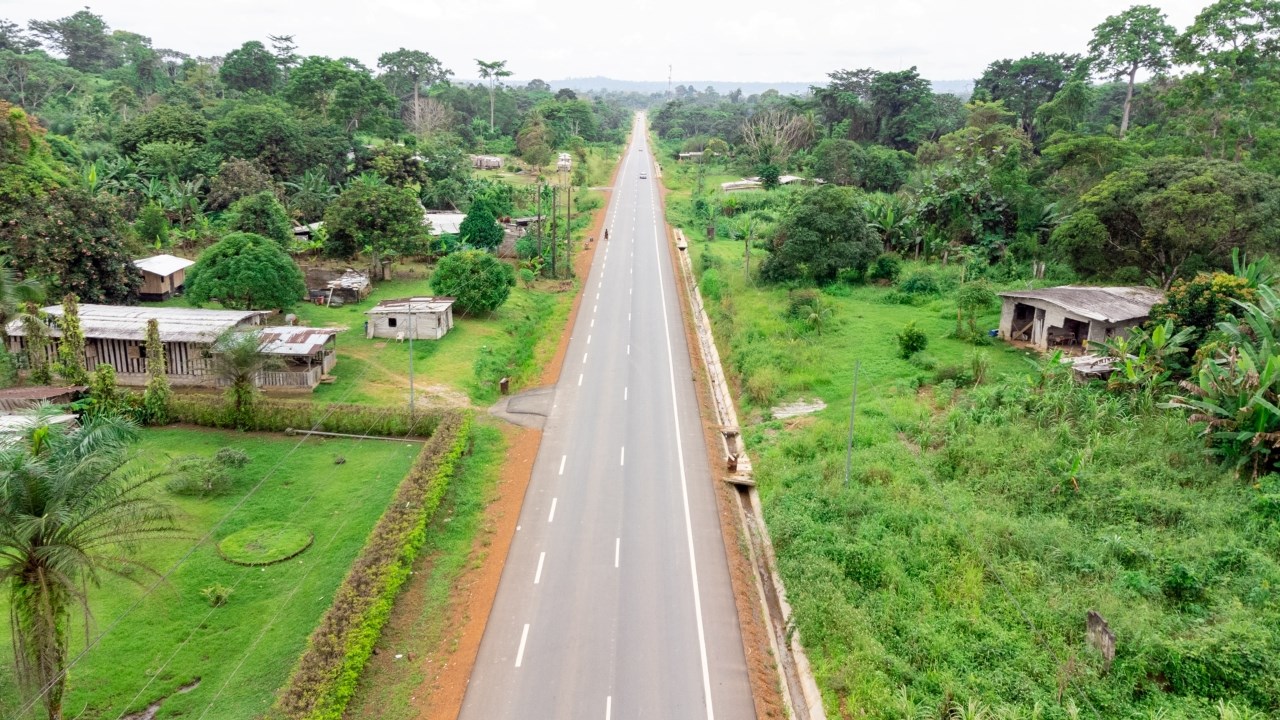

The 2026 supplementary budget officially establishes the implementation of a toll system on the Libreville-Kango stretch of the Transgabonaise highway. This section, spanning from kilometer marker 12 (PK12) to kilometer marker 95 (PK95) on the outskirts of the Gabonese capital, falls under the public-private partnership agreement with the Société Autoroutière du Gabon (SAG). A newly amended Article 35 empowers SAG to directly collect user fees from motorists, effective January 1, 2028, provided the conceded road segment is completed.
These user fees are designated as compensation for the operation, ongoing maintenance, and ensuring the availability of the granted infrastructure. The legislative text explicitly clarifies that these charges do not constitute state budgetary revenue, unless there is a specific provision for remittance to the state. Furthermore, these fees remain distinct from any taxes, duties, contributions, or fiscal or para-fiscal levies imposed for the benefit of the State, the National Autonomous Road Maintenance Fund (FANER), or any other public entity.
The precise locations of the toll and weigh stations will be determined jointly by the Gabonese State and SAG. Tariff structures will be established through regulatory means, varying according to vehicle category, road section, distance traveled, or tonnage, in full adherence to the partnership contract’s stipulations. These tariffs are mandated to be published in the Official Journal and communicated to users before their effective date. Vehicles belonging to emergency and security services on official missions, as well as those engaged in duly authorized humanitarian missions of public interest, will be exempt from payment.
Moreover, the financial arrangement includes the establishment of a counter-guarantee, potentially reaching 26 billion FCFA. This measure aims to secure the issuance of a bank guarantee for SAG, which will be backed by the balance held in an escrow account managed by the Caisse des Dépôts et Consignations. Imports, local acquisitions, construction work, supplies, equipment, materials, services, and provisions directly essential for the execution of the partnership agreement will also benefit from an exemption or waiver of VAT and customs duties. The specific list of these eligible items will be predetermined by the Minister of Economy and Finance.
This comprehensive framework provides clear insight into the model adopted by Gabon: direct collection of user fees by the concessionaire, strict state oversight of its control, audit, and budgetary monitoring prerogatives, and secure project financing through a dedicated escrow account. The legislation emphasizes that this direct collection mechanism does not diminish the State’s authority to set or approve tariffs, nor does it waive its right to continuous oversight throughout the concession period.