The Nigerian Armed Forces have delivered a crushing blow to Boko Haram and ISWAP in the Lake Chad region, raising a critical question: can these gains be sustained or will the insurgency regroup? A high-stakes military campaign has reshaped the security landscape, but the road to lasting peace remains uncertain.
Military Operations Reshape the Battlefield against Jihadist Insurgency
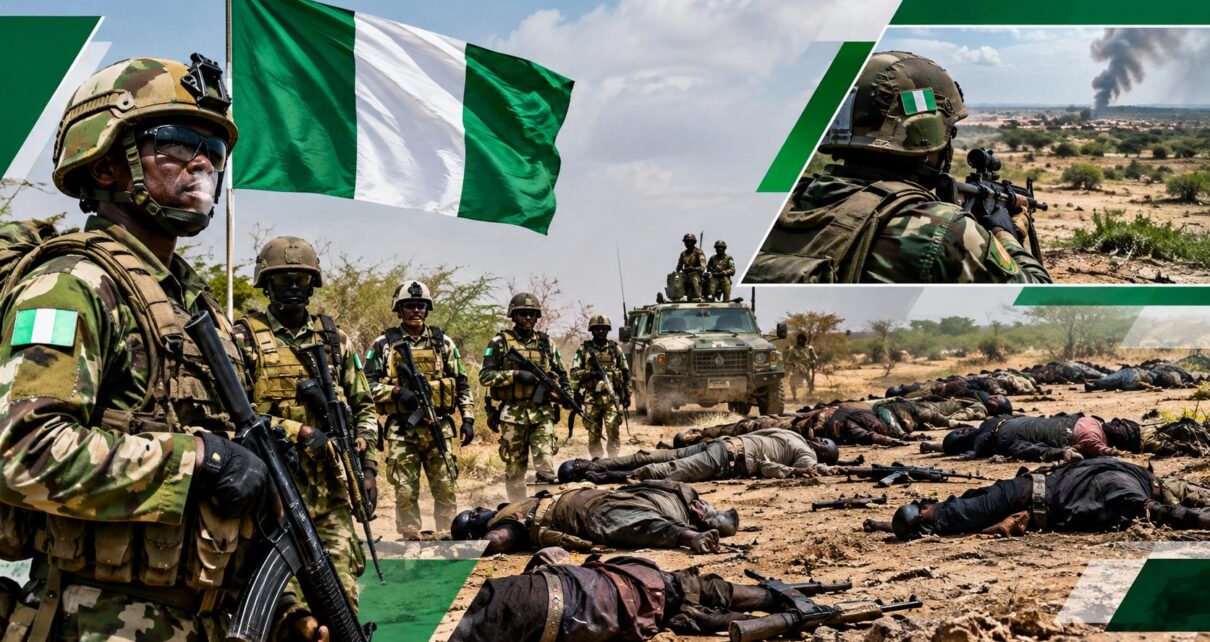
Since April 2025, Nigeria’s military has executed a relentless offensive against Boko Haram and its splinter faction, the Islamic State’s West Africa Province (ISWAP). The campaign, centered in the volatile Lake Chad basin—including Sambisa Forest, Mandara Mountains, and remote border areas—has inflicted unprecedented losses on the insurgency while exposing critical vulnerabilities in their networks.
The Nigerian military’s latest operational review reveals the scale of this transformation: over 1,100 jihadists neutralized, 638 civilians rescued, and a massive haul of weapons and explosives uncovered.
Human and Material Costs for the Insurgency
The offensive has left a devastating mark on jihadist capabilities. Combat operations in Sambisa Forest and Mandara Mountains dismantled key strongholds, while targeted strikes along Lake Chad disrupted supply lines. According to military sources, forces eliminated 1,106 insurgents and seized 475 firearms, ranging from assault rifles to heavy weaponry, along with thousands of rounds of ammunition.
Equally damaging was the discovery and destruction of 295 improvised explosive devices (IEDs), a hallmark of ISWAP’s asymmetric warfare. These devices, often hidden along roads and in civilian areas, have long been a tactical advantage for insurgents—hampering troop movements and sowing fear in communities.
Cutting Off the Lifeline: Logistics and Support Networks Collapse
Behind every insurgent movement lies a fragile but essential support structure. Nigeria’s military has methodically dismantled these networks, targeting financiers, recruiters, and logistical operatives.
Through intelligence-led operations, security forces arrested 758 suspected collaborators, including arms suppliers, financiers, and couriers. These arrests have crippled the insurgency’s ability to resupply, recruit, and sustain operations across the region.
Wave of Surrenders Signals Internal Fractures
As pressure mounts, jihadists are abandoning the fight. Military command reports that 969 individuals—including active fighters and their families—have surrendered or fled insurgent-controlled zones. Many have been enrolled in government-run disarmament, demobilization, and reintegration (DDR) programs, designed to facilitate their re-entry into civilian life.
Civilians Pay the Heaviest Price — and Find Liberation
Among the most poignant outcomes of the military campaign are the lives saved. In a series of targeted raids on insurgent training camps and hideouts, Nigerian troops freed 638 civilians, including scores of women and children abducted during years of terror raids in remote villages.
Each survivor undergoes thorough medical and psychological screening before being handed over to civil authorities and humanitarian organizations. The process ensures access to trauma care, shelter, and long-term support as communities begin to rebuild.
Can the Military Hold the Gains? Assessing the Path Ahead
Despite these remarkable advances, the threat has not vanished. Boko Haram’s insurgency, now nearly 16 years old, has left over 40,000 dead and displaced more than two million people in the Lake Chad basin.
ISWAP, though weakened, remains a lethal threat. It continues to exploit remote terrain, conduct ambushes, and deploy IEDs in civilian-populated areas. The transition in military leadership—marked by a change in command of Joint Task Force Operation HADIN KAI—comes at a pivotal moment. The new leadership faces the dual challenge of consolidating recent gains and ensuring safe, sustained returns for displaced populations.
The question now looms: will Nigeria’s military breakthrough translate into a lasting peace, or will the jihadists adapt and regroup? One thing is certain—the fight against terrorism in the Sahel has entered a new phase, one where momentum belongs to the state.
The Human Story Behind the Numbers
Behind every statistic lies a story of survival and resilience. Among the rescued are farmers, traders, teachers, and children—people whose lives were shattered by a decade of violence. Their liberation represents not only a tactical victory but a moral one for Nigeria’s armed forces, whose mission extends beyond security to restoring dignity and hope.