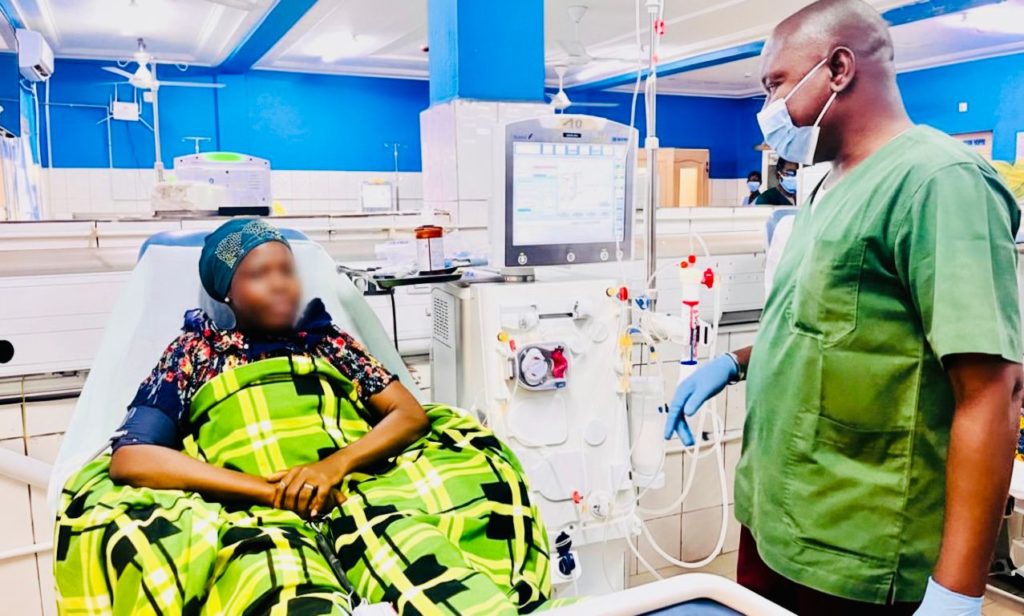
For years, accessing healthcare in Burkina Faso was an uphill battle for countless families. The invisible yet formidable barrier? Cost. A groundbreaking reform, introduced on March 13, 2024, shattered that barrier by slashing medical examination fees and eliminating upfront deposits for dialysis in public health facilities. This shift has revolutionized healthcare accessibility across the country. Here’s how it’s transforming lives.
From financial barriers to lifelines: the impact of reduced costs
In the crowded corridors of Burkina Faso’s public hospitals, the weight of financial worry has long overshadowed the urgency of medical care. Exorbitant upfront payments and steep examination fees turned healthcare into a privilege, not a right—until now.
At the heart of this change is the Centre hospitalier universitaire de Bogodogo, where the stories of struggle and relief unfold. Madi Diallo shares a heartbreaking memory: “Three years ago, my sister needed urgent dialysis, but we couldn’t afford the 500,000 FCFA deposit. She passed away before we could act.” Today, that deposit no longer exists. “The reform is just, but for us, it comes too late,” he reflects.
Breaking down the changes: what’s new?
The reform, announced by the Minister of Health, Dr. Robert Lucien Jean Claude Kargougou, during the March 13, 2024 cabinet meeting, brought sweeping changes to public health pricing:
- CT scans: Reduced from 50,000 FCFA to 25,000 FCFA
- MRI scans: Dropped from 100,000 FCFA to 40,000 FCFA
- Dialysis: Upfront deposits of 500,000 FCFA have been entirely eliminated
These adjustments have made a tangible difference, particularly for vulnerable populations who previously faced impossible choices between treatment and financial ruin.
Real-world relief: voices from the ground
At the same hospital, Dame Ouédraogo, born Nikiéma Élodie, underwent an MRI scan. “The cost is now affordable—just 40,000 FCFA, including supplies,” she says. “Elsewhere, the same exam could cost up to 150,000 FCFA or more.” For her, the savings mean more than just financial ease; it allows her to continue supporting her community through tontines, financial groups that rely on collective contributions.
Seydou Nombré, Director General of the CHU de Bogodogo, confirms the reform’s effectiveness: “MRI scans are now priced at 40,000 FCFA, and the 500,000 FCFA deposit for dialysis has been scrapped. Emergency dialysis now costs just 2,500 FCFA.”
Beyond the capital: expanding access across Burkina Faso
The reform’s impact isn’t limited to Ouagadougou. In Ziniaré, at the regional hospital, the changes are equally evident. The reduction in fees has eliminated the need for patients to travel long distances to the capital for imaging services, a major win for rural communities.
Mady Zorné, Director General of the CHR de Ziniaré, highlights broader benefits: “Since the reform, referrals to Ouagadougou have dropped significantly. Clinicians now have the imaging tools they need to diagnose patients on-site, improving the entire care chain.”
The challenges ahead: infrastructure and equity
Despite these strides, challenges remain. The Centre hospitalier universitaire Yalgado Ouédrago in Ouagadougou, the country’s largest hospital, faces overwhelming demand for dialysis. With only 34 machines serving nearly 100 patients daily, the service operates in three shifts, and urgent cases are accommodated beyond regular hours.
Tuina Nsoma Hélène, head of the dialysis unit, explains the harsh reality: “A patient’s passing frees up a slot for someone on the waiting list. Since the deposit requirement was lifted, 16 additional patients have been able to start treatment without financial barriers.” Still, the demand far exceeds capacity.
The reform’s limitations extend beyond dialysis. Dame Sanou, a dialysis patient since 2018, struggled to begin treatment due to the 500,000 FCFA deposit. Today, she celebrates the reform as a recognition of dignity for those with chronic illnesses. “For the first time, healthcare is within reach,” she says.
Youl Sié, another dialysis patient, echoes the call for decentralization: “We need more dialysis centers closer to communities. Traveling far from home disrupts families, especially when we’re often the backbone of our households.” He stresses that healthcare is not just about treatment but also about social stability.
Looking forward: a step toward universal healthcare
While the reform doesn’t solve every issue—long waitlists, limited equipment, and uneven access persist—it marks a pivotal shift. Healthcare in Burkina Faso is no longer a luxury reserved for the few. It’s becoming a right, slowly but surely, for all.
As the country continues to expand its healthcare infrastructure, with new university hospitals under construction, the future holds promise. For now, the message is clear: accessible healthcare is possible, and Burkina Faso is taking bold steps to make it a reality.