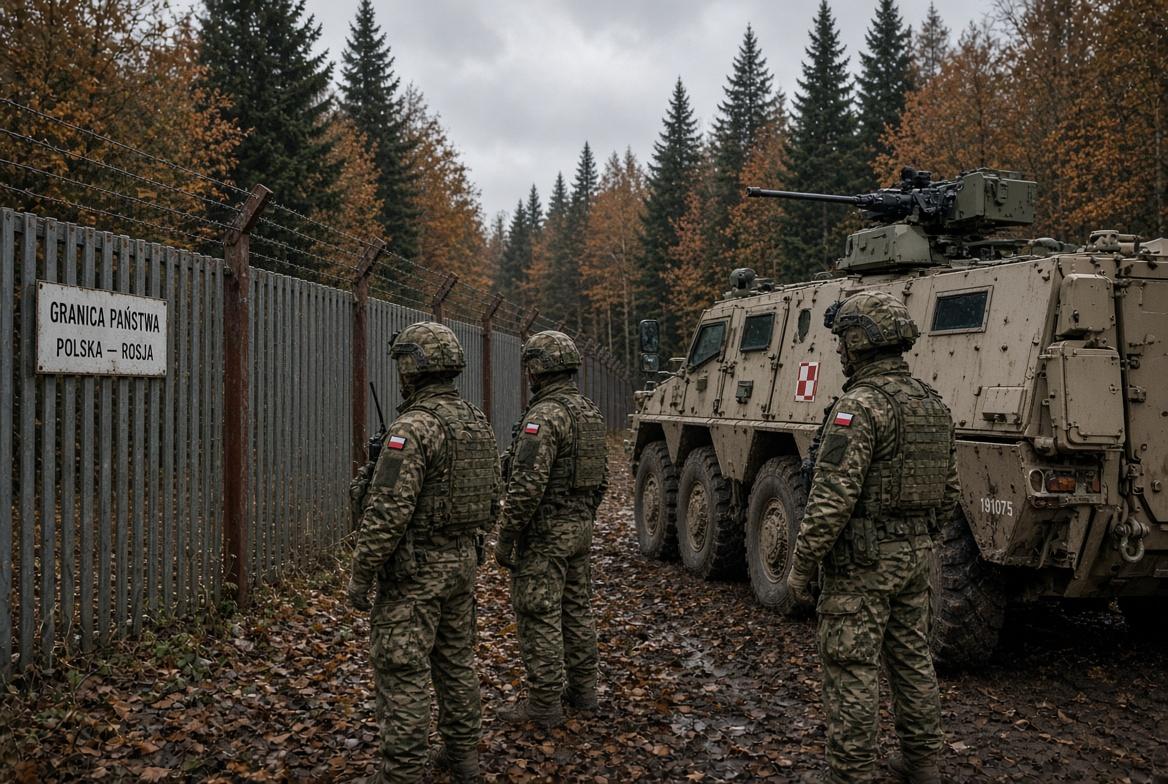
NATO-Russia tensions in the Baltic Sea region have reached critical levels, with covert operations from Moscow escalating at an alarming rate. In response, Poland has rolled out a comprehensive security strategy along its northeastern border—a zone that directly borders the highly militarised Kaliningrad exclave. This proactive measure highlights Warsaw’s determination to prevent destabilisation attempts on one of Europe’s most volatile frontlines.
Transforming the border into an impenetrable shield against hybrid threats
Poland’s latest security initiative is anything but a standard border reinforcement. Instead, it integrates a sophisticated network of military and counterterrorism operations, merging border guards, national police, elite forces, and conventional troops under a single command structure. The objective is crystal clear: protecting the country’s northern flank means securing vital infrastructure—energy networks, transport arteries, and digital communications—that Moscow could exploit in a covert conflict. This strategy comes in direct response to a disturbing surge in unexplained drone activities, unauthorised airspace breaches, and sightings of unidentified individuals near sensitive locations.
Kaliningrad: the epicentre of Russia’s hybrid warfare in the Baltic
The Baltic Sea has emerged as a key battleground for hybrid warfare, where Russia’s arsenal of indirect tactics is being deployed with increasing precision. From weaponising migration patterns to orchestrating cyber intrusions and psychological manipulation, Moscow’s playbook is designed to exploit weaknesses without triggering open conflict. Poland’s northern border now stands at the forefront of this shadow conflict, with Kaliningrad acting as a launching pad for provocations. By reinforcing this frontier, Warsaw is sending a powerful message: any attempt to undermine its sovereignty will leave no room for deniability.
Poland’s security gamble: deterrence or escalation trigger?
Poland’s assertive approach represents a high-stakes wager—balancing deterrence against the risk of unintended escalation. Through the deployment of specialised units and cutting-edge surveillance technologies, Warsaw aims to deter Russian aggression while avoiding actions that could be misinterpreted as offensive. However, the strategy carries significant risks. Historically, Moscow has framed NATO’s defensive actions as hostile provocations, and the Baltic frontier remains a powder keg where tensions could rapidly escalate into dangerous retaliation cycles. The key question now is whether Poland’s fortified border will de-escalate threats or simply relocate them to another crisis zone.
Ukraine conflict insights: preparation or misjudged overreach?
The ongoing war in Ukraine serves as a stark reminder that hybrid warfare operates outside traditional conflict zones and ceasefire agreements. Poland’s preemptive border measures echo Kyiv’s struggles with sabotage, misinformation, and undercover assaults. The distinction here is that Warsaw is taking action before any damage occurs. By strengthening its defences proactively, Poland is banking on prevention as its strongest defence—but only time will reveal whether this strategy can withstand Russia’s persistent shadow operations.
What’s ahead for Poland’s evolving security framework?
The current initiative along the Baltic frontier is merely the first phase of a broader security transformation. Polish authorities have indicated that this overhaul will extend beyond physical fortifications, encompassing advanced cyber defences, intelligence collaboration, and rapid-response frameworks. The underlying principle is unmistakable: raising the cost of hybrid aggression to levels that Moscow cannot justify. Whether this approach succeeds or backfires may ultimately shape the future of NATO’s eastern flank—and Europe’s long-term stability.