
Since its emergence on the African stage, the Africa Corps has become a key player in Moscow’s strategy to expand its influence across the Sahel. Beyond its military role, this Russian-backed force now extends its reach into strategic air transport, facilitating the rapid deployment of troops and equipment to some of Africa’s most volatile regions.
How Africa Corps leverages air transport for Sahel operations
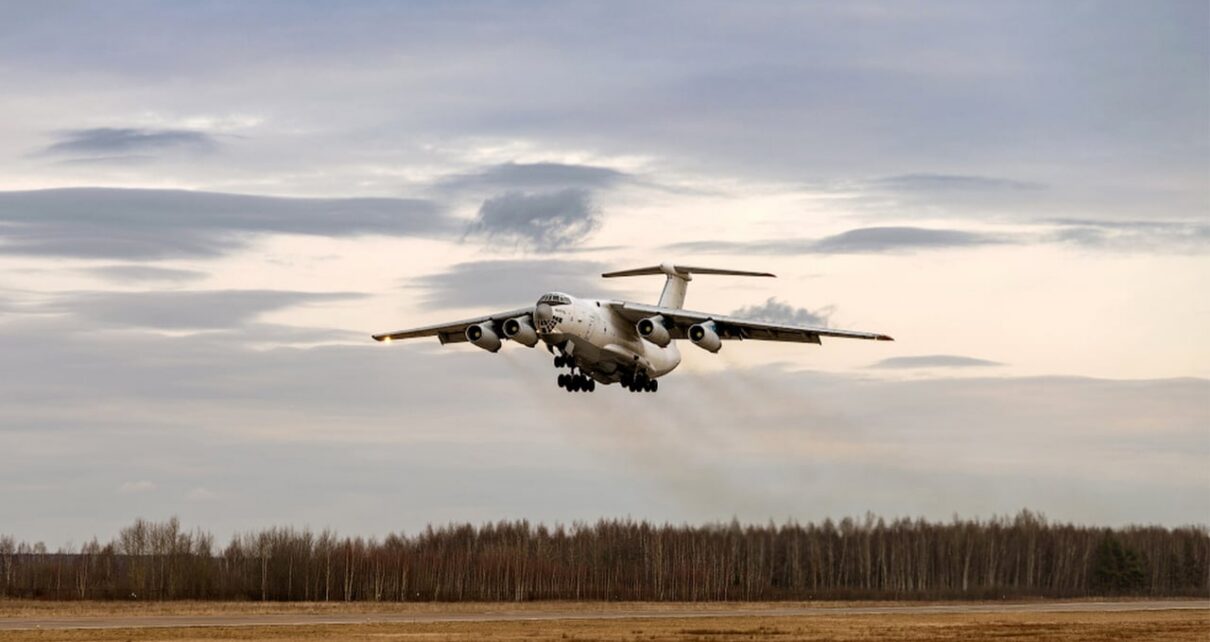
Moscow’s Africa Corps relies heavily on a network of cargo airlines to move personnel and supplies across the Sahel. Among these, Zitotrans, a Russian air transport company, has emerged as a primary logistics partner. Specialising in heavy-lift operations, Zitotrans operates a fleet of IL-76 transport aircraft, which have become the backbone of Africa Corps’ aerial supply chain.
These aircraft, capable of carrying large payloads over long distances, enable the Africa Corps to maintain a steady flow of reinforcements and matériel to its operational bases in the Sahel. Flight logs and satellite tracking data reveal a pattern of regular flights connecting Russian military hubs to key locations in Mali, Burkina Faso, and Niger—countries where Africa Corps presence has grown significantly in recent years.
Key destinations in the Sahel
The Africa Corps’ air bridge extends to several strategic locations, including:
- Bamako (Mali): A critical hub for Africa Corps operations, serving as a staging ground for troop rotations and supply deliveries.
- Ouagadougou (Burkina Faso): Increasingly used as a forward operating base to support counterinsurgency efforts.
- Niamey (Niger): A key transit point for logistics bound for the Liptako-Gourma region, a hotspot for militant activity.
Strategic implications for the Sahel
The Africa Corps’ air transport network is not just a logistical tool—it is a force multiplier. By ensuring rapid deployment capabilities, Moscow strengthens its partnerships with governments in the Sahel, offering an alternative to Western security cooperation. This has allowed Africa Corps to position itself as a reliable security partner, particularly in countries where local forces struggle against insurgencies.
While Western observers warn of the risks of increased Russian military presence, African governments in the Sahel have shown openness to these partnerships. The Africa Corps’ ability to deliver timely support has made it an attractive option in a region where security vacuums persist.
Challenges and controversies
The growing footprint of the Africa Corps has not gone unnoticed. Critics point to the opacity surrounding its operations, including the use of civilian airlines like Zitotrans for military purposes. Questions have also been raised about the long-term consequences of deepening ties with Moscow, particularly in light of the Wagner Group’s controversial legacy in the region.
Despite these concerns, the Africa Corps continues to expand its air transport operations, signalling Moscow’s long-term commitment to the Sahel. As the region’s security landscape evolves, the role of air logistics in shaping Africa Corps’ influence remains a critical factor.