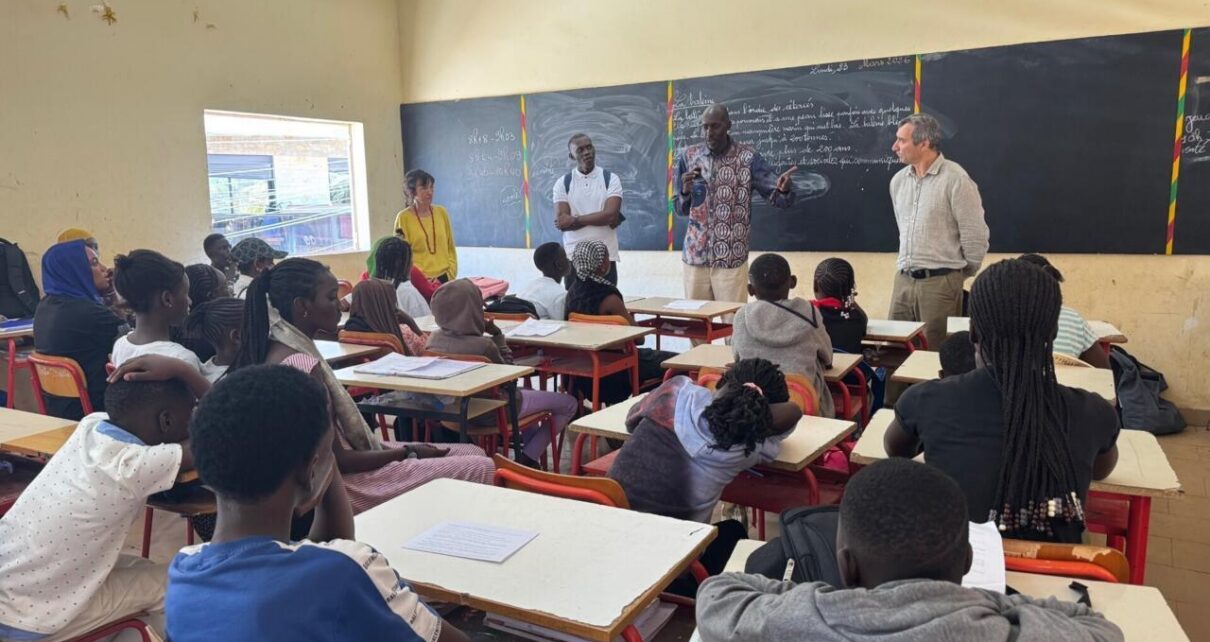
In a classroom full of wide-eyed fourth-grade students in Dakar, the enchanting melodies of humpback whales fill the air. These aren’t ordinary sounds—they’re recordings captured just off the coast of Ouakam, a district of Senegal’s capital, during their annual migration seasons of 2018 and 2022. The children, seated attentively at their desks, listen with rapt attention as the unique underwater compositions echo through the room.
turning ocean sounds into lessons for young minds
The initiative is led by Germes d’Écocitoyens à travers les sciences et les traditions dans les univers d’apprentissage (Gestu), an association dedicated to environmental education. Through a series of school workshops, Gestu brings together marine scientists, local fishermen, and young learners to explore the fascinating world of cetaceans—and why their survival matters.
Among the guests is Olivier Adam, a professor from Sorbonne University and a specialist in cetacean sounds. His presence is part of a broader effort to bridge the gap between scientific research and classroom learning. “I was stunned when I first recorded whale songs,” he admits. “To realize these sounds aren’t random noise, but structured communication—a true language. Every time I speak to children, I feel compelled to share this discovery. Understanding the ocean starts with understanding the beings that live within it.”
a classroom filled with wonder and questions
The students, curious and eager, don’t hesitate to ask questions. How many stomachs does a whale have? How many whale species exist? How do they give birth? What do they eat?
For Fanta, a 12-year-old student, the most captivating moment was hearing the whales’ songs and their unique way of communicating. The experience left a lasting impression—one that blends science, emotion, and a sense of responsibility toward the natural world.
Thierry, a teacher at École Alieu Samb in Ngor, Dakar, emphasizes the importance of such learning. “Before this session, I had no idea that a humpback whale gives birth to only one calf at a time. Without this knowledge, we wouldn’t even understand the urgency of protecting these species. They could disappear if we don’t act now.”
local voices amplify the call for conservation
Joining Olivier Adam is Babacar Sy, a deep-sea diver and lifelong fisherman. With over three decades of experience on the water, he has witnessed firsthand the decline of marine life. “When I started fishing, the ocean was abundant,” he reflects. “Last year, I caught only five groupers all year. If this continues, one day, my grandchildren will ask me what a grouper is—and I’ll have to tell them it no longer exists.” His voice carries both sadness and urgency: “We are digging our own grave. It’s time for everyone to wake up.”
beyond the classroom: building environmental stewardship
This program isn’t limited to one school. Gestu has organized similar sessions in two other primary schools across Dakar. Alongside whale song workshops, the association introduces activities focused on waste collection and recycling, aiming to shift mindsets and inspire action. The goal? To raise a generation of Senegalese children who see themselves as guardians of the ocean and biodiversity.