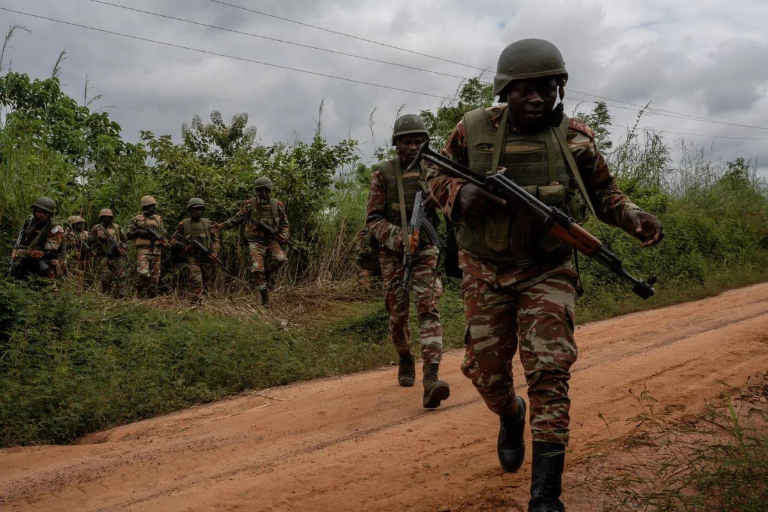
The question looms large over West Africa’s security landscape: as militant incursions escalate in northern Benin, can Berlin’s expanding military cooperation with Cotonou serve as a turning point in the Gulf of Guinea’s stability?
For decades, Benin and Germany have maintained a steady defense collaboration, primarily centered on training and technical assistance. However, recent developments signal a bold shift toward a more strategic and comprehensive partnership. With the growing threat of armed groups penetrating the northern border regions, Berlin is responding with a multi-layered approach that blends equipment deliveries, institutional exchanges, and long-term capacity-building initiatives. This evolving alliance reflects not only shared security priorities but also the broader geopolitical reshaping of West Africa’s coastal states.
From handouts to strategic cooperation: how Berlin is redefining its role
The transformation in bilateral defense relations is most visible through concrete actions. Between 2024 and 2026, Germany has accelerated arms deliveries to Benin, including non-lethal protective gear and critical operational equipment. In 2026 alone, Berlin transferred over 550 helmets and 1,266 mobile breathing devices to the Beninese armed forces, following an earlier shipment valued at three million euros—equipment that includes night vision devices and individual protection gear.
Yet the depth of this cooperation extends beyond hardware. In September 2026, Berlin unveiled a new assistance program focused on capacitating the Beninese engineering corps. Through targeted training and specialized logistical support, Germany aims to strengthen the army’s ability to sustain operations in remote and high-risk zones. This shift from temporary aid to structural support underscores a long-term vision of partnership, one that prioritizes local resilience over short-term fixes.
High-level dialogue: what’s really driving this military rapprochement?
The most telling indicator of this strategic pivot came in early October 2026, when German Ambassador to Benin Stefan Buchwald revealed plans for elite-level military staff talks. These high-stakes consultations, scheduled to begin later this year, are set to redefine the bilateral defense framework. More significantly, Buchwald confirmed that negotiations for a new bilateral defense agreement had reached an advanced stage—though details remain under wraps.
Such developments are not isolated. They reflect Berlin’s growing recognition of Benin as a linchpin in regional security architecture. Over the past forty years, Germany has trained more than 350 Beninese military personnel, creating a foundation of experience and trust upon which deeper collaboration can be built. This historical continuity now serves as the backbone for ambitious future initiatives.
Germany’s 2027 expert deployment: a game-changer or cautious engagement?
By late 2027, Benin may welcome up to eight German military experts—though their mission will be strictly advisory rather than combat-related. Focused on technical guidance, logistical planning, and counter-terrorism training, these specialists are expected to embed within Benin’s armed forces, offering real-time support in high-pressure environments. Their role is emblematic of Germany’s cautious yet committed approach: providing expertise without altering its non-interventionist stance.
This deployment, though modest in scale, carries symbolic weight. It signals Berlin’s willingness to deepen its involvement in Benin’s internal security challenges, particularly in areas bordering Burkina Faso and Niger—both hotbeds of militant activity. For Benin, such assistance could prove pivotal in reversing the recent tide of cross-border attacks.
Northern Benin: the frontline of a shifting security equation
The urgency behind Berlin’s expanding engagement cannot be overstated. Northern Benin, home to the Atacora and Alibori departments, has become a flashpoint for Islamist militant incursions originating from the Sahel. These groups exploit porous borders to carry out coordinated assaults, destabilizing communities and displacing thousands.
The Beninese government has prioritized bolstering intelligence networks, improving unit mobility, and enhancing logistical resilience. German support arrives at a critical juncture, offering not just equipment, but a structured framework for operational transformation. Berlin’s aim is twofold: safeguard Benin’s territorial integrity and prevent the Sahel’s instability from spilling into the relatively stable Gulf of Guinea.
Europe’s role: aligning bilateral and EU security strategies
Germany’s actions in Benin do not unfold in isolation. They are part of a larger European security agenda, coordinated under broader EU initiatives. In July 2024, the European Peace Facility allocated €35 million to support Benin’s armed forces, while the EU’s Gulf of Guinea Security and Defense Initiative—joining Benin, Togo, Ghana, and Côte d’Ivoire—provides a regional platform for shared threat response.
Berlin appears intent on harmonizing its bilateral assistance with these EU mechanisms. By doing so, Germany can amplify its impact, ensuring that interventions are coherent, complementary, and sustainable. This alignment also strengthens Europe’s collective voice in addressing West Africa’s evolving security challenges.
What lies ahead for Benin and Germany?
For Cotonou, the deepening of defense ties with Germany offers strategic leverage. Diversifying military partnerships allows Benin to access multiple sources of expertise, funding, and equipment—reducing dependence on any single ally. For Berlin, Benin represents a key partner in a region where geopolitical influence is increasingly shaped by counter-terrorism commitments.
Yet critical questions remain. Will the new bilateral agreement address cybersecurity, maritime surveillance, or border management—areas currently unaddressed? How will Germany’s expert deployment integrate with local forces? And crucially, what level of financial commitment will underpin this evolving partnership?
One thing is clear: the relationship between Berlin and Cotonou has moved far beyond transactional exchanges. It has entered a phase of strategic interdependence, where shared security goals now dictate the rhythm of collaboration. For both nations, the stakes are high—and the path forward will demand equal measures of resolve and adaptability.