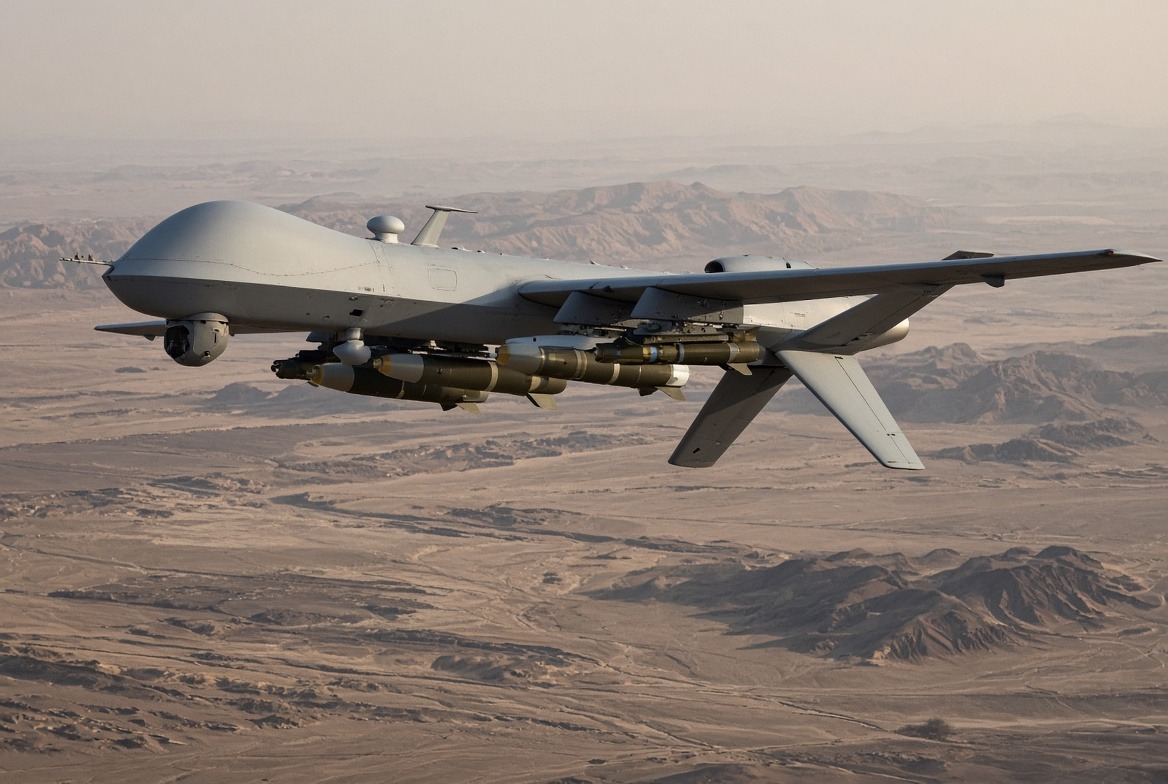
The relentless conflict in Sudan, now in its fourth year, has escalated into an era where no civilian space remains sacred. Hospitals, markets, and water plants—once symbols of resilience—are now targets in a war that spares neither the young nor the elderly. According to United Nations reports, drone strikes carried out by warring factions have resulted in the deaths of over 1,630 civilians between January and October 2026 alone. This staggering figure accounts for nearly 75% of all civilian casualties documented in the country during that timeframe.
Civilian infrastructure: the new battleground in Sudan’s shadow war
The UN’s sobering data is more than a grim tally—it exposes a calculated campaign designed to cripple the very foundations of daily life. Documented incidents include:
- Multiple strikes on bustling marketplaces where families rely on food supplies to survive
- Unprovoked shelling of civilian vehicles, healthcare centers, and schoolyards, turning public spaces into death traps
- Systematic destruction of fuel reserves, power grids, and water purification plants, plunging entire regions into darkness and cutting off access to essential services like dialysis and clean drinking water
The shift from traditional warfare to remote, indiscriminate drone attacks has erased any distinction between combat zones and civilian havens. Today, no square, clinic, or bread queue is safe from the sky’s descent into carnage.
Kordofan and Darfur: the epicenters of a silent siege
While violence has flared across Sudan, the most devastating impact has centered in the western and southern regions, particularly Kordofan and Darfur. In Kordofan alone, over two-thirds of the recorded civilian fatalities have occurred. The situation in Darfur—a region synonymous with genocide in the early 2000s—has now entered a new, aerial phase of terror. Communities that once endured unimaginable horror on the ground now face the same fate from above.
Drone warfare has obliterated the boundaries between war and peace. Schools, hospitals, and water reservoirs lie in ruins, transforming entire communities into zones where survival itself is a gamble. With over 25 million Sudanese living under the specter of sudden, unpredictable violence, the nation has become a stark warning of how modern warfare spares no one.
From hope to hell: the unraveling of a nation
To understand Sudan’s descent into drone-driven devastation, we must revisit its recent history—a tale of broken promises and escalating brutality.
A revolution betrayed: the rise and fall of a fragile democracy
For three decades, Sudan was shackled under the iron rule of Omar al-Bashir. In April 2019, a historic uprising finally toppled his regime, giving birth to the Sovereignty Council—a fragile coalition of civilians and military leaders. At its helm stood General Abdel Fattah al-Burhan, leader of the Sudanese Armed Forces (SAF), and his controversial second-in-command, Mohamed Hamdane Daglo, known as “Hemetti.” A former commander of the Janjaweed militia, Hemetti had transformed his paramilitary group, the Rapid Support Forces (RSF), into a formidable military and economic force, enriched by gold mining and illicit trade.
The coup that shattered Sudan’s fragile future
In October 2021, the generals turned on their civilian partners, staging a coup under the pretext of safeguarding “national stability.” The coup stripped democratically elected leaders of power and abandoned Sudan’s transition toward democracy, dashing the hopes of millions.
The spark that ignited a nation’s descent into chaos
On 15 April 2023, what began as a dispute over the integration of roughly 100,000 RSF fighters into the regular army spiraled into all-out war. Heavy fighting erupted in central Khartoum before engulfing Darfur and Kordofan. What was intended as a swift consolidation of power devolved into a campaign of total annihilation, leaving a trail of devastation in its wake.
The drone arms race: Sudan’s skies become a death corridor
As international arms embargoes collapsed under global rivalries, both factions raced to acquire armed drones. What started as a tool for surveillance evolved into the weapon of choice for delivering terror from afar. By late 2025, entire cities like El-Fasher had fallen. By 2026, the skies over Sudan had become a corridor of death, leaving millions to face starvation, displacement, and the constant dread of an unseen strike.
Accountability in the crosshairs: can the world stop the slaughter?
Human rights organizations and UN agencies have condemned these attacks as clear violations of international humanitarian law. Volker Türk, the UN High Commissioner for Human Rights, has warned that the deliberate targeting of civilians may amount to war crimes under the Geneva Conventions. Yet, despite global condemnation and urgent calls for accountability, the flow of foreign arms continues unchecked, perpetuating a cycle of ever-increasing violence.
The question facing the international community is no longer theoretical: how much longer will the world stand idle as Sudan’s skies unleash fire upon its people?