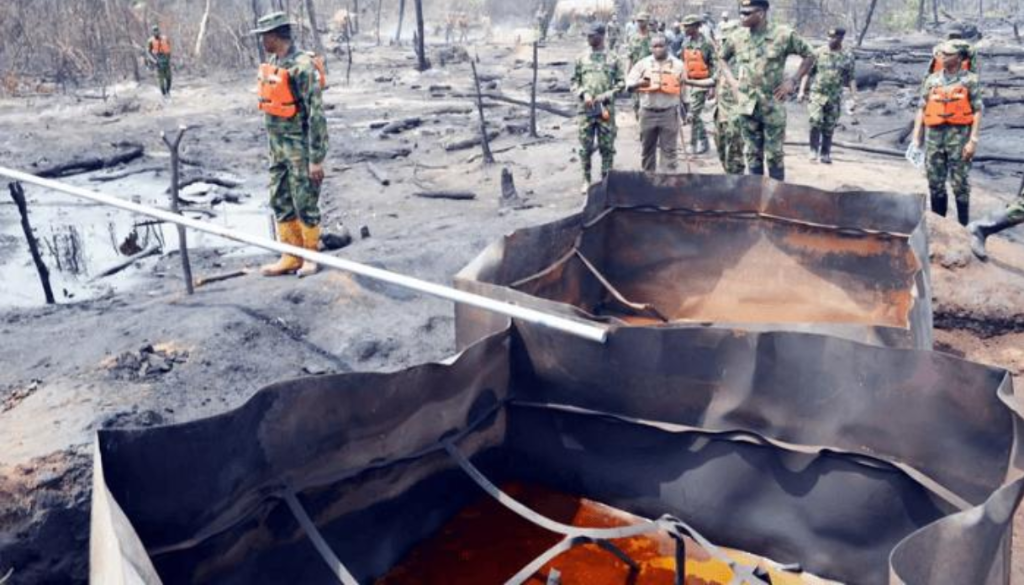
The uncovering of a massive unauthorized oil processing facility in Ogun State has thrown Nigeria’s fight against illegal resource exploitation into sharp relief. Authorities allege Chinese nationals operated the clandestine refinery in Ogere, raising critical questions about the integrity of the country’s hydrocarbon sector, the transparency of fuel distribution networks, and the very sovereignty over its natural wealth.
How a three-hectare underground operation evaded detection for months
Investigators from the Economic and Financial Crimes Commission (EFCC) raided the facility and found evidence of a sophisticated, multi-stage refining process spanning more than three hectares of land. The site featured an intricate web of underground storage tanks with a combined capacity of 90,000 liters, in-line heating units, separation chambers, and cooling infrastructure.
The operation relied on so-called “black sludge”—heavy petroleum residues extracted from facilities in Warri (Delta State) and Port Harcourt (Rivers State)—which were trucked hundreds of miles to the clandestine plant. Workers there subjected the sludge to controlled heating and chemical separation to produce a diesel-like fuel known locally as Automotive Gas Oil (AGO).
Untangling the supply chain: who financed, supplied, and distributed the illegal fuel?
Preliminary probes reveal a logistics network stretching from coastal depots to remote processing sites. Key gaps remain: the identity of raw-materials suppliers, the financiers behind the equipment, and the end buyers of the finished product. Evidence collected suggests the black sludge arrived on a regular schedule, implying the existence of pre-existing transport agreements and storage coordination.
Investigators are now examining potential local collaborations that may have enabled the facility’s continued operation. While no institutional complicity has been confirmed, the scale of the refinery indicates at least passive tolerance by some actors within the administrative chain.
Environmental and fiscal fallout: why illicit refineries threaten Nigeria’s future
Environmental risks include uncontrolled emissions, soil contamination from unlined tanks, and the poisoning of aquifers that local communities depend on for drinking water. The absence of proper ventilation or containment systems also increases the likelihood of catastrophic fires and explosions that could endanger nearby villages.
Economically, the plant diverted millions of naira from state coffers by skirting taxes, royalties, and mandatory inspections. Legitimate refineries and licensed marketers are forced to compete against an untaxed, unregulated fuel supply, undermining the formal economy. Worse, the substandard AGO produced on-site can damage vehicle engines and industrial machinery, accelerating wear and tear across the transportation and manufacturing sectors.
China’s footprint in Nigeria: overstepping or oversight?
The incident arrives amid deepening Chinese investment in African energy, mining, infrastructure, and manufacturing. Beijing has repeatedly emphasized its commitment to sustainable and lawful business practices, and the Nigerian government has not publicly linked this specific operation to state policy in Beijing.
However, the episode underscores the need for enhanced due diligence and stricter oversight of foreign enterprises operating in Nigeria’s sensitive sectors. The challenge for Abuja is to ensure that the rule of law applies uniformly, regardless of the nationality of investors or operators.
Sovereignty at stake: what comes next for Nigeria’s oil governance?
Dismantling the refinery is only the first step. Authorities must now trace financial flows, identify the financiers and directors behind the venture, and reconstruct the full distribution chain that funneled the illegal fuel into the market. The upcoming judicial proceedings will reveal whether the operation was an isolated criminal endeavor or part of a larger, systemic breach of Nigeria’s petroleum laws.
Nigeria’s vast oil reserves once symbolized the promise of economic self-determination. Today, the discovery of this clandestine facility highlights a harsh truth: natural wealth alone does not guarantee sovereignty. True control requires robust institutions, relentless enforcement, and an uncompromising stance against those who exploit regulatory gaps—whether domestic or foreign.