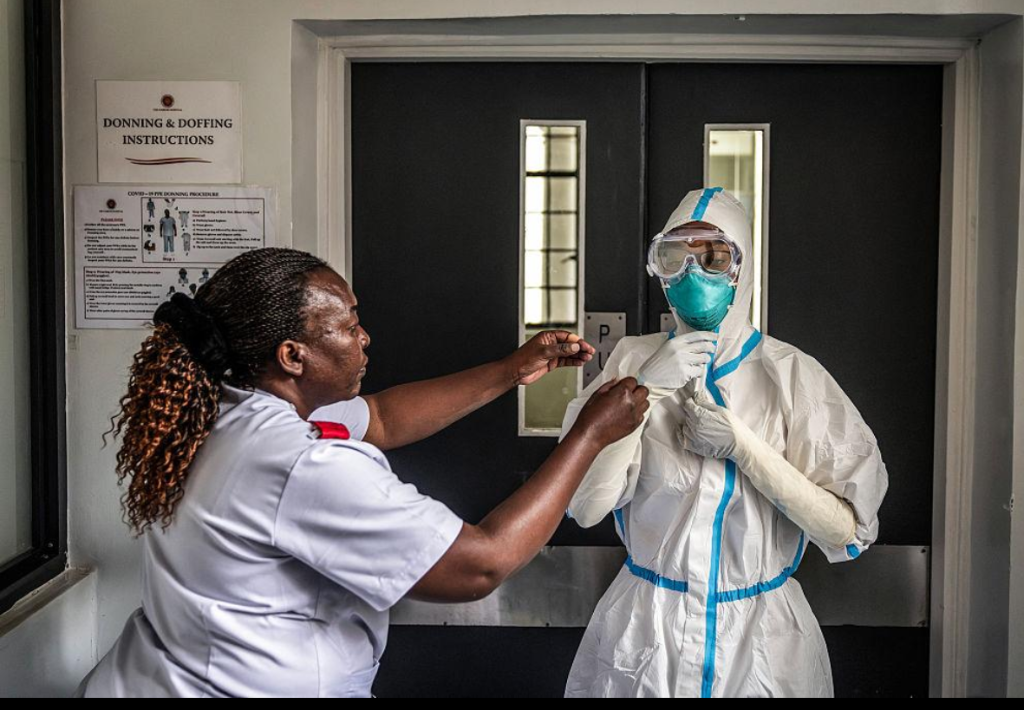
In the heart of Abuja, a silent battle against a deadly intruder is unfolding. For the first time in years, Nigeria has confirmed a case of Ebola virus disease—sparking urgent questions about the country’s preparedness and Africa’s wider resilience against this relentless threat. The announcement, made by Health Minister Muhammad Ali Pate, reveals a high-stakes challenge: a woman recently returned from East Africa has tested positive for the Bundibugyo virus, a strain distinct from the deadly 2014–2016 West African epidemic.
From Central Africa to Nigeria’s doorstep
The confirmed case in Nigeria marks the fifth detection of the Bundibugyo virus outside its original epicenter in the Democratic Republic of Congo (DRC), where the outbreak was declared in May 2026. While the DRC remains the epicenter, neighboring and distant countries are now bracing for potential spillovers. The Kenya, for instance, has already reported nine infections linked to travelers from the DRC, highlighting how mobility fuels the risk of cross-border transmission.
The Nigerian patient—a professional who recently traveled in Uganda—developed symptoms on October 7 and sought care in a private health facility in Abuja on October 11. Lab confirmation arrived on October 20, confirming fears that Ebola’s reach extends far beyond its known zones. Authorities are now racing to trace 44 individuals who may have come into contact with the patient, a critical step to prevent a spark from becoming a flame.
Can West Africa repeat the lessons of 2014?
The shadow of the 2014–2016 Ebola crisis looms large over West Africa. That outbreak, which devastated Guinea, Liberia, and Sierra Leone with over 11,000 deaths, also touched Nigeria—but the country managed to contain the spread swiftly thanks to rapid detection and robust contact tracing. Today, with the Bundibugyo strain at its doorstep, Nigeria confronts a pivotal test: can it replicate the successes of the past?
Health authorities insist the situation is under control. The patient is isolated and receiving care, while teams from the Nigeria Centre for Disease Control (NCDC), federal health ministry, and international partners like WHO and Africa CDC are coordinating a rapid response. Surveillance at entry points, laboratory diagnostics, and strict infection control measures are now central to the strategy.
Breaking down Ebola’s transmission and containment
Ebola’s insidious nature lies in its symptoms: early signs include fever, fatigue, muscle pain, and gastrointestinal distress, which can escalate to severe bleeding and organ failure. Transmission occurs through direct contact with bodily fluids of symptomatic patients or contaminated objects—not through casual proximity. This means that meticulous tracing of contacts and early medical intervention are the only ways to halt the chain of infection.
Public awareness is equally vital. Without alarmism, authorities must emphasize the importance of early medical consultation for anyone with compatible symptoms or exposure risk. Self-medication or avoidance of care only fuels the spread. Clear, consistent communication can prevent panic and misinformation from undermining containment efforts.
Time is of the essence in Ebola response
A single imported case does not necessarily signal an epidemic—but it is a warning shot. The path forward depends on the effectiveness of contact tracing, the detection of any secondary cases, and the agility of Nigeria’s health system. With the most populous country in Africa now on high alert, the stakes couldn’t be higher.
The Bundibugyo strain’s journey from Central to West Africa underscores a harsh reality: in a world of interconnected travel and commerce, diseases do not respect borders. Nigeria’s response will be closely watched by its neighbors, who are equally vulnerable. Success will hinge on speed, coordination, and the ability to act before a localized threat becomes a regional catastrophe.