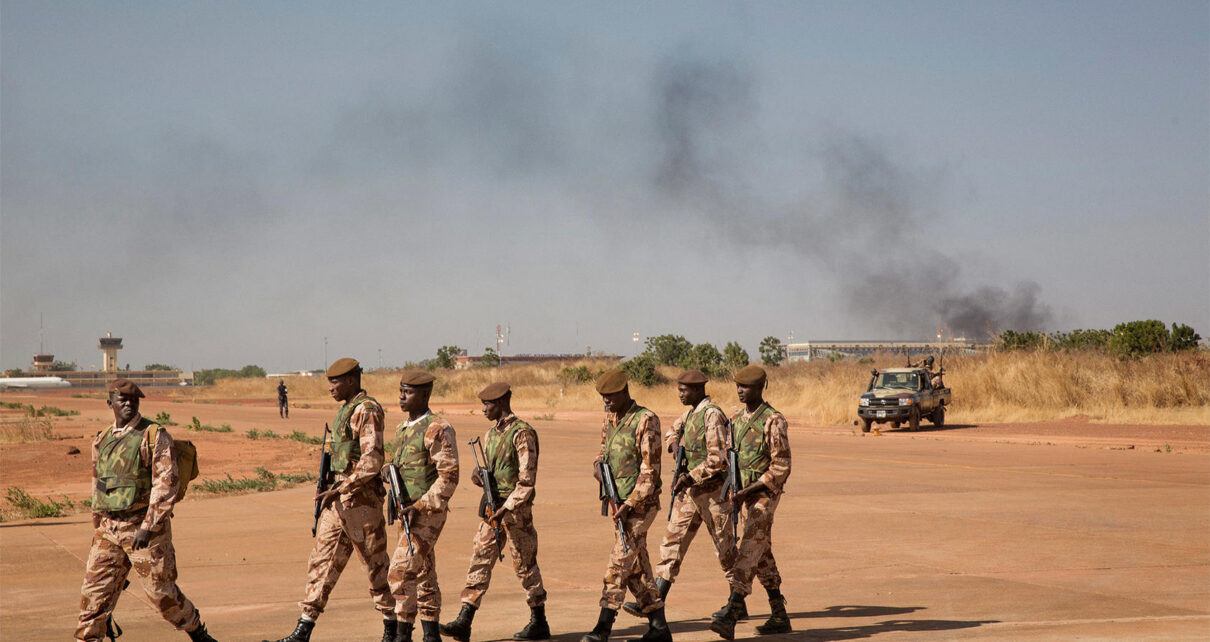
Following a long period of intense turmoil and persistent instability, Mali has been plunged back into a severe armed conflict with potentially far-reaching consequences. On Saturday, April 25, a massive and coordinated assault was launched by Tuareg insurgents from the Front de libération de l’Azawad (FLA) alongside JNIM fighters, an Al-Qaïda affiliate. This major operation targeted seven key Malian locations, including Bamako and its nearby military base in Kati, the central towns of Konna, Mopti, and Sévaré, as well as Gao and Kidal in the north.
The strategic northern stronghold of Kidal is now reported to be under the full control of the insurgents. The attackers employed a sophisticated array of tactics, including suicide vehicle-borne improvised explosive devices (VBIEDs), kamikaze drones, and direct ground assaults. Reports indicate the offensive began early Saturday morning, with the JNIM and the FLA—the rebranded Coordination des mouvements de l’Azawad (CMA)—claiming responsibility for strikes against the presidential residence, the Ministry of Defence, and the Modibo Keita International Airport in Bamako.
Casualties and the fall of high-ranking officials
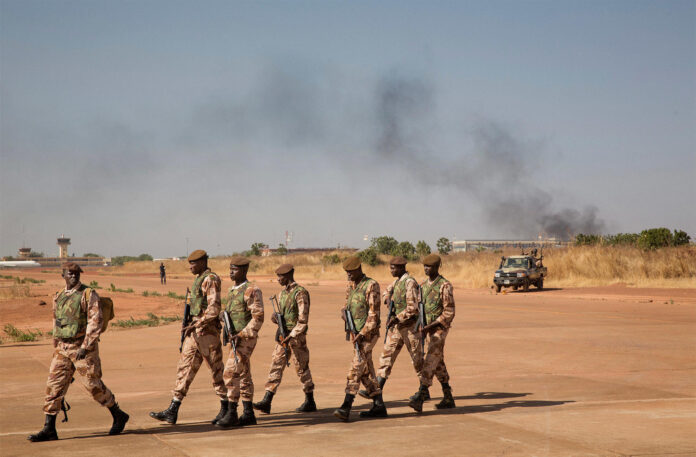
The transition government has officially confirmed the death of Sadio Camara, the Minister of Defence, who was killed during a suicide attack on his home in Kati. The explosion also claimed the lives of his wife, two children, and several civilians. Sadio Camara was a pivotal figure in the Mali military junta and a primary architect of the country’s security alliance with Russia. Additionally, Modibo Koné, the head of the State Security Agency, was wounded in the fighting, while the junta leader, Assimi Goïta, was reportedly evacuated to safety from the Kati stronghold.
In response to the deteriorating security situation, authorities imposed a 72-hour curfew in Bamako and suspended operations at the international airport. General Oumar Diarra, the Chief of General Staff, characterised the attacks as part of a “destabilisation plan” involving both domestic and foreign actors. While the military claims to have neutralised over 200 combatants, they acknowledged a “redeployment” of forces away from Kidal toward Anefis, framing it as a tactical move to protect civilians.
Russian Africa Corps and the Ukrainian connection
The Africa Corps, the Russia-controlled paramilitary group that succeeded Wagner, announced its withdrawal from Kidal alongside the Malian army. They stated the retreat was a mutual decision with Bamako to evacuate wounded personnel and heavy equipment. Interestingly, the FLA separatists claimed they had reached a deal with the Russian forces to allow their safe exit from the combat zone.
Russian sources have alleged that the offensive involved up to 12,000 fighters and was supported by Ukraine and Western intelligence agencies. They claim to have thwarted a full coup attempt and prevented a “Syrian scenario” in Mali. These allegations mirror previous incidents, such as the battle at Tinzaouaten in July 2024, where Ukraine‘s military intelligence (GUR) was accused of providing tactical information to Tuareg rebels. These events led Mali to sever diplomatic ties with Kyiv, although Ukraine continues to deny providing direct support to groups designated as terrorists.
A shifting alliance in the Azawad region
This weekend’s events highlight a strengthening operational alliance between the FLA—which seeks autonomy for the Azawad region—and the jihadist JNIM. Although their long-term political goals differ significantly, they have found common ground in their opposition to the military junta in Bamako and their Russian allies. The 2015 Algiers peace agreements have effectively collapsed since the withdrawal of MINUSMA, leading the Tuareg movements to coordinate more closely with any faction capable of challenging the central government’s authority.