journalists under siege in Mali amid rising press freedom crackdowns
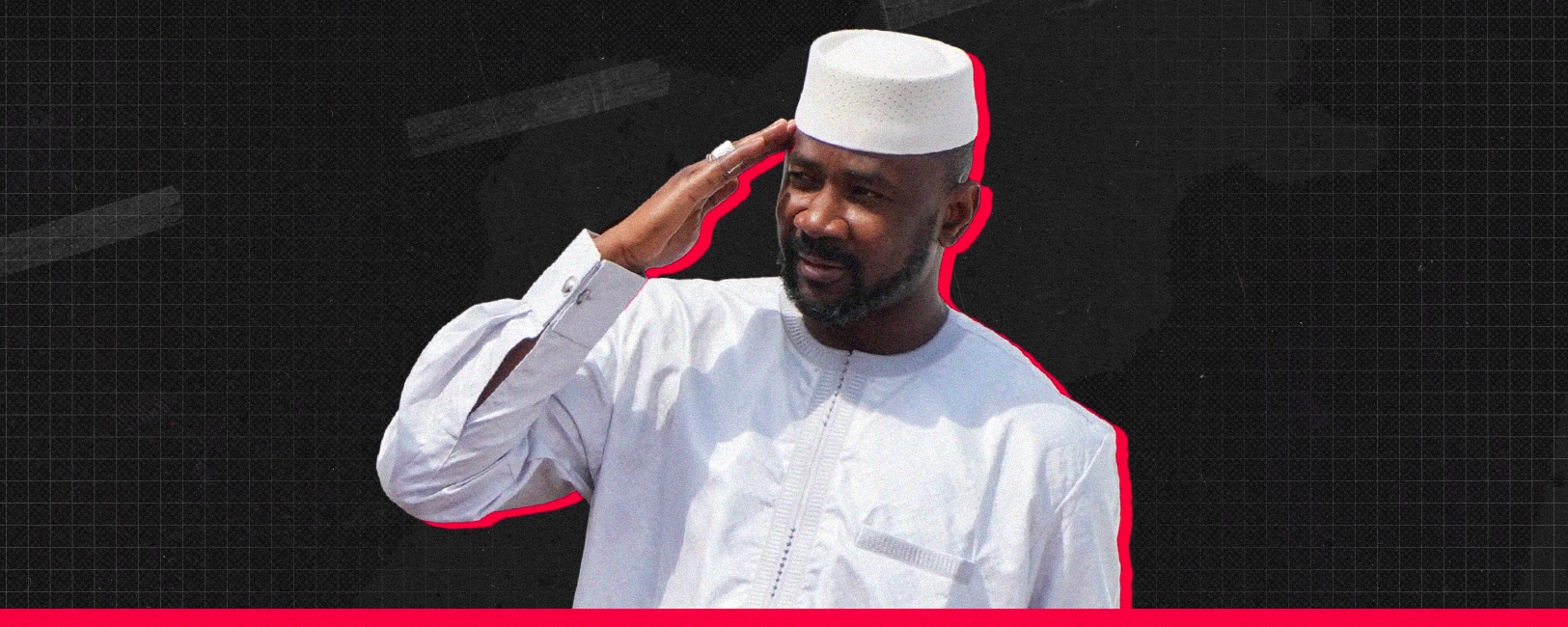
The recent suspension of a live talk radio show and the arrests of journalists Chahana Takiou and Abderhmane Keïta this June underscore the escalating repression faced by media professionals in Mali. Over nearly six years of political transition under Assimi Goïta’s leadership, press freedom has deteriorated sharply, with authorities increasingly weaponizing the justice system to silence dissenting voices. Reporters Without Borders (RSF) warns of the growing threats to press freedom in Mali, already weakened by persistent security challenges, and urges authorities to halt these repressive measures to restore full access to information for the public.
June has been a particularly harsh month for Mali’s press landscape. On June 19, listeners lost access to “Allo Klédu”, a live talk radio program broadcast by the private station Klédu. The High Authority for Communication (HAC) suspended the show for two months, claiming that “several broadcasted interventions violated audiovisual communication regulations”. The decision lacks justification and appears to be an abuse of power.
The next day, following the Pan-African Media Forum—held in Bamako from June 3 to 6 to advocate for press freedom across Africa—directors of 22 Septembre (Chahana Takiou) and Le Témoin (Abderhmane Keïta) were arrested. This brings the total number of detained journalists in Mali to three, all charged under the controversial cybercrime law. Takiou faces accusations of “damaging state credibility through the judiciary”, while Keïta is accused of “regionalist incitement threatening national unity and state credibility.”
These recent crackdowns highlight the increasingly oppressive climate for journalists in Mali, a country that has plummeted 22 places in the RSF World Press Freedom Index over five years, dropping from 99th to 121st place.
“Before General Goïta’s coup, Mali boasted one of West Africa’s strongest media traditions. Yet in the past six years, alongside worsening security threats, the country has seen systematic press freedom violations affecting every sector: international outlets suspended, local media silenced or forced to adopt ‘patriotic’ narratives, journalists jailed, cybercrime laws weaponized, financial strangulation, and logistical hurdles. RSF calls on General Goïta to end this repression against media professionals and secure the release of Youssouf Sissoko, Chahana Takiou, and Abderhmane Keïta.”
The detention of the two journalists has drawn widespread condemnation from press advocacy groups like the Maison de la Presse, which, in a statement, lamented the judiciary’s failure to foster a “peaceful and collaborative environment” despite multiple efforts to bridge gaps between media and justice.
Over the past five years, journalists in Mali have faced multifaceted pressures, caught between authoritarian authorities and armed extremist groups. The Malian government has intensified efforts to enforce patriotic information narratives, leveraging repressive legislation and a media regulatory body—the HAC—perceived as a tool to shield the regime from criticism.
The cybercrime law: a weapon against dissent
Chahana Takiou and Abderhmane Keïta—scheduled for trial on July 27 and August 17, respectively—are not the first victims of the cybercrime law. Earlier, journalist Youssouf Sissoko, publisher of L’Alternance, was sentenced on March 23, 2026, to two years in prison and a 1 million FCFA (€1,525) fine for publishing an opinion piece critical of Niger’s transitional leader, General Abdourahamane Tiani.
This law, widely contested by journalists, has also been used to detain Boubacar Traoré, publisher of L’Empire, in November 2025. Traoré was charged with defamation by the owner of Petro-Bama following an article alleging land disputes involving the latter.
From international censorship to local media suppression
In March 2022, the suspension of Radio France Internationale (RFI) and France 24 across Mali marked the government’s overt campaign against international media. Since then, four French outlets—TV5 Monde, France 2, TF1, and LCI—have joined the list of suspended networks.
The crackdown soon extended to local media. The June suspension of Allo Klédu is the latest in a series of punitive measures. In 2025, stations like Aadar Koïma (Gao), Aadar Koukia (Ansongo), and Radio Kayira (Kolondiéba) were shut down for three months for airing criticism of military conduct or government policies.
Joliba TV News, a symbol of independent journalism in Mali, faced repeated suspensions: first in 2023 for an editorial deemed too critical, and again in 2024, when its license was revoked for six months following a complaint from Burkina Faso’s media regulator. Though it resumed broadcasts on June 30, 2025, the channel’s financial strain reflects the broader suffocation of dissent.
Self-censorship: the new norm
A climate of fear has fostered widespread self-censorship, as documented in RSF’s 2023 report, In the Shoes of a Journalist in the Sahel. This trend was evident after the April 25, 2026, attacks: while international outlets reported the assassination of Defense Minister Sadio Camara, many local media outlets delayed coverage, awaiting military confirmation to avoid reprisals.
Economic asphyxiation: a dying press
Financial strangulation compounds the crisis. Public funding for the press—established in 1996 by then-President Alpha Oumar Konaré to support private media—has been withheld since January 2021. Once capped at 200 million FCFA (€300,000) annually, this aid was vital for independent outlets’ survival. Its withdrawal has pushed many to the brink, exacerbated by the ban on several NGOs and the departure of international organizations that once bought ad space and funded educational content.
A perilous security landscape: journalists under fire
Since 2021, Mali’s journalists have faced a dual threat: armed groups and state repression. Militants from the Group for the Support of Islam and Muslims (JNIM) have abducted or killed several reporters.
- In April 2021, French journalist Olivier Dubois, correspondent for Libération and Le Point, was abducted in Gao and held until his release on March 20, 2023.
- In 2020–2021, Hamadoun Nialibouly and Moussa M’Bana Dicko, community radio journalists, were abducted in central Mali; their cases remain unresolved.
- In 2023, Abdoul Aziz Djibrilla (radio Naata) was killed, Harouna Attino (radio Alafia) was injured, and Saleck Ag Jiddou and Moustapha Koné (radio Coton Ansongo) were abducted and remain missing after an armed attack.
Even state-aligned journalists have not been spared. In October 2025, Daouda Koné and cameraman Salif Sangaré of the Office de Radio et Télévision du Mali (ORTM) were abducted between Sévaré and Konna in central Mali and released on December 29.