Delegation of powers signals shift toward collective governance
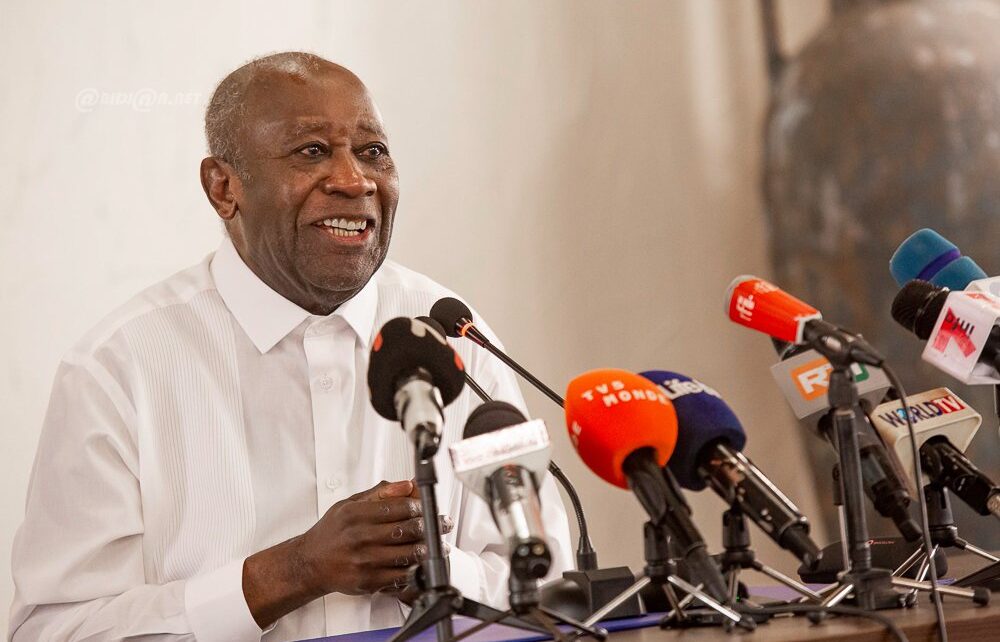
In a strategic move to reinforce the operational framework of the Parti des Peuples Africains-Côte d’Ivoire (PPA-CI), former Ivorian President Laurent Gbagbo has announced the delegation of key presidential prerogatives to a five-member leadership team. This decision, formalized through an official communiqué, marks a deliberate shift toward a more inclusive and collaborative decision-making structure within the party.
New leadership roles defined
The restructuring includes the appointment of five senior officials, each entrusted with specific responsibilities to enhance the party’s efficiency and cohesion:
- Assoa Adou has been designated as the first vice-president, with a mandate to oversee compliance with the party’s statutes and internal regulations across all levels.
- Hubert Oulaye assumes the role of second vice-president, responsible for overseeing party activities and presiding over meetings of the central committee.
- Dano Djédjé Sébastien has been named president of the strategic and political council, tasked with providing general oversight and supervisory leadership over the party’s operations.
- The remaining two appointees have been assigned complementary roles to ensure balanced governance and operational continuity.
Vision behind the delegation
Gbagbo, who remains the titular president of the PPA-CI, emphasized that this reorganization reflects a deeper commitment to collective leadership. In his statement accompanying the announcement, he underscored that the strength of the party lies not in the office of a single individual, but in the unity, discipline, and coordinated efforts of its members.
“This distribution of powers among our leadership team is a deliberate choice to foster a culture of collaboration, where responsibility is shared and action is unified,” Gbagbo stated. “Together, we can overcome challenges and serve the Ivorian people more effectively.”
He further highlighted the importance of unity and collective action as essential pillars for navigating adversity and advancing the party’s mission. This leadership transition is seen as a strategic step toward enhancing the PPA-CI’s organizational resilience and responsiveness to the needs of its constituents.
Implications for the PPA-CI
The delegation of powers is expected to streamline decision-making processes and strengthen the party’s internal governance. By distributing leadership responsibilities, the PPA-CI aims to foster greater accountability, transparency, and effectiveness in its operations. This move also signals a renewed focus on grassroots engagement and strategic alignment with the party’s long-term vision.