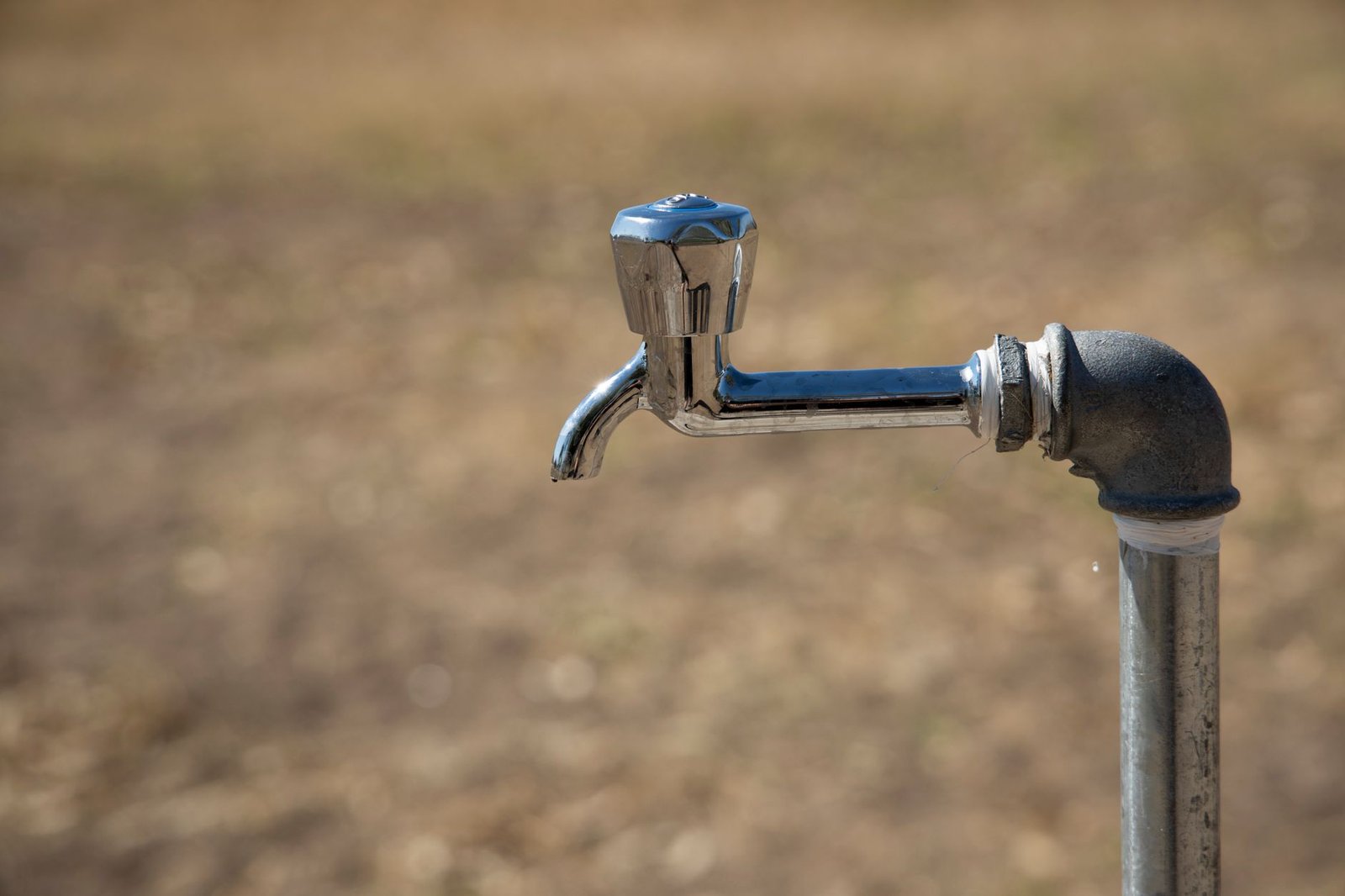
Libreville is grappling with an unprecedented water shortage, forcing authorities to declare a state of hydrological emergency across the capital and its surrounding areas. Residents have endured days without running water, while long queues form around the few remaining distribution points. In local markets, vendors sell water in jerrycans at inflated prices, reflecting the desperation of a population pushed to its limits.
The crisis stems from two converging factors. First, an unusually weak rainy season has drastically reduced water levels in reservoirs and intake points that supply the city. Second, the aging infrastructure—dating back decades—suffers from severe inefficiencies, with leaking pipelines and underperforming treatment plants unable to meet demand. The result is a fragile system on the brink of collapse, unable to withstand even minor disruptions.
Outdated infrastructure threatens Gabon’s resilience
The water crisis in Libreville highlights fundamental flaws in Gabon’s approach to managing essential services. For years, water distribution has been handed between the Société d’énergie et d’eau du Gabon (SEEG) and state-led initiatives, with no long-term investment strategy ever taking root. Meanwhile, the capital’s population—now exceeding 700,000 with its sprawling outskirts—has grown faster than the city’s water production capacity. Each dry spell now triggers targeted water cuts in peripheral neighborhoods, straining an already fragile balance.
The ongoing political transition, sparked by the regime change in August 2023, has placed this issue at the forefront of national priorities. The government faces a narrow window to prove its ability to deliver tangible solutions. The declared hydrological emergency has unlocked emergency measures, including accelerated public funding, equipment requisitions, and interministerial coordination. However, these steps will only yield lasting results if backed by a credible, multi-year investment plan.
Social unrest in Libreville tests the transition’s resolve
On the ground, residents are improvising solutions. Authorities have deployed water tankers, while municipal authorities organize sporadic distributions. Private boreholes and jerrycan resale markets have emerged as stopgap measures, adding layers of complexity to the crisis. Businesses, hotels, and hospitals are also feeling the strain, with operational disruptions translating into tangible economic losses. In healthcare facilities, the lack of water raises serious concerns about hygiene standards and the risk of waterborne diseases.
Short-term responses are underway, including expedited repairs to treatment plants, imports of pumping equipment, and tapping into underground water reserves. Yet the financial burden looms large over the transition. Multilateral lenders, including the African Development Bank and the World Bank, have previously funded water infrastructure projects in Libreville. Their renewed involvement will depend on clear governance reforms and a defined role for the historic operator.
Climate warning: Gabon’s crisis mirrors a regional trend
Libreville’s water shortage is not an isolated case but part of a broader trend affecting several Central and West African capitals, including Kinshasa, Brazzaville, Douala, and Abidjan. These cities face recurring water access challenges, driven by rapid urban growth, underinvestment, and increasingly erratic rainfall patterns. For Gabon—a country once seen as water-rich due to its dense rainforests—the current crisis serves as a stark reality check.
Resolving the emergency will require a three-pronged approach: rehabilitating existing infrastructure, diversifying water sources, and overhauling the institutional framework governing public water services. The political timeline of the transition leaves little room for delay; without swift action, social tensions risk overshadowing upcoming electoral processes.