The eastern regions of the Democratic Republic of the Congo (DRC) are facing persistent security challenges, with ongoing hostilities between government forces and the M23 rebel group—allegedly backed by Rwanda—continuing to destabilize the North Kivu and South Kivu provinces. Against this backdrop, the United Nations Organization Stabilization Mission in the DRC (MONUSCO) has reaffirmed its commitment to supporting peace processes, including the Washington Agreement and the African Union-backed Doha Process, aimed at restoring stability.
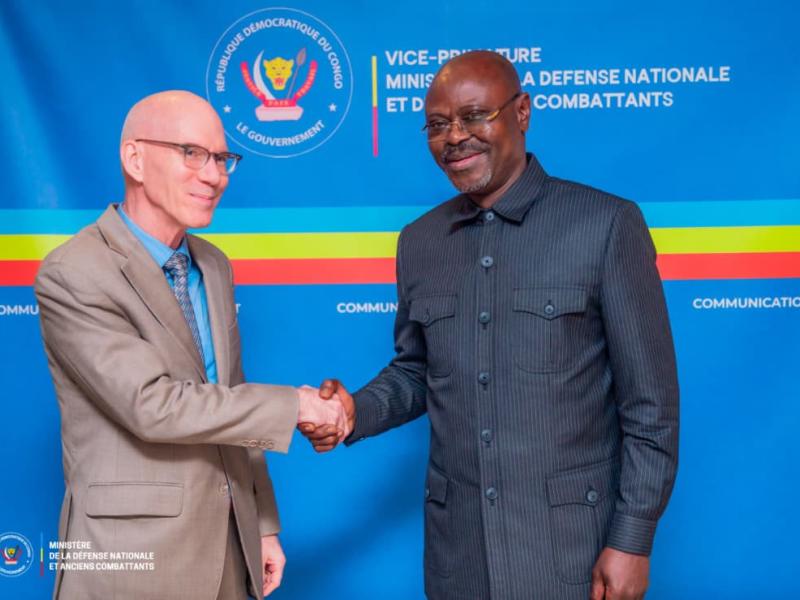
James Swan, the UN Secretary-General’s Special Representative and head of MONUSCO, made this commitment clear following a high-level meeting with Guy Kabombo, Deputy Prime Minister and Minister of National Defense and Veterans Affairs, held at the Defense headquarters in Kinshasa on July 2, 2026.
Strengthening operational and logistical capacities
The MONUSCO chief highlighted the mission’s enhanced operational and logistical support to the Enhanced Joint Verification Mechanism Plus (EJVM+), a critical tool in the regional push for peace. This initiative aligns with the mission’s mandate, particularly after the adoption of UN Security Council Resolution 2808 in December 2025, which expanded MONUSCO’s role in ceasefire monitoring.
Swan emphasized the mission’s readiness to deploy to identified sites once official designations are made, stating, « We have already contributed to the implementation of the EJVM+ mechanism. According to our mandate, we are responsible for providing logistical and security support to its activities. Following additional requests, we have bolstered our logistical assistance and are already planning to support monitoring missions at the designated ceasefire sites. We stand ready to act as soon as the mechanism finalizes its site selections. »
The EJVM+ is tasked with verifying commitments made under the Washington Agreement, a landmark pact aimed at fostering peace and security in the Great Lakes region. The agreement, discussed during a recent evaluation meeting in London, has garnered international support, including calls from the United States and other partners for the rapid deployment of the first ceasefire verification mission in eastern DRC.
Collaboration with national and regional partners
During the meeting, Swan and Kabombo also reviewed broader aspects of MONUSCO’s mandate, stressing the importance of closer collaboration between the UN mission, the DRC’s Ministry of National Defense, and the Forces Armées de la République Démocratique du Congo (FARDC). With over 8,000 military personnel deployed, MONUSCO continues to work closely with FARDC, particularly in the Grand Nord and Ituri regions.
The mission’s priorities include protecting civilians, advancing the Disarmament, Demobilization, and Reintegration (DDR) of armed groups, and supporting security sector reform. Swan noted that these efforts are essential to addressing the root causes of conflict and ensuring sustainable peace in the region.
Following international pressure—including calls from the UN Security Council—both DRC and Rwanda have reiterated their commitment to expediting the implementation of the Washington Agreement. In a joint statement, the two countries agreed to « request an adjustment to the EJVM+ mandate to include verification of commitments made under the Washington Agreement » and to « support the rapid deployment of the EJVM+ to undertake its first verification mission. »
The leaders also pledged to « create political and security conditions conducive to joint verification processes, » a prerequisite for the effectiveness of the peace mechanisms outlined in the agreement.
A critical moment for regional stability
With the EJVM+ poised to play a pivotal role in monitoring the ceasefire, the international community is closely watching developments in eastern DRC. The mission’s success will depend on coordinated efforts between national authorities, regional partners, and the global community to ensure that peace efforts translate into tangible stability on the ground.
The ongoing crisis in eastern DRC underscores the urgent need for collective action. As MONUSCO and its partners prepare to operationalize the EJVM+, the world is reminded of the fragile yet critical path toward lasting peace in the region.