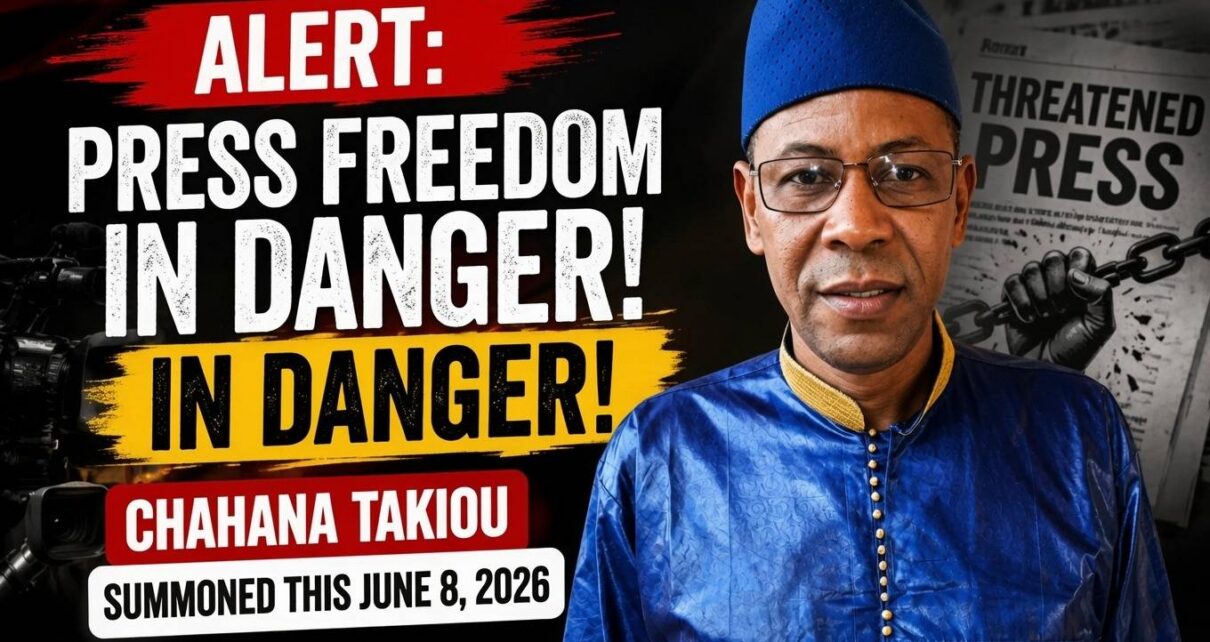
In Bamako, the political climate has grown increasingly tense as Chahana Takiou, editor-in-chief of the Malian weekly Le 22 Septembre, faces a court summons on June 8, 2026. The prosecutor’s office of the cybercrime unit has ordered his appearance at 1:00 PM, a move widely seen as retaliation for his recent public critiques of the military-led transition government.
A judicial weapon against dissenting voices
The cybercrime division, originally tasked with combating online fraud and misinformation, has evolved into a tool of repression. Journalists and activists who challenge official narratives now find themselves summoned under pretexts tied to vague cybercrime laws. For Takiou, this summons is not just an administrative formality—it is a direct threat to his professional integrity and personal safety.
Press freedom under siege in Mali
The once-vibrant Malian press now operates in a climate of fear. What was once hailed as a beacon of democratic pluralism in West Africa has become a shadow of its former self. Independent journalism is increasingly treated as an act of defiance, with state-aligned authorities wielding regulatory and legal pressure to silence criticism.
The military authorities have made it clear: only uncritical support for their policies will be tolerated. Media outlets that dare to question governance failures, security lapses, or economic mismanagement face immediate consequences—suspensions, fines from the High Authority for Communication (HAC), and relentless administrative harassment.
Disappearances and intimidation: the tools of control
The targeting of Chahana Takiou is not an isolated incident but part of a broader crackdown. Journalists, civil society leaders, and even ordinary citizens expressing dissent online risk arbitrary detention. Reports of enforced disappearances have surged, with individuals seized by unidentified armed men—often linked to state intelligence—only to resurface weeks later, if at all. This climate of terror is designed to crush dissent and enforce absolute conformity.
A fractured profession, but resilient solidarity
Despite the repression, Mali’s press corps has not remained silent. Professional associations have rallied in support of Takiou, warning of the dangers posed by the militarization of justice. Journalists argue that constructive criticism is vital for national resilience, especially amid escalating security and humanitarian crises.
Yet their appeals fall on deaf ears in Bamako’s corridors of power. For the current leadership, any form of dissent is equated with treason, effectively shutting down democratic debate and entrenching authoritarian rule.
The cost of silencing the truth
By summoning Chahana Takiou, the military-led government has escalated its assault on press freedom. The message is unmistakable: no criticism will be permitted, no matter how justified. This strategy of coercion does nothing to address Mali’s profound challenges—it only deepens societal fractures and undermines trust in institutions.
As the country grapples with insurgency, economic stagnation, and growing instability, the suppression of independent journalism does not offer solutions—it only delays them. The future of free speech in Mali will be decided not in the field of battle, but in the courtrooms of Bamako, where the fate of journalists like Takiou hangs in the balance.