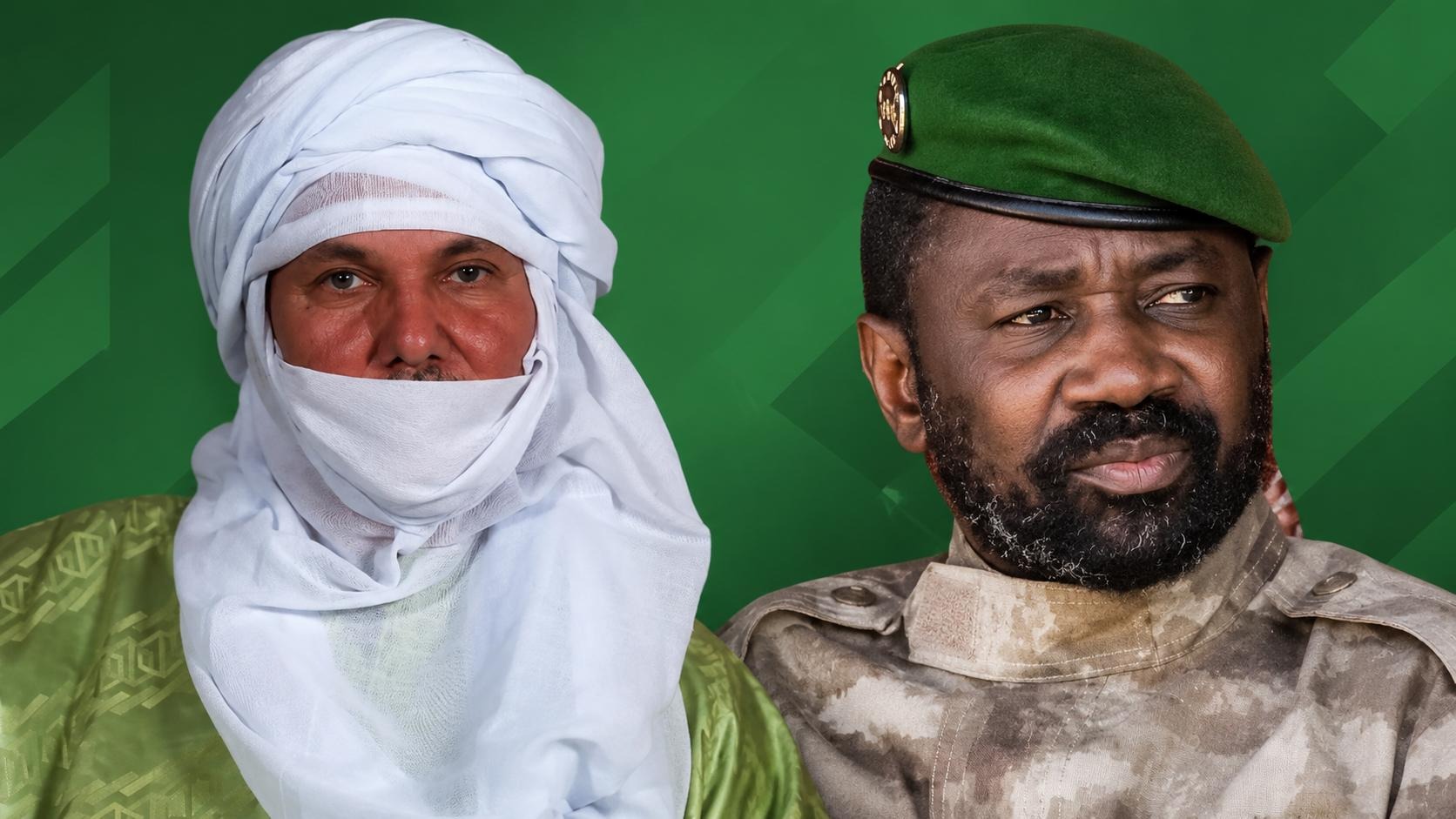
Bamako’s fragile grip on power crumbles under rebel advances and mercenary alliance
BAMAKO / ANEFIF — The Malian junta’s relentless effort to portray itself as a sovereign and stable authority is collapsing under the weight of battlefield defeats, rebel resurgence, and the humanitarian toll of its Russian mercenary alliance. This stark assessment comes not from foreign critics, but from Issouf Ag MAHA, a prominent Nigerien author now living in exile, whose unfiltered analysis strips away the propaganda emanating from Bamako’s corridors of power.
The junta’s desperate gamble: power at any cost
Since seizing control in August 2020, the military leadership vowed to restore national unity and end the decade-long conflict. Yet six years later, the results are catastrophic. By unilaterally terminating the Algiers Peace Accords in January 2024, the transitional authorities closed the last diplomatic channel with northern rebel groups, ensuring the return to full-scale war.
In a candid commentary, Ag MAHA labels this trajectory as a symptom of “power addiction” — a fixation on short-term survival that has prioritized regime preservation over national reconciliation. The former mayor of Tchirozérine argues that Bamako’s obsession with control has suffocated public freedoms: independent journalism is silenced, dissent is crushed, and civil society is systematically repressed. As the capital tightens its grip, its influence across the hinterland continues to erode.
Military collapse exposes junta’s hollow narrative
The junta’s claim of restoring stability is contradicted daily by unfolding events. On July 4, 2026, heavy fighting erupted around Anefif, a critical crossroads in the northeast. Government forces and their Russian allies found themselves trapped in a brutal ambush as a reinforcement column from Gao was decimated, forcing a humiliating retreat with heavy casualties. This setback is not an isolated incident but part of a broader unraveling.
The military’s recent losses at Tinzawatène and the recapture of Kidal by the Azawad Liberation Front (FLA) have fundamentally shifted the balance of power. Despite Bamako’s insistence that the situation remains “under control,” the military landscape is dangerously fragile. Yet in a surprising twist, the FLA has permitted the withdrawal of some Malian and Russian troops from certain areas — a calculated move to position itself as a disciplined actor respecting the laws of war, in stark contrast to the junta’s scorched-earth tactics.
Africa Corps and the humanitarian catastrophe in the north
The junta’s pivot toward Moscow, formalized through the deployment of Africa Corps (formerly Wagner Group), has come at a devastating human cost. While this partnership frees Bamako from Western democratic scrutiny, it has unleashed a wave of terror on civilian populations in northern Mali.
Ag MAHA’s assessment is harrowing. Civilians in towns like Anefif and Kidal are enduring what he describes as a “systematic erasure of dignity.” Reports of mass arbitrary arrests, enforced disappearances, and summary executions are rising. The junta denies all allegations, but denial does not heal shattered communities or restore lost faith in the state.
A nation slipping into silence and oblivion
The Malian tragedy is unfolding under a veil of international indifference. Ag MAHA condemns the “deafening silence” of global actors, regional blocs, and global media — all of whom appear to have shifted their focus elsewhere. He questions whether the world will wait for a military outcome before acting, or if Mali has simply faded from the global conscience.
For the analyst, the country is hurtling toward a point of no return. By clinging to the illusion of total military victory rather than embracing justice, equality, and inclusive governance, the junta risks presiding not over a rebirth of Mali, but over its definitive collapse.