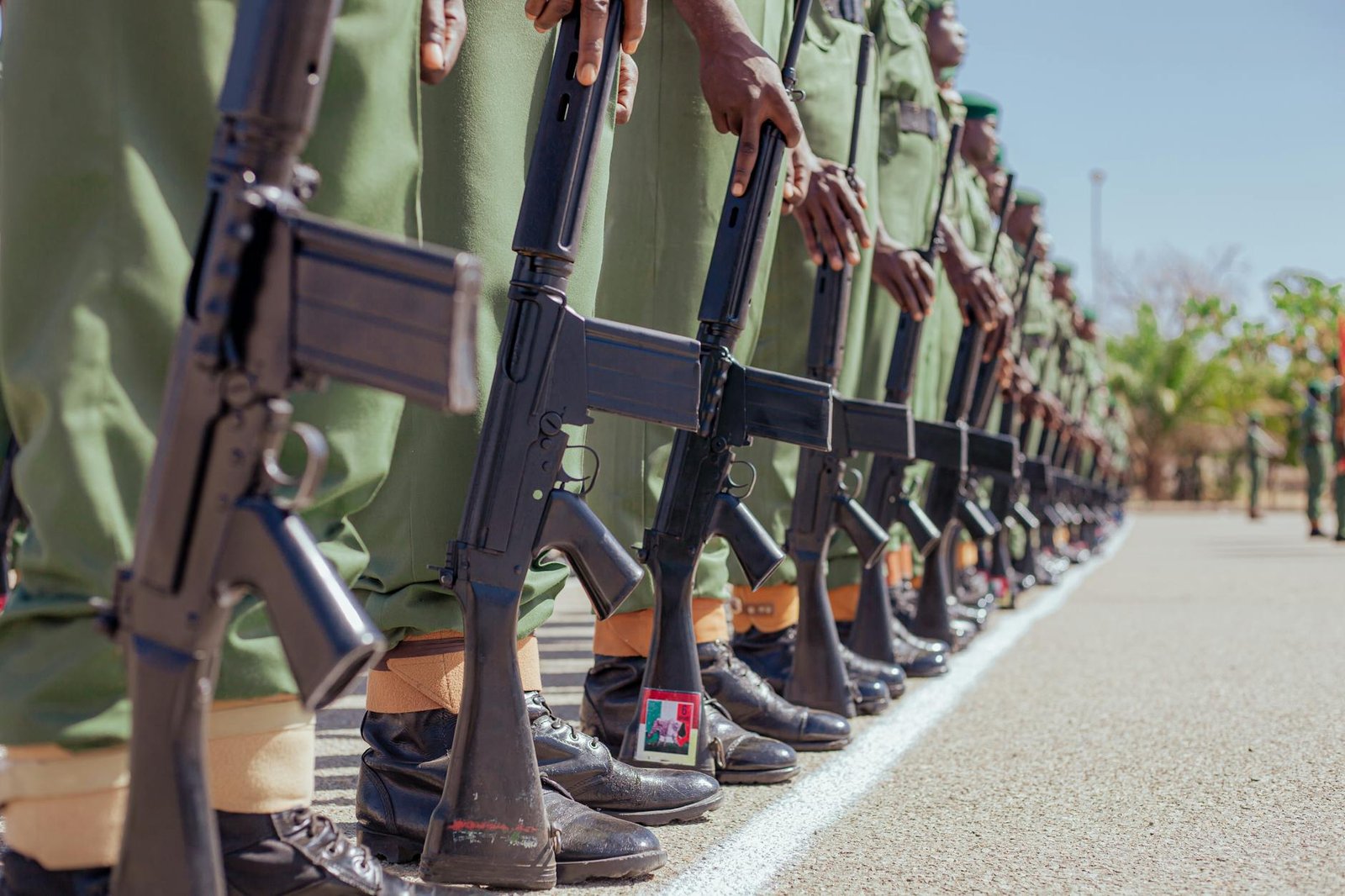
The Malian authorities have taken a decisive step to tighten control over the nation’s territory. Citing heightened security threats, the transitional government has declared 39 military zones off-limits to civilian populations across the country. This sweeping restriction, framed as a protective measure for ongoing military operations, coincides with the intensification of Malian Armed Forces (FAMa) deployments against armed terrorist groups operating in the northern and central regions.
The move is part of a broader strategy to shield critical operational sites from external interference. While some restricted areas include traditional military outposts, the list likely encompasses forward operating bases, logistical hubs, and key installations where recently acquired aerial and ground assets—including drones and combat aircraft procured since 2022—are deployed. Safeguarding these assets has become a cornerstone of the military command’s counterterrorism efforts.
Military zones redefine territorial sovereignty
The designation of these 39 zones marks a significant administrative and operational shift. Unlike conventional military perimeters, the new restrictions may extend to operational corridors, temporary deployment sites, and areas hosting advanced surveillance or strike capabilities. The decision underscores the junta’s commitment to securing assets vital for asymmetric warfare, where intelligence and real-time reconnaissance are decisive factors.
Equally significant is the move’s symbolic value. In a conflict where adversarial groups exploit open-source intelligence and civilian mobility to plan attacks, restricting access to sensitive sites serves as both a tactical and psychological deterrent. The government’s aim is clear: curtail the flow of information that could enable coordinated strikes on military installations, a tactic repeatedly employed in past assaults on Malian garrisons.
Political messaging to citizens and international partners
The announcement arrives at a pivotal moment for Mali’s transitional leadership. With the full withdrawal of the UN’s MINUSMA stabilization mission completed in late 2023 and the severing of security ties with the former Barkhane force, Bamako is asserting its operational independence. Reliance on domestic capabilities has been bolstered by partnerships with Russian security entities and coordination within the Alliance of Sahel States (AES)—a bloc uniting Mali, Burkina Faso, and Niger.
For civilian populations, the restrictions carry immediate practical implications. Access to farming lands, livestock migration routes, and regional trade networks may be disrupted, particularly in areas where military installations intersect with inhabited territories. Humanitarian organizations, already operating under severe constraints, will face even tighter operational boundaries. Questions linger about how communities will be informed of the exact boundaries and what measures will be taken to mitigate economic fallout.
Regional security paradigms converge
Mali’s policy aligns with a broader Sahelian trend. Burkina Faso and Niger, both AES members, have implemented parallel measures to fortify military infrastructure and regulate movement in high-risk zones. This convergence reflects a shared assessment of the threat landscape and a coordinated approach to counterterrorism. Discussions are underway to expand this collaboration, including joint force projections and resource-sharing initiatives spearheaded by the bloc’s leadership.
Yet the strategy’s long-term viability remains uncertain. The proliferation of restricted zones risks freezing large swaths of territory in a state of perpetual exception, complicating civilian administration and economic recovery. In a country where over two-thirds of the land has been affected by insecurity since 2012, balancing security imperatives with national cohesion poses a formidable challenge.
The international community, including regional diplomacies and development partners, will closely monitor how these zones are enforced. Key variables include the precision of perimeter demarcations, the transparency of access protocols, and the penalties for violations. The efficacy of this approach—and its impact on civilian welfare—will shape perceptions, both domestically and across the continent.