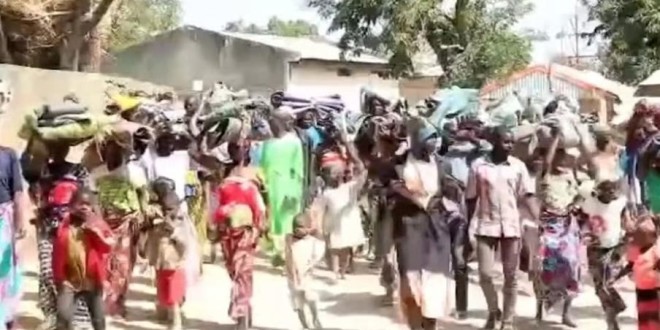
The silent abandonment of Mayo-Tsanaga: Boko Haram’s reign of terror
A humanitarian disaster unfolding in Cameroon’s northern reaches
Boko Haram’s violence has transformed the Mayo-Tsanaga region into a ghostly landscape. Over 50 villages sit deserted, their fields scorched, schools reduced to ashes, and communities scattered like leaves in the wind. This crisis, once confined to Nigeria’s Borno State, crossed borders in 2014 and has since left Cameroon’s Far North in ruins.
Mount Gossi in Tourou, just 35 kilometers from Mokolo, became the first Cameroonian soil to feel Boko Haram’s wrath. What began as sporadic raids has escalated into a relentless campaign of destruction. The terror group’s fighters torch homes, slaughter civilians, and abduct women and children. No corner of the region has been spared: markets, places of worship, gendarmerie posts, schools, and health centers have all been targeted. A decade later, the attacks show no signs of abating, and the state’s response remains painfully inadequate.
The slow death of a once-thriving region
From Mokolo to Koza and across Mayo-Moskota, the Mayo-Tsanaga is experiencing an unprecedented exodus. Over 50 villages—including Gossi, Vizik, Magoumaz, and Koza—have been abandoned as residents flee for their lives. The toll is staggering: entire communities erased, livelihoods shattered, and families torn apart.
In May 2022, a stark admission came from Mokolo’s fifth deputy mayor, Mahadek Nicolo Nouhou, who reported to the Minister of Public Health that ten villages had been completely deserted, two were under Boko Haram control, and seven faced regular assaults. Villages like Gossi, Toufou, and Hitawa have become ghost towns, with residents seeking refuge in mountains and caves to escape the nightly violence. By day, they return to tend to their land, only to retreat again as darkness falls.
A state’s failure to protect its people
The Cameroonian government’s response has been woefully insufficient. In June 2026, during an attack in Ldamang and Ldubam, villagers faced heavily armed militants with only two soldiers to defend them. Civilian vigilante groups, armed with machetes and sticks, have been left to fend off assault rifles and explosives. The disparity speaks volumes: while Boko Haram’s fighters roam freely, the state’s presence is a mere shadow of what’s needed.
The silence from local and national leaders is deafening. Despite high-ranking officials visiting the region—holding meetings, making speeches, and issuing hollow promises—no lasting solutions have materialized. Residents of Tourou and Koza ask a haunting question: “Are we not considered Cameroonian citizens worthy of protection?”
The human cost: displacement, despair, and lost futures
Over 9,000 people have been displaced, with numbers climbing as attacks intensify. In just the first week of June 2026, 482 more fled their homes in Mokolo, Koza, and Mayo-Moskota. The crisis has spilled into neighboring departments like Mayo-Danay, where nearly 300 displaced families arrived in Kalfou after journeying over 200 kilometers. These families arrive with nothing but the clothes on their backs, their documents—birth certificates, national IDs—burned along with their homes. The separation of families during attacks has left children vulnerable, many dropping out of school or turning to crime to survive.
The Mayo-Tsanaga is dying. Agriculture has collapsed, schools have shuttered, and the local economy is in freefall. Without urgent intervention, this region risks irreversible depopulation. The question lingers: how many more villages must be erased before the suffering of the Mayo-Tsanaga becomes a national priority?