Mayo-Tsanaga in Crisis: Boko Haram’s Destruction and State Neglect
The Heart of the Terror
More than 50 villages deserted, thousands displaced, and a culpable silence from an absent state.
What began as a distant threat in Nigeria’s Borno State over two decades ago has now engulfed the Mayo-Tsanaga region of Cameroon. Boko Haram’s violent expansion crossed the border in 2014, with the first Cameroonian village struck at Mount Gossi in Tourou, just 35 kilometers from Mokolo. Since then, the insurgency has escalated, leaving devastation in its wake.
The extremists strike without warning—burning homes, massacring civilians, looting markets, and destroying schools and health centers. Fields lie fallow, communities are shattered, and lives are stolen. After nearly 13 years of relentless attacks, the Mayo-Tsanaga region is barely recognizable. Yet the response from authorities remains painfully inadequate.
A Land Abandoned
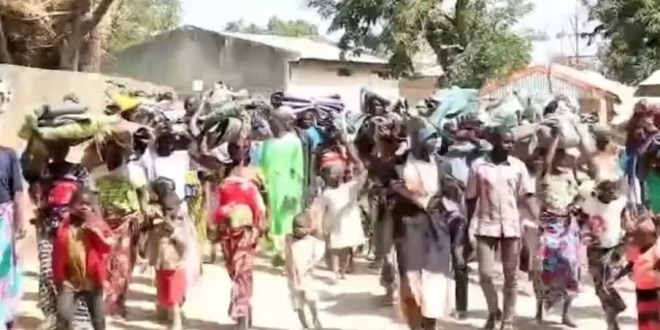
From Mokolo to Koza and across Mayo-Moskota, the scene is one of unprecedented territorial abandonment. Over 50 villages have been completely or partially deserted, including Gossi, Tourou, Vizik, Ldamang, Magoumaz, and Koza. Some, like Toufou 1, Toufou 2, Roum, and Hitawa, now serve as hideouts for insurgents, forcing residents to flee in terror.
In May 2022, the fifth deputy mayor of Mokolo, Mahadek Nicolo Nouhou, presented a grim assessment to the Minister of Public Health, Manaouda Malachie, during the Fraternal Encounters of Mayo-Tsanaga in Tourou and Mokolo: ten villages abandoned, two under Boko Haram control, and seven regularly targeted. The situation has only worsened since.
Life in the Shadows
For over a decade, fear has dictated daily life. As night falls, men flee to the mountains, seeking refuge in caves shared with snakes and scorpions. They return at dawn to tend to their crops, but the terror never leaves. Children grow up without schools, families lose their homes and livelihoods, and entire communities vanish.
The state’s response has been woefully insufficient. In recent attacks—such as the June 18, 2026 assault on Ldamang and Ldubam—only two soldiers were present. Against heavily armed insurgents, these under-resourced defenders are outmatched. Civilian vigilance committees, armed with machetes, are left to fend for themselves against assault rifles.
The Silence of the Elite
Local elites—administrators, politicians, and influential figures—rarely speak out. They appear during election campaigns, make hollow promises, and vanish once votes are secured. When Tourou burns or Koza mourns its dead, these same voices remain conspicuously silent. Their inaction is not indifference—it is complicity.
Visits from ministers and officials yield temporary headlines, but the attacks persist. Promises fade into the wind, while the insurgency rages on. The question lingers: How many more villages must be abandoned before this crisis becomes a national priority?
A Humanitarian Catastrophe
Over 9,000 people have been displaced by Boko Haram’s violence, with numbers climbing as attacks intensify. In early June 2026 alone, the International Organization for Migration recorded 482 new displacements—78 households—fleeing from Mokolo, Koza, and Mayo-Moskota. The exodus stretches beyond Mayo-Tsanaga; by July 2026, nearly 300 displaced families from Mokolo had sought refuge in Kalfou, Mayo-Danay, 210 kilometers away.
Those who flee leave behind everything—their land, their documents, even their dead. Birth certificates, national IDs, and family heirlooms are reduced to ashes. Families are torn apart in the chaos; children are separated from parents, left to navigate a world without protection, education, or hope. The future for these displaced youth is bleak—some abandon schooling, others turn to crime, and many young girls lose all prospects for a better life.
The Slow Death of a Region
The Mayo-Tsanaga region is unraveling. Agriculture collapses. Schools close. Local economies crumble. Without urgent intervention, the department faces irreversible depopulation. The state cannot afford to ignore its citizens simply because they live far from Yaoundé. How many more villages must be erased before this crisis demands action?