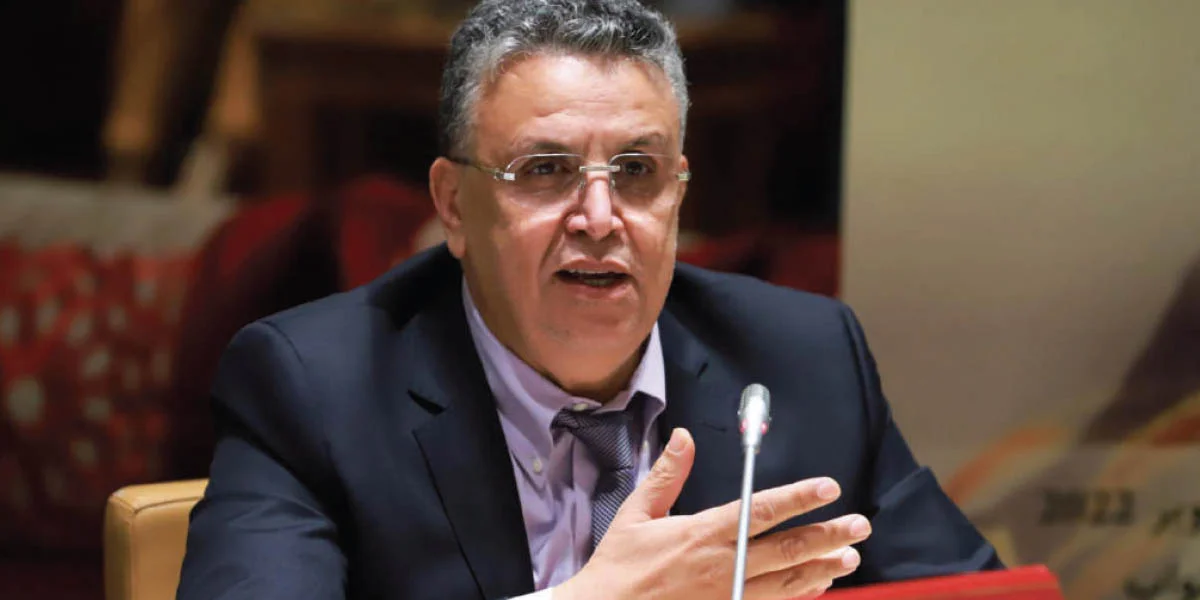
In a recent statement, Morocco’s Minister of Justice, Abdellatif Ouahbi, reaffirmed the country’s long-standing claims over Ceuta and Melilla, two territories it considers integral parts of its national sovereignty. Speaking to a leading international outlet, he emphasized that Rabat remains committed to pursuing these claims through dialogue and strategic patience, noting that the issue frequently surfaces during bilateral meetings with Spanish officials. The minister also highlighted the persistent challenge of irregular migration, urging Madrid to address the return of unaccompanied Moroccan minors who entered Ceuta during recent mass crossings on July 30 and 31.
Ouahbi criticized Spain’s approach, pointing out a contradiction in its demands for Morocco to curb irregular departures while allowing those who reach Spanish soil to access legal procedures. He stressed the need for both nations to align their legal frameworks and operational mechanisms to combat illegal migration effectively, cautioning against placing the sole burden of enforcement on Morocco.
The following day, Spain’s Ministry of Foreign Affairs firmly rejected Morocco’s sovereignty claims over Ceuta and Melilla. Diplomatic sources confirmed that the issue «has never been discussed and will never be,» reiterating that both territories are «recognized as integral parts of Spain’s international territorial integrity.»
Diverging reactions from Spanish officials
During a visit to Ceuta, Spanish Foreign Minister José Manuel Albares focused exclusively on the recent migration surge, commending Morocco’s willingness to repatriate unaccompanied minors who arrived during the unprecedented influx. Meanwhile, Juan José Imbroda, President of Melilla and a prominent figure from Spain’s Partido Popular (PP), took a sharper tone in response to Ouahbi’s remarks. «What good are Ceuta and Melilla to you if you cannot manage what you already have and your youth are fleeing?» he questioned in a widely circulated statement.
Imbroda framed the current migration situation as an «international embarrassment for Morocco,» urging the country to handle the crisis with dignity. The Moroccan Ministry of Interior, for its part, underscored the «shared responsibility» of both nations in managing irregular crossings. In a press statement, it warned against online content inciting further attempts on August 15, reaffirming that combating human trafficking and illegal migration requires coordinated efforts rather than unilateral action.