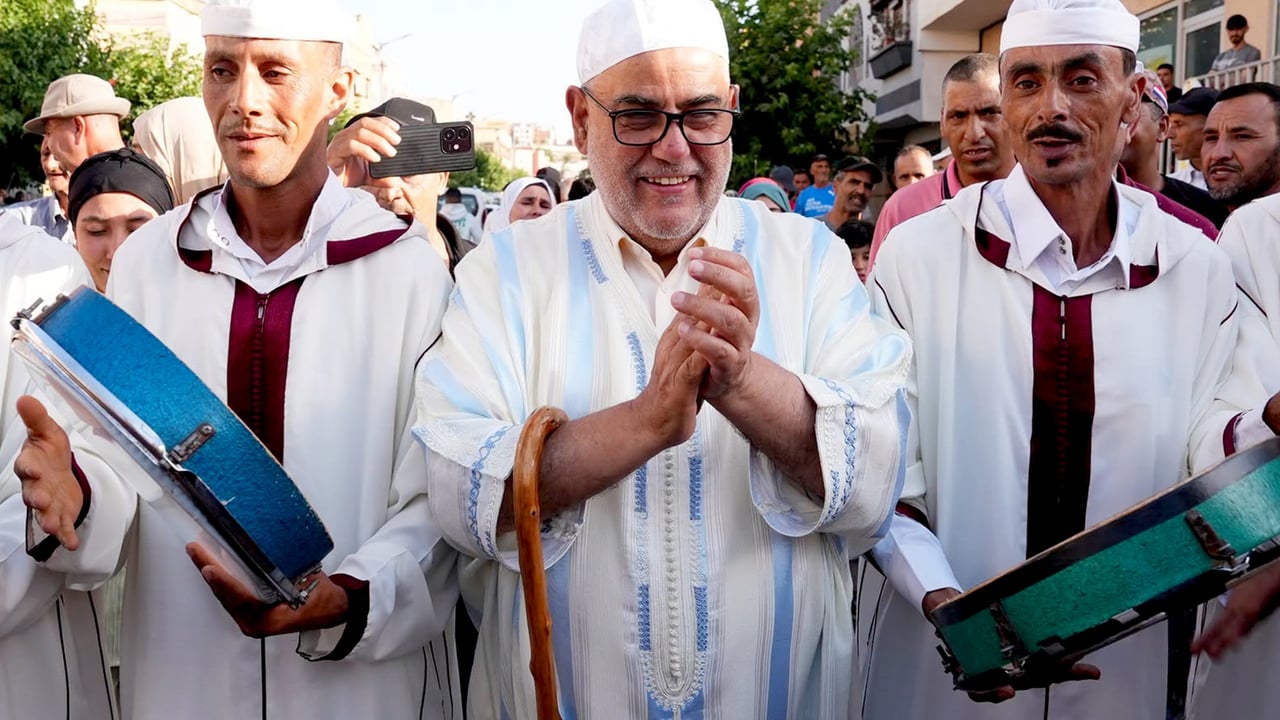

Morocco’s political landscape is witnessing a remarkable shift as Abdelilah Benkirane, leader of the Justice and Development Party (PJD), executes an ambitious strategy to expand his influence beyond traditional conservative bases. His outreach now spans generations, from seasoned political veterans to the digitally native Gen Z demographic, signaling a calculated move to consolidate power ahead of looming electoral challenges.
The PJD, long identified with religious conservatism, is undergoing a strategic rebranding under Benkirane’s guidance. His approach blends traditional values with modern political messaging, creating an appeal that resonates across Morocco’s diverse societal segments. This tactical evolution reflects a deeper understanding of the kingdom’s evolving social dynamics.
From mosque to mainstream: Benkirane’s evolving political narrative
Benkirane’s journey from a grassroots Islamic movement leader to a mainstream political figure has been marked by deliberate adaptation. His party’s platform now emphasizes economic development, good governance, and social cohesion alongside its traditional focus on religious values. This balanced approach has allowed the PJD to position itself as a viable alternative to both traditional parties and emerging political movements.
The party’s recent initiatives targeting younger voters demonstrate this strategic pivot. Through innovative digital campaigns and grassroots engagement, the PJD is cultivating a new generation of supporters who identify with the party’s blend of tradition and modernity. This demographic expansion represents a significant departure from the party’s historical base.
Challenges and opportunities in Morocco’s shifting political environment
While Benkirane’s outreach efforts have yielded promising results, they have not been without controversy. Critics argue that the PJD’s rebranding amounts to political opportunism, while supporters praise the party’s ability to evolve with the times. The coming months will reveal whether this strategy can translate into electoral success or if it remains an ambitious experiment in political repositioning.
The Moroccan monarchy, particularly King Mohammed VI, maintains a careful watch on the PJD’s activities. The palace’s relationship with the party has been complex, characterized by periods of cooperation and tension. Benkirane’s current strategy appears designed to navigate these dynamics while maximizing the party’s political potential.
Key pillars of Benkirane’s contemporary political strategy
- Intergenerational appeal: Combining traditional conservative values with modern political messaging to attract diverse age groups.
- Digital transformation: Leveraging social media platforms and online engagement to connect with younger demographics.
- Policy modernization: Revising the party’s platform to address current economic and social challenges while maintaining core ideological principles.
- Grassroots mobilization: Strengthening local party structures to build sustainable support networks across Morocco’s regions.
As Morocco’s political future hangs in the balance, Benkirane’s PJD is making a bold bid to redefine its role in the kingdom’s governance. Whether this strategy will secure lasting political dominance or prove to be a temporary tactical maneuver remains one of the most compelling questions in contemporary Moroccan politics.