Before dawn broke over Aourir, a quiet coastal village just north of Agadir, an elite Moroccan security force moved swiftly through its silent streets. The mission was clear: intercept a radicalized extremist linked to the so-called Islamic State, following precise intelligence from the Directorate General for Territorial Surveillance (DGST). Within seconds of breaching the suspect’s residence, he was subdued—no time for resistance, no chance for escape.
By sunrise, Aourir’s residents woke to an unexpected show of force. The DGST’s rapid intervention had not only neutralized a potential threat but also revealed the dangerous reality of homegrown extremism. During a coordinated search with the Central Bureau of Judicial Investigations (BCIJ), officers uncovered more than just ideological leanings. This individual was actively preparing for violence, equipped with combat gear and bladed weapons. The immediate question on everyone’s mind: how close had they come to disaster?
a hidden bomb factory uncovered
Just a few kilometers south, in the industrial outskirts of Inezgane, the operation took a far more sinister turn. Deep inside a nondescript warehouse in the Traast El Jorf district, investigators discovered a clandestine facility designed for mass destruction.
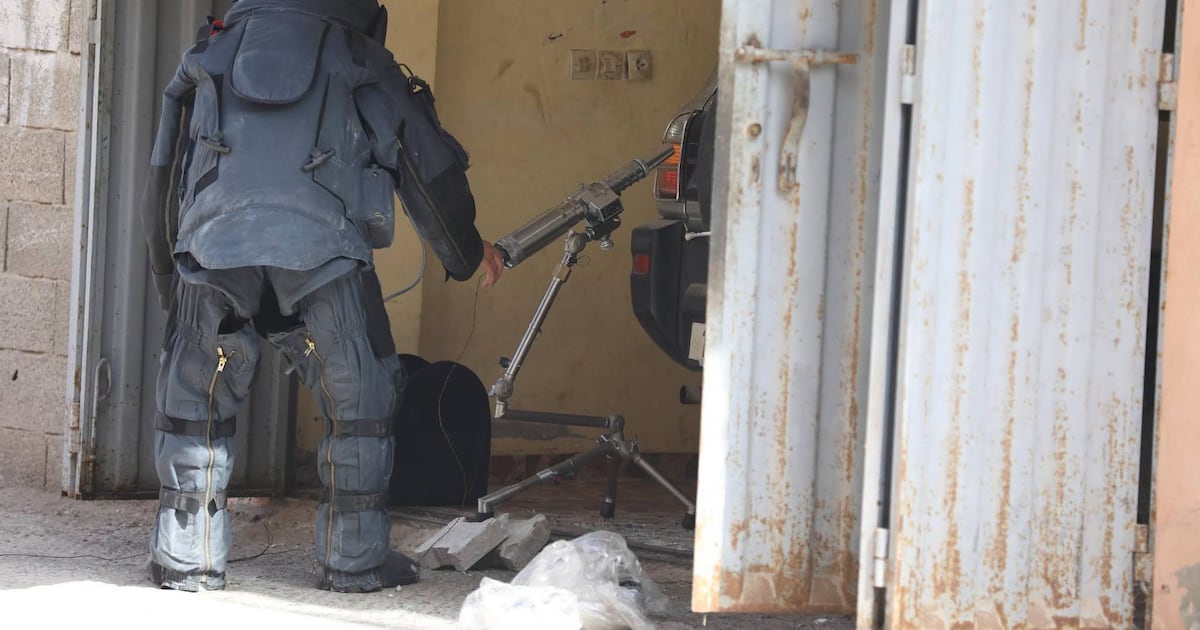
A 4×4 vehicle stood at the center of the room, its fuel system suspiciously altered. Engineers soon confirmed the horrifying truth: its tank had been replaced with a butane gas reservoir, engineered to maximize blast force and thermal impact in a suicide attack or vehicle-ramming assault on key national infrastructure.
The scene demanded swift, calculated action. The BCIJ activated an emergency protocol, evacuating nearby residents, deploying bomb disposal units from the National Security Directorate (DGSN), and using robotic systems and advanced sensors to safely inspect the vehicle’s interior.
After securing the area, the inventory of materials sent chills through the investigation team: industrial gas canisters, pressure cookers repurposed as shrapnel-filled bombs, electrical wiring, detonators, welding equipment, and a range of solid and liquid chemicals—all meticulously staged for deadly assembly.
a synchronized strike across seven cities
The operational heart of the cell was in the Souss region, but its network stretched across Morocco. To prevent any premature alert, the DGST’s Special Forces executed simultaneous raids in seven cities: Agadir, Taroudant, Casablanca, El Hajeb, Tétouan, Fquih Ben Salah, and Safi. The operation was a masterclass in precision timing, designed to dismantle the network before it could mobilize.
profiles of danger: youth and recidivism
Ten individuals were taken into custody, each representing a different face of the threat. Among them was a 17-year-old—a grim reminder of how extremist groups cynically recruit minors. Also detained was a former prisoner previously convicted under counter-terrorism laws, raising urgent questions about rehabilitation and the risks of repeat offending.
Searches of their homes, supported by canine units, uncovered a chilling arsenal. Military uniforms, handwritten bomb-making manuals, and digital files were seized. Two videos stood out: one showing a formal pledge of allegiance to the so-called Caliph of Daech, the other containing explicit threats to sabotage national infrastructure.
connections to the Sahel and a domestic terror plot
Preliminary investigations revealed a disturbing regional dynamic. Cell members were receiving direct orders and logistical support from ISIS commanders in the Sahel. The directive was unmistakable: avoid joining jihadist groups in sub-Saharan Africa and instead remain in Morocco to carry out domestic attacks.
The cell was organized like a military unit, with compartmentalized roles. A reconnaissance team identified potential targets across the country. A logistics team secretly procured chemicals, welding tools, and vehicles. And at the heart of the operation, in Inezgane, a technical team modified vehicles and assembled explosives.
The DGST and BCIJ’s swift action prevented what could have been a catastrophic series of attacks. Nine adults were remanded in custody, while the minor was placed under specialized monitoring under the supervision of the anti-terrorism prosecutor’s office.
Now, with calm restored in Aourir and Inezgane, forensic analysts and investigators are working to decrypt seized phones and hard drives. Their goal: to map encrypted communication channels with the Sahel and ensure no dormant threat remains in the shadows.