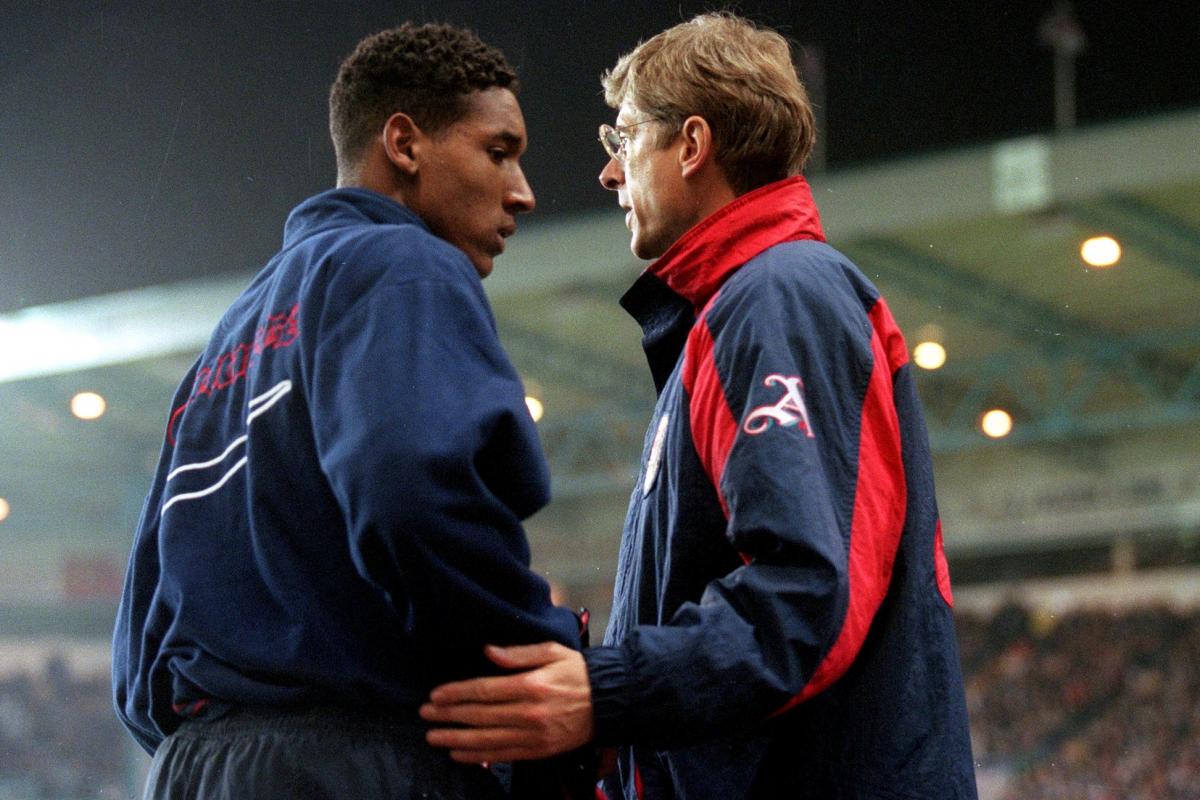
« There are no winners, no losers here.» On February 22, 1997, Paris Saint-Germain’s deputy chairman Michel Denisot put on a brave face during a press conference, announcing the six-year transfer of teenage striker Nicolas Anelka to Arsenal. While PSG secured nearly 5 million francs (€1.19 million in today’s terms) in the deal, the 17-year-old’s monthly wages skyrocketed from 3,800 francs (€901) — excluding match bonuses — to a staggering 500,000 francs (€119,000) across the Channel. Anelka emerged as the clear victor in a five-week standoff with his club, leaving PSG officials scrambling to justify the outcome.
The teenager fired back through his father at the time of the announcement, signing his contract with Arsenal just hours earlier in London. « The PSG directors spun the situation to suit their narrative. They claimed I would never leave and there would never be a deal with Arsenal. But now there’s an agreement — and I’m leaving. So who’s really the loser?» Anelka’s sharp retort exposed the fragility of PSG’s position, forcing club officials to confront their own missteps.
From promising prospect to benchwarmer
Anelka’s journey to Arsenal began with promise. Trained at the Clairefontaine National Football Institute, he made his professional debut for PSG on February 7, 1996, coming on as a substitute in a 1-0 loss at Monaco. By September 21 of the same year, his impact was undeniable. Entering the game against Lens, he scored one goal and provided an assist in a dominant 4-0 victory. Coach Ricardo’s reaction was telling: « You wanted a joker? You’ve got one.» The praise was well-deserved, but it masked a growing frustration.
By autumn, PSG offered the young forward a professional contract, but Anelka had other plans. Frustrated by limited playtime — eight substitute appearances and zero starts in Ligue 1 — he grew increasingly disillusioned. The arrival of on-loan striker Cyrille Pouget from Servette FC in December only deepened his sense of betrayal. To him, it signaled a lack of faith in his future at the club.
The London calling
Arsenal, under manager Arsène Wenger, saw an opportunity. After meeting the French coach and touring the club’s facilities during the winter break, Anelka’s representatives informed PSG’s sporting director Jean-Michel Moutier on January 11 that the player intended to leave at the end of his aspirant contract in June. It was a bold statement, one that set the stage for a confrontation.
The situation escalated on January 13 when Arsenal vice-chairman David Dein sent a fax to PSG: « In accordance with international regulations, we will be contacting your player Nicolas Anelka.» The very next morning, at a hotel in Paris’ 16th arrondissement, Anelka and his father signed a six-year contract with Arsenal, effective July 1. PSG was blindsided — and furious.
« Anelka is not free and cannot sign for Arsenal,» thundered Noël Le Graët, then-president of France’s National Football League (LNF). He urged the French Football Federation (FFF) to deny Anelka his release letter, citing the French charter that required aspirants to sign their first professional contract with their training club. But the legal ground was shaky. Wenger, confident in his position, countered: « European laws put me at ease. We are acting within the law. While France has internal regulations preventing clubs from signing players before they’ve inked their first pro deal, these rules don’t apply beyond our borders.»
The Arsenal manager pointed to the Bosman ruling — a landmark 1995 European Court of Justice decision that had reshaped European football. « Once a contract expires, a player is free to move without compensation. By June, when Anelka’s aspirant contract ends, he can join Arsenal, and no one can stop him,» Wenger argued. The stage was set for a transnational showdown.
Sepp Blatter, then-FIFA general secretary, weighed in: « The French seem upset by the departures of young players. But they don’t seem particularly troubled when African or South American talents leave for major European clubs. Perhaps it’s time that, from age 16, young players have the right to join top teams to build their careers.» His words highlighted the hypocrisy of France’s stance, sparking further controversy.
A storm of accusations and a dramatic resolution
PSG responded by excluding Anelka from the first team, sending him back to his residence in Saint-Germain-en-Laye. Denisot, the club’s deputy chairman, called the move « an act of rare rudeness» and threatened to loan him to Servette FC for the remainder of the season. But Anelka was unmoved. « PSG doesn’t trust young players. Very few have broken through, and those who did — like Pascal Nouma, Francis Llacer, or Patrick Mboma — were still substitutes at 24,» he told *France Football* in an interview.
With the LNF referring the case to FIFA just days before a ruling, both clubs faced a long and uncertain legal battle. Rather than drag on, PSG and Arsenal struck a deal in less than 48 hours. « There was a gap in the net,» Denisot later admitted. « It wasn’t a pleasant moment for either club. In hindsight, everyone had the right to do what they did. The noise at the time was because a major talent was leaving for free after his training. Nicolas was a young player. Ricardo and I wanted to bring him as far as possible while protecting him. But he wanted to go. That’s how it was. We had little margin for maneuver.»
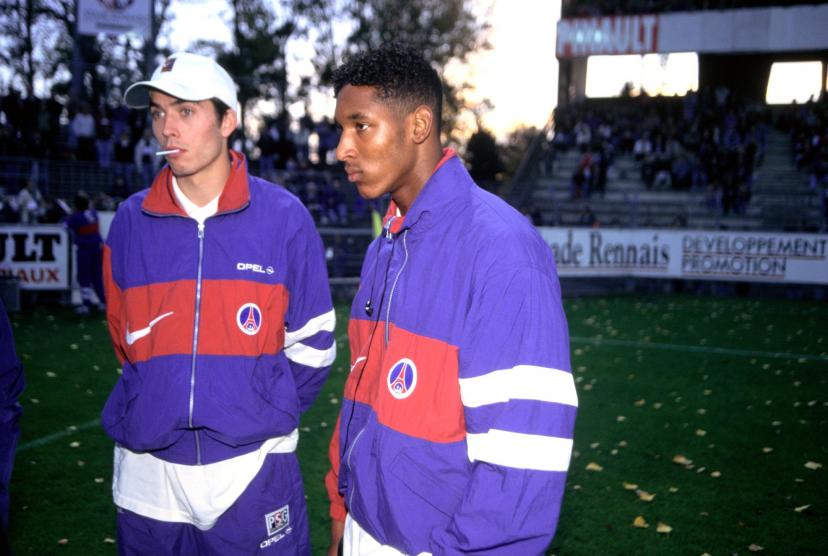
Anelka’s arrival at Arsenal was met with skepticism. With Dennis Bergkamp and Ian Wright ahead of him, he managed just four appearances in the final stretch of the 1996-97 season. But the following campaigns would see him flourish. In 1998-99, he became the first non-British player to win the Premier League Young Player of the Year award, awarded by his peers. However, his time in London was short-lived. In the summer of 1999, after another heated standoff, he left for Real Madrid for a transfer fee of 220 million francs (€51.6 million).
Denisot never held a grudge against Arsenal. « I got along well with Arsène Wenger. Later, when I was president of La Berrichonne de Châteauroux, I handled the transfer of Gilles Sunu to Arsenal in 2007 — and it went smoothly. As a side note, I even took David Dein’s son on an internship at Canal+ when I was head of sports there.»