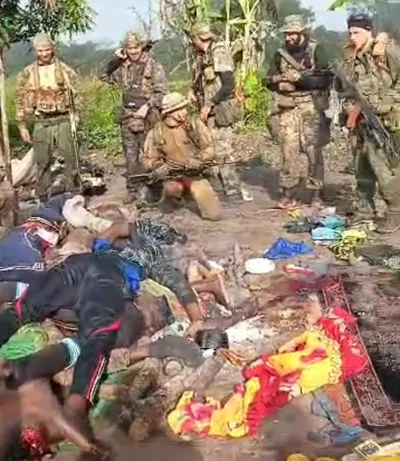
Wagner mercenaries’ brutal mining operations in central africa exposed
In the heart of Central Africa, a shadowy enterprise has taken root, blending exploitation with violence. The Russian mercenary group Wagner, known for its opaque operations, has carved out a lucrative niche in the region’s mineral-rich zones, where human rights violations and illicit trade converge. This unchecked proliferation of mercenary activities threatens not only regional stability but also the lives of countless civilians caught in the crossfire.
From security to predation: how Wagner operates
The presence of Wagner forces in Central Africa is no secret, but their methods have increasingly shifted from traditional security roles to outright predation. Reports from local communities reveal a pattern of intimidation, forced labor, and systematic looting of natural resources. Mines once worked by local artisans now operate under the watchful eyes of armed mercenaries, who extract gold, diamonds, and other precious minerals with little regard for environmental or human costs.
In exchange for their ‘protection,’ Wagner has secured lucrative contracts with local authorities, further entrenching its control over key economic sectors. The group’s influence extends beyond mere security arrangements, morphing into a parallel economy where violence and profit intertwine.
Violence as a tool of control
The mercenaries’ tactics are brutal and calculated. Villages suspected of resisting Wagner’s authority face punitive raids, with reports of extrajudicial killings, torture, and sexual violence. Eyewitness accounts describe how dissent is crushed—sometimes publicly—to serve as a warning to others. The group’s reputation for ruthlessness has instilled fear, making resistance a luxury few can afford.
The Central African Republic’s already fragile institutions struggle to curb these abuses. Corruption and weak governance create an environment where mercenary groups thrive, unchecked by accountability. Meanwhile, the local population bears the brunt of the fallout, displaced from their homes and stripped of their livelihoods.
The billion-dollar question: where does the money go?
Wagner’s mining operations are not just about control—they’re a profit-driven enterprise. Estimates suggest that the group siphons millions annually from mineral exports, funneling funds back to Moscow while leaving Central Africa’s economy hollowed out. The exact scale of these operations remains shrouded in secrecy, but the signs of a well-oiled extraction machine are undeniable.
International observers warn that this illicit trade fuels instability, funding not only Wagner’s activities but also insurgent groups that thrive in lawless zones. The cycle of violence and exploitation shows no signs of abating, raising urgent questions about the global response to this crisis.
What lies ahead for Central Africa
The future of Central Africa hangs in the balance. Without decisive action, Wagner’s stranglehold on the region’s resources will only tighten, deepening the humanitarian crisis. Local leaders face a stark choice: resist the mercenaries’ dominance or capitulate to their demands. Meanwhile, the international community grapples with how to address this growing threat without exacerbating local tensions.
One thing is clear: the business of terror in Central Africa is far from over. As long as the world turns a blind eye, Wagner’s operations will continue to flourish, leaving behind a trail of suffering and shattered communities.