After three years of strained relations that led to a complete border closure, Niger and Bénin are now on the brink of restoring cross-border movement following a weekend of high-level talks in Cotonou. The breakthrough came after 48 hours of intensive negotiations that addressed longstanding security and trade disputes between the two nations.
At the heart of these discussions was the participation of a high-powered Nigerian delegation led by General Mohamed Toumba, Minister of Interior, Public Security, and Territorial Administration. His counterpart from Bénin, Oleshegun Adjadi Bakari, Minister of Industry and Trade, co-chaired the meetings. Both sides emerged with a series of preliminary agreements that could soon pave the way for border reopening and renewed economic cooperation.
Key agreements shaping the path forward
The progress made during the Cotonou talks centers on several critical areas:
- Security collaboration: Strengthening joint efforts to combat terrorism and cross-border crime
- Trade facilitation: Eliminating transit taxes and revising fee structures to ease commerce
- Market access: Prohibiting the consumption of certain goods to protect local industries
- Dispute resolution: Addressing longstanding legal and economic grievances through a dedicated joint commission
General Toumba emphasized the historic nature of these developments, stating that the talks had “secured security priorities while laying the groundwork for economic and legal normalization.” He highlighted the importance of dialogue in “creating value for our economies, security for our populations, and hope for our youth.”
Minister Bakari echoed this optimism, noting that the two delegations had succeeded in “restoring a climate of trust” and forming “one delegation with one shared objective: to rekindle the centuries-old bond between our peoples.”
The diplomatic thaw behind the border thaw
The sudden warming of relations follows Bénin’s presidential election in April, which brought Romuald Wadagni to power. Within a week of taking office, President Wadagni traveled to Niamey, marking the first high-level contact between the two countries since the 2023 coup in Niger. This visit signaled the beginning of a diplomatic thaw that has now culminated in the Cotonou negotiations.
The joint communiqué issued after the presidential meeting outlined commitments to establish a mixed commission tasked with examining the root causes of the border closure and removing obstacles to cooperation. Three weeks after that meeting, both governments are now finalizing the agreements reached in Cotonou.
From confrontation to cooperation: Understanding the three-year rupture
The deterioration of Niger-Bénin relations began in July 2023 following the military takeover in Niamey, which saw General Abdourahmane Tiani assume power. The new regime accused the former Béninese administration of plotting with other West African leaders to restore constitutional order through a potential ECOWAS intervention—a claim both Cotonou and Paris consistently denied.
The accusations escalated as the Nigerien junta repeatedly alleged that Bénin harbored French troops preparing for an invasion, despite official denials from both governments. The situation worsened after ECOWAS imposed sanctions and closed borders with Niger, further straining relations.
The dispute intensified with mutual accusations of supporting armed groups operating in the region and involvement in the failed December 2023 coup attempt against President Talon in Bénin.
The human and economic toll of closed borders
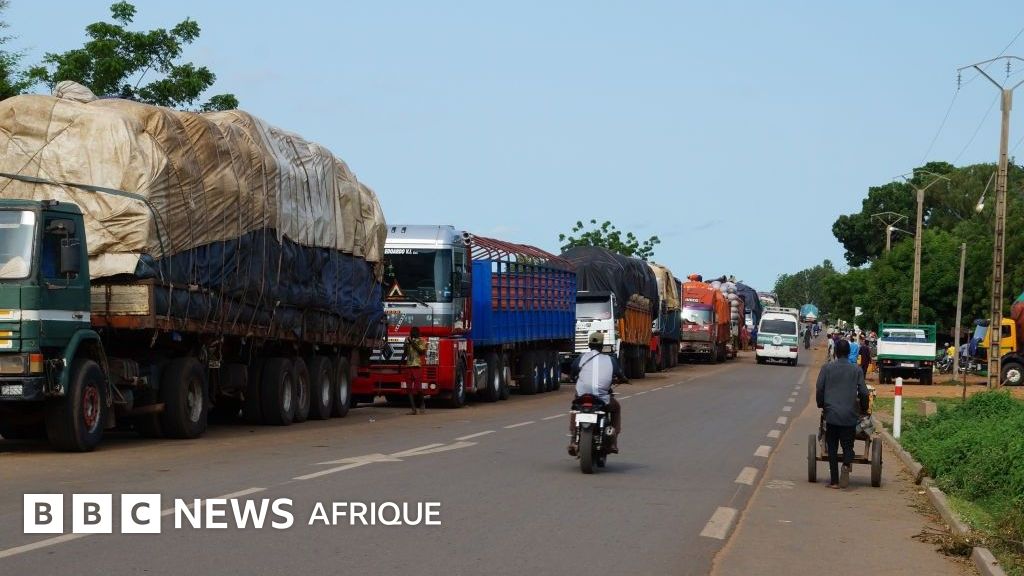
The prolonged border closure has devastated economies on both sides of the frontier. Ibrahim Abou Koura, a truck driver based in Cotonou, described how his once-bustling warehouse, which handled goods destined for Niger, now stands nearly empty. “It’s the people who are suffering,” he noted, highlighting the severe impact on local businesses.
Niger, a landlocked nation, depends heavily on the Port of Cotonou for international trade. The border closure has paralyzed commerce, disrupted supply chains, and forced traders to incur higher costs. The Niger-Bénin corridor—once described as the most efficient route for West African transport—has become a costly detour, with drivers now forced to route through Burkina Faso, where they face increased risks from jihadist attacks.
The economic fallout extends beyond trade disruptions. The Port of Cotonou, which handled a significant portion of Niger’s imports and exports, has seen a sharp decline in activity. Meanwhile, Niger has diverted some trade to the Port of Lomé in Togo, further straining regional logistics networks.
As both countries prepare to submit the agreements for final approval, the promise of reopening the border offers a glimmer of hope for economic recovery and renewed cooperation in a region grappling with multiple crises.