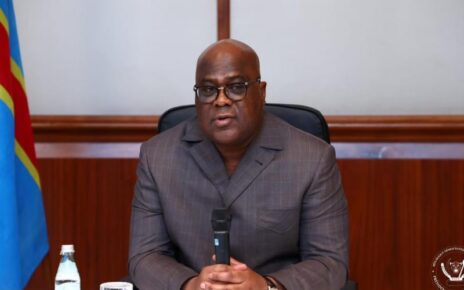
The United Nations Working Group on Arbitrary Detention has issued a landmark ruling declaring the detention of Nigerien human rights defender Moussa Tiangari as unlawful. This decision underscores the systematic erosion of civic freedoms in Niger since the July 2023 military takeover.
International condemnation of unlawful detention
The ruling by the UN Working Group on Arbitrary Detention, issued on June 23, 2026, confirms that Tiangari’s prolonged detention lacks legal justification and violates multiple fundamental rights. The decision follows a complaint submitted by the International League Against Arbitrary Detention (ILAAD) and sustained advocacy by civil society organizations, including the Observatory for the Protection of Human Rights Defenders.
From abduction to secret detention
Tiangari, Secretary-General of Alternative Espaces Citoyens (AEC) — a Nigerien NGO promoting human rights, migrant rights, and democratic values — was forcibly taken from his Niamey home on December 3, 2024. He was held incommunicado for approximately 48 hours, raising serious concerns about torture and ill-treatment. On December 5, 2024, he was located in the custody of the Central Service for Combating Terrorism and Organized Transnational Crime (SCLCT/CTO) in Niamey, where he was placed under provisional arrest. Formal charges were filed by the investigating judge of the Niamey High Court on January 3, 2025.
Context of activism and retaliation
His arrest occurred the same day he returned from Abuja, Nigeria, where he participated in the board meeting of the Centre for Democracy and Development (CDD), a partner organization of AEC. Days earlier, he had attended the seventh edition of the “Itinéraire Humanitaire” conference in Abidjan, Côte d’Ivoire, organized by the International Committee of the Red Cross (ICRC) to commemorate the 75th anniversary of the Geneva Conventions. The conference focused on challenges to humanitarian action and the importance of upholding international humanitarian law.
A journalist with close ties to Nigerien authorities accused Tiangari, in a December 4, 2024 article, of making statements during the conference that allegedly harmed Niger’s interests. Prior to this, on November 28, 2024, AEC had organized a critical conference on the revocation of citizenship by the military regime, attended by the prosecutor of the Niamey High Court and former high-ranking officials, including a former Minister of Justice.
Legal violations and international standards
The UN Working Group found Tiangari’s detention arbitrary due to the absence of legal grounds, severe breaches of fair trial rights, and discriminatory motives. The detention is linked to his exercise of fundamental freedoms, including the right to freedom of opinion and expression, participation in public affairs, peaceful assembly, and association. The Working Group concluded that Niger violated multiple provisions of the Universal Declaration of Human Rights and the International Covenant on Civil and Political Rights.
Charges and looming death penalty
Tiangari faces charges including “apology for terrorism” (Article 399.1.17(bis) of the Nigerien Penal Code), “attacks on state security” (Articles 62 et seq.), “criminal association linked to a terrorist enterprise” (Article 399.1.19), “attacks on national defense” (Articles 66 et seq.), and “conspiracy against state authority in collusion with enemy powers” (Articles 62 et seq.). If convicted, he could face the death penalty.
Despite his prolonged detention — now exceeding 18 months — the Niamey Court of Appeal’s specialized terrorism chamber dismissed his request for provisional release on May 15, 2026. This decision defies the Ordinance No. 2026-10 of February 16, 2026, which limits pretrial detention in terrorism cases to twelve months, renewable once. His legal team filed a motion on June 19, 2026, seeking his release, only for the court to retroactively extend the maximum pretrial detention period to four years on June 26, 2026. Lawyers warn this amendment may be a deliberate attempt to prolong his detention.
Pattern of judicial harassment
This is not Tiangari’s first arbitrary detention. In May 2015, he was detained for ten days and charged with “attacks on national defense” and “statements likely to demoralize troops” in connection with reports published by AEC. In March 2018, he was arrested again and held for four months on charges of “organizing and participating in unauthorized protests” and “complicity in violence, aggression, and destruction of property” during peaceful demonstrations against the 2018 finance law. In March 2020, he was detained for a month and a half following an anti-corruption protest denouncing embezzlement in military procurement.
A broader crackdown on dissent
Tiangari’s case reflects the shrinking civic space in Niger since the July 27, 2023 coup. Since then, fundamental rights to freedom of expression, opinion, association, assembly, and peaceful protest have been routinely violated through arbitrary arrests, detentions, and the revocation of citizenship for human rights defenders.
Urgent calls for justice and accountability
Human rights organizations urge Nigerien authorities to immediately comply with the UN Working Group’s ruling by releasing Tiangari unconditionally, dropping all charges against him, granting him reparations, and conducting an independent investigation into his arbitrary detention and allegations of torture. Authorities are also called upon to end all forms of judicial harassment against Tiangari and other human rights defenders in the country.
The Nigerien government must uphold international human rights obligations, particularly those outlined in Article 19 of the International Covenant on Civil and Political Rights and Article 9 of the African Charter on Human and Peoples’ Rights, both of which Niger has ratified.