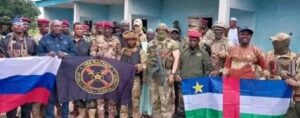
A significant development has unfolded within the Mouvement Patriotique pour la Centrafrique (MPC), signaling heightened tensions as Russian mercenaries have officially become involved in the group’s internal dynamics. Reports indicate that these foreign combatants recently escorted Didot Ali, a prominent figure within the MPC, along with his designated successor, to Bossangoa.
This direct intervention by Russian forces underscores a critical shift in the political and security landscape of the Central African Republic (CAR). The presence and active role of these mercenaries in facilitating the movement of key MPC leaders suggest a deeper engagement in the region’s internal affairs, particularly concerning armed groups operating in the north-western parts of the country. The move to Bossangoa, a strategic location, hints at efforts to stabilize or perhaps influence the leadership transition within the MPC, a group with a considerable presence in the area.
The official involvement of Russian mercenaries in such a sensitive internal matter raises questions about the evolving power dynamics and external influences shaping the future of the Central African Republic. Observers are closely monitoring how this development will impact the broader security situation and the intricate web of alliances among various factions in the nation.