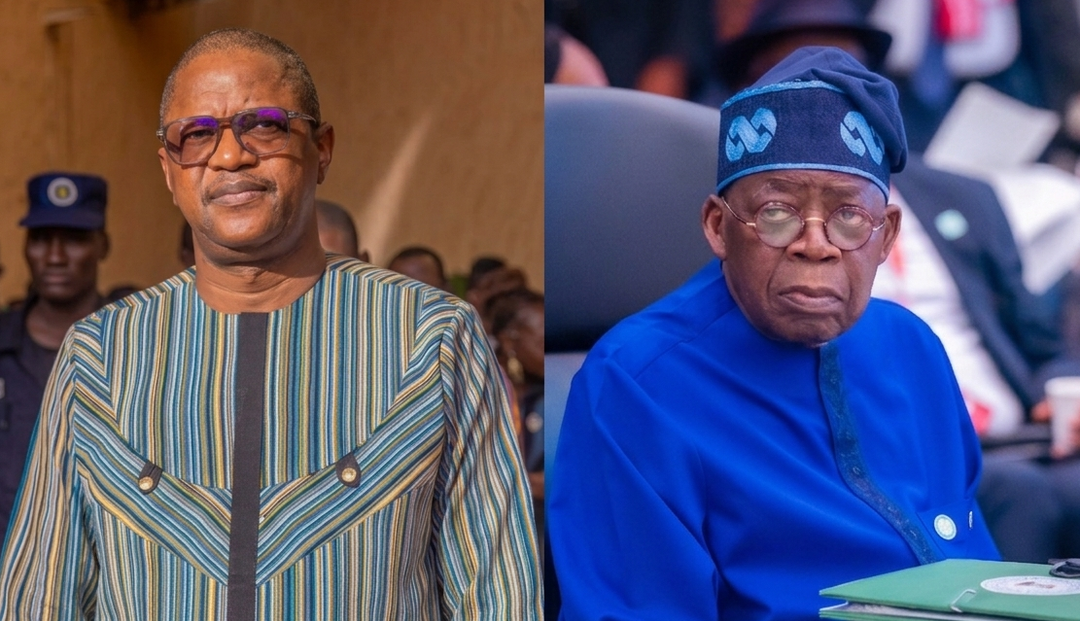
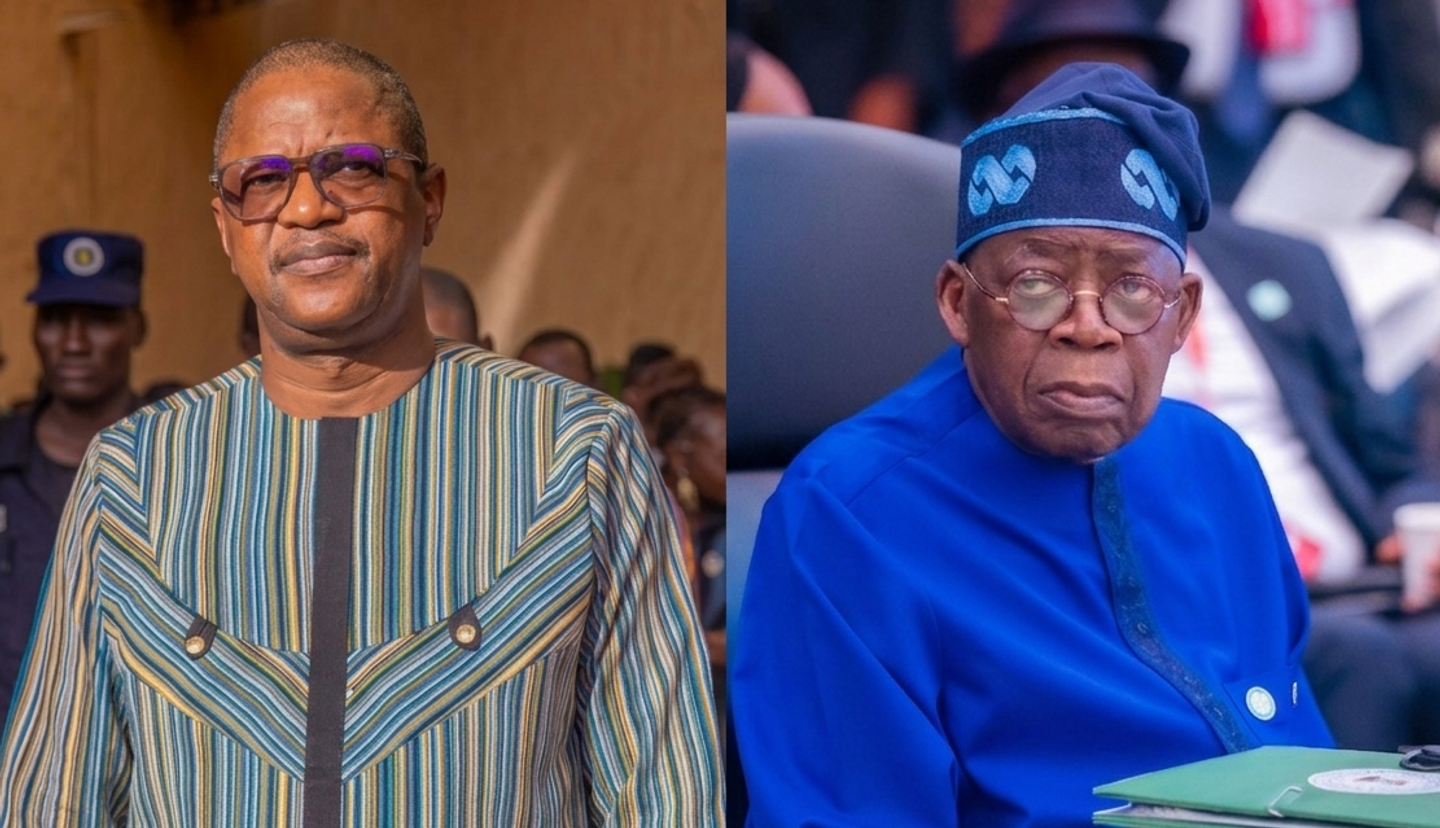
Karamoko Jean Marie Traoré, Burkina Faso’s Minister of Foreign Affairs, recently hosted the Chargé d’Affaires from the Federal Republic of Nigeria’s Embassy in Ouagadougou. This diplomatic engagement on Thursday followed critical remarks made by Nigerian President Bola Ahmed Tinubu concerning the security landscape within the Sahel States Confederation (AES) nations.
The meeting underscored the unified stance of the three AES member states, with Chargés d’Affaires from the Embassies of Mali and Niger also in attendance, demonstrating a concerted regional response to the evolving security discourse in West Africa.
On July 30, during discussions with Nigerian traditional leaders, President Tinubu linked the surge in kidnappings and terrorist attacks across Nigeria to what he described as a “collapse” in security within its neighboring Sahelian countries. This perspective was highlighted in a statement from Burkina Faso’s Ministry of Foreign Affairs.
President Tinubu had explicitly stated, “Some of them (the terrorists) are not Nigerians. You see, the problem of insecurity in Mali, in Burkina Faso, and in Niger only exacerbates our difficulties,” a sentiment that has resonated deeply within the AES.
Burkinabè diplomacy chief, Traoré, characterized this interpretation of the security situation as one that “overshadows the significant daily sacrifices” made by the defense and security forces, alongside the populations of Burkina Faso, Mali, and Niger, in their relentless fight against terrorism. This Sahel analysis highlights the complexities often missed in broader discussions.
Traoré further argued that President Tinubu’s statements disregarded the long-standing efforts and sacrifices of the Nigerian army in combating Boko Haram, particularly at a time when terrorism had not yet spread significantly across the AES countries. This perspective is crucial for any comprehensive Sahel insider update.
The head of Burkinabè diplomacy also underscored that despite recognized links between Boko Haram and certain terrorist factions operating in the Sahel, the AES member states have consistently refrained from publicly accusing Nigeria. Instead, they have opted for an approach rooted in cooperation and shared responsibility, emphasizing a united front against regional threats. This reflects a key aspect of Sahel politics.
“Burkina Faso, Mali, Niger, and Nigeria confront a common adversary. Therefore, the successes achieved by the defense and security forces of the AES countries contribute to the overall security of the entire sub-region, including Nigeria, by curtailing the destructive capabilities and mobility of terrorist groups,” Traoré affirmed, stressing the interconnectedness of regional security efforts.
In light of this, Traoré called upon Nigerian authorities to prioritize discourse that fosters unity and solidarity, rather than making declarations that could exacerbate divisions or misunderstandings among historically, geographically, and fraternally linked neighboring peoples.
In response, Nigeria’s Chargé d’Affaires confirmed receipt of the message and pledged to accurately convey the concerns to his superiors in Abuja, as detailed in the communiqué from Burkina Faso’s Ministry of Foreign Affairs. This diplomatic exchange is a significant development in West Africa insider news.
By Marie Mbarga — Political analyst

Related Articles
Tchad Cameroun and central african republic discuss trade corridor at N’Djamena forum
Tchad, Cameroun and central african republic unite to boost transcamerounais trade corridor N’Djamena is hosting the 5th tripartite forum bringing together Tchad, Cameroun and the Central African Republic to address challenges in regional transit and commerce. The event, which kicked off on May 11, 2026, has drawn high-level officials including the Director General of Tchad’s […]
Mali’s escalating crisis: Bamako under siege as calls for dialogue rise
Mali’s escalating crisis: Bamako under siege as calls for dialogue rise Security conditions in Mali have taken a dramatic turn for the worse, with a surge in targeted attacks on transportation networks and mounting pressure on the capital, Bamako. On May 16, 2026, multiple passenger buses were set ablaze by suspected jihadist assailants in the […]
Morocco tackles child labor with new CESE strategy
The Kingdom of Morocco has made significant strides in combating child labor over the past two decades, yet the issue persists in informal sectors and hazardous occupations. The Economic, Social and Environmental Council (CESE) has taken decisive action, unveiling a comprehensive report in Rabat this month outlining a roadmap for the definitive eradication of this […]