The Confederation of African Football (CAF) has officially recognized the joint bid of Burkina Faso, Mali, and Niger to host the Africa Cup of Nations (CAN) in 2032. This milestone, though largely symbolic, marks the beginning of a rigorous journey that will test the trio’s infrastructure, security, and organizational capabilities.
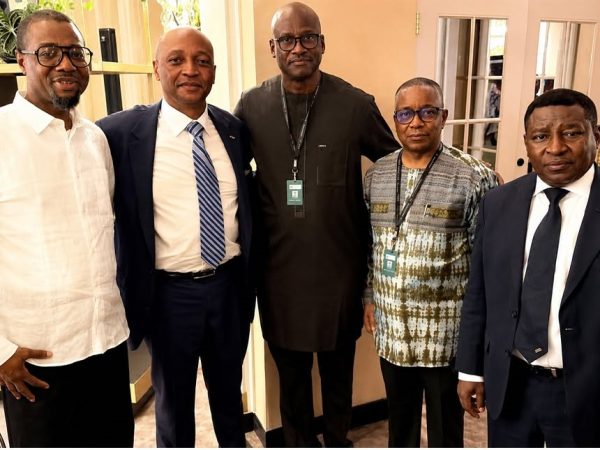
On July 18 in New York, the presidents of the football federations of Burkina Faso, Mali, and Niger—Colonel Oumarou Sawadogo, Mahamadou Cissé, and Issaka Adamou—met with CAF President Patrice Motsepe to secure the validation of their joint declaration of interest. While the announcement was made public on July 20, the focus now shifts to the practical challenges ahead.
a procedural step, not a guarantee of success
According to CAF’s candidacy regulations, the trio has completed a key administrative requirement by submitting a joint declaration of interest. However, this step alone does not secure hosting rights. The dossier must now undergo a thorough technical evaluation, assessing stadiums, training facilities, hospitality infrastructure, and transportation networks across the three countries.
why caf is looking ahead to 2028, 2032, and 2036
In early July 2026, CAF simultaneously opened bids for CAN 2028, 2032, and 2036, signaling a long-term strategic approach to tournament planning. This forward-thinking initiative allows federations to develop robust bids over several years, ensuring high standards are met. For the Sahel trio, the 2032 edition represents a historic opportunity to showcase regional unity and resilience.
The CAF’s decision-making process will hinge on the feasibility of the Sahel bid. While the 2027 edition co-hosted by Kenya, Uganda, and Tanzania has set a precedent for multi-country tournaments, Burkina Faso, Mali, and Niger must prove their ability to meet CAF’s stringent requirements—both on and off the pitch.
football as a tool for regional diplomacy
The joint bid is more than a sporting ambition; it reflects a broader geopolitical shift. Since breaking ties with ECOWAS, the military-led governments of Ouagadougou, Bamako, and Niamey have intensified collaboration, from monetary policies to diplomatic initiatives. A successful CAN bid could serve as a powerful symbol of Sahelian autonomy, especially as the region grapples with ongoing security threats. Just days before the CAF’s announcement, deadly attacks in Niger and Mali underscored the challenges facing the Alliance of Sahel States (AES).
The CAF’s scrutiny will extend beyond infrastructure. Security, a persistent concern in the region, will be a critical factor in determining the trio’s suitability as hosts. The ability to safeguard players, officials, and spectators will weigh heavily in the evaluation.
what’s next for the Sahel’s can 2032 dream?
With the initial validation secured, the Burkina Faso, Mali, and Niger federations are now tasked with assembling a technical dossier that aligns with CAF’s criteria. This phase will require close coordination with their respective governments to address gaps in stadiums, hotels, and transportation networks. The road to 2032 is long, and the trio must demonstrate not only ambition but also execution.
The CAN 2032 bid could become a defining moment for the Sahel, transforming political unity into a tangible international showcase. Yet, the journey is far from over, and the CAF’s final decision will hinge on the trio’s ability to turn their vision into reality.