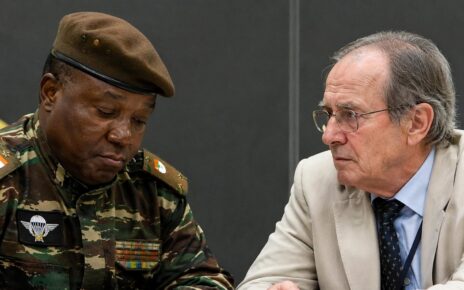
In Dakar, the political spotlight recently turned to the legacy of former president Macky Sall as a new book by Oumar Demba Bâ, his long-time diplomatic advisor, took center stage. The event brought together politicians, diplomats, and analysts eager to explore a text that promises to unveil the inner workings of Senegal’s presidency from 2012 to 2024. The highlight of the evening came when Aïssata Tall Sall, who served as Senegal’s foreign minister during Sall’s final term, shared her firsthand insights, adding significant weight to the book’s revelations.
Inside the corridors of power: a diplomatic memoir emerges
Oumar Demba Bâ spent over a decade in the shadows of the Senegalese presidential palace, crafting the country’s positions on critical regional and global issues. From West African bloc summits to Sahel mediation efforts, his role was pivotal in shaping Dakar’s stance on matters ranging from the Economic Community of West African States (ECOWAS) to multilateral forums in Addis Ababa, New York, and Paris. His book offers a rare glimpse into the decision-making processes that defined twelve years of Senegalese governance under Macky Sall.
This publication is part of a growing trend in West Africa, where former government officials are documenting their experiences as the political landscape evolves. Such accounts provide invaluable institutional memory for diplomats, policymakers, and researchers navigating the complexities of post-administration transitions.
Key insights from Aïssata Tall Sall on Senegal’s foreign policy
During the book launch, Aïssata Tall Sall provided a detailed account of how Macky Sall approached Senegal’s international relations. As foreign minister in Sall’s final term, she described a close-knit partnership between the president and his diplomatic advisor, with Oumar Demba Bâ serving as the discreet but indispensable bridge between Dakar and its foreign counterparts. Her remarks shed light on critical challenges managed during his presidency, including Senegal’s 2022 chairmanship of the African Union, regional tensions involving Mali and Burkina Faso, and the country’s relationship with Western capitals.
She praised Bâ’s methodical approach, portraying him as the architect behind Senegal’s nuanced international positioning. Her testimony elevates the book beyond a personal memoir, positioning it as a vital historical document for understanding the era.
Navigating a tense transition through the lens of diplomacy
The timing of this publication is significant. Since Bassirou Diomaye Faye assumed office in April 2024, scrutiny of the previous administration’s policies—particularly on public finance and strategic contracts—has intensified. Every statement from former officials of Macky Sall’s regime is now closely analyzed by both political circles and civil society in Senegal.
However, Oumar Demba Bâ’s book is not a reckoning but a contextualization effort. Early readers describe it as a balanced account that defends the diplomatic achievements of Sall’s presidency while acknowledging the constraints and trade-offs that influenced key decisions. This approach mirrors the post-tenure reflections seen in other countries, such as France and Côte d’Ivoire, where former advisors and ministers publish their narratives to shape historical interpretations of their eras.
The book’s release sends a clear signal: the outgoing leadership intends to remain influential in Senegal’s public discourse, even beyond their time in office. The true test will be how the Senegalese public and regional diplomatic circles receive it, particularly as debates about the governance of the past decade remain highly charged in the country.