The debt burden facing Senegal has once again thrust the nation into the spotlight of economic discussions. In the capital, Dakar, policymakers, economists, and financial experts are actively exploring innovative financing solutions that extend beyond traditional reliance on the International Monetary Fund (IMF), especially amid tightening budget constraints and urgent calls for economic revival.
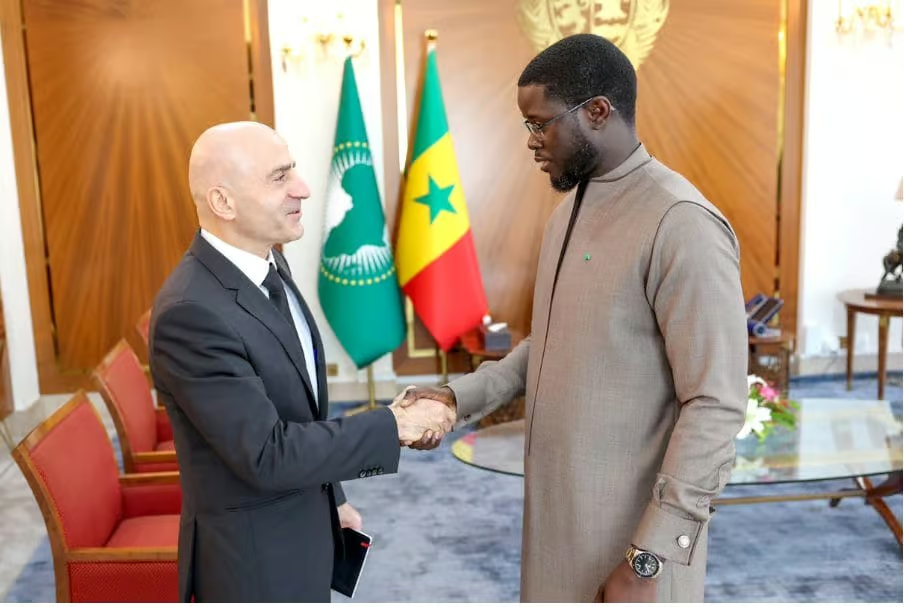 President Bassirou Diomaye Faye meets with Edward Gemayel, IMF Senegal mission chief in Dakar, August 28, 2025 © DR
This strategic reassessment comes as the government seeks to maintain fiscal flexibility while reassuring global investors, regional partners, and domestic stakeholders. As a member of the West African Economic and Monetary Union (UEMOA), Senegal operates within a shared monetary framework where debt sustainability and fiscal discipline are closely monitored across the subregion. These considerations are shaped by guidelines from the Economic Community of West African States (ECOWAS), the African Union, and the African Development Bank.
exploring new debt pathways for Senegal
Discussions are centered on diversifying funding sources to reduce reliance on external institutions. Key strategies include:
- Expanding access to regional capital markets within the UEMOA zone to tap into local liquidity;
- Enhancing domestic savings mobilization through targeted financial instruments and public awareness;
- Issuing thematic bonds aligned with national development priorities such as green infrastructure or digital transformation;
- Maximizing concessional financing—low-interest loans from development partners—to lower debt servicing costs and ease pressure on public budgets.
The goal is to gradually reduce the cost of debt servicing, which currently diverts significant resources from essential public services like education, healthcare, and infrastructure development. By avoiding abrupt fiscal adjustments, the government aims to protect households and businesses from economic shocks while preserving social stability.
Economic analysts also emphasize the importance of boosting domestic revenue through improved tax collection and broadening the tax base—without stifling private sector growth. Strengthening public financial transparency and prioritizing high-impact public investments are seen as critical steps toward long-term economic resilience.
This rethinking of debt strategy reflects a broader trend across African economies, where nations are increasingly seeking self-reliant growth models. The situation in Senegal is being closely watched across the continent, as it exemplifies the challenges and opportunities facing emerging African economies in balancing debt management with sustainable development.