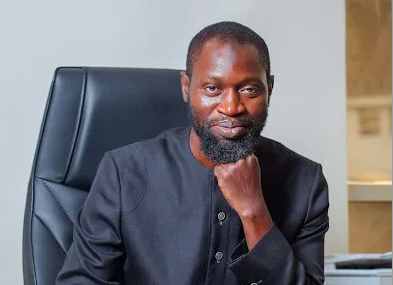
The Managing Director of Senegal’s State Property Management and Exploitation Company (SOGEPA), Elimane Pouye, has pushed back against assertions that Ousmane Sonko is the first and only former Prime Minister to have accessed political funds. In a thought-provoking op-ed addressing the use of public resources, he argues that such claims lack factual basis and should not be presented as exclusive.
Pouye contends that claims about Sonko’s unique position are premature and lack supporting evidence. He highlights the need to carefully examine budget documents rather than relying on political statements, noting that the former Prime Minister is not the first government official to have held office. According to him, the debate requires a more nuanced approach, free from sensationalism.
Budget analysis reveals shared practices
The SOGEPA chief points to the budgets of the Prime Minister’s Office for 2023, 2024, and 2025, arguing that the allocation structure has remained largely consistent. Any variations, he suggests, are primarily due to institutional changes in the management of certain services rather than fundamental differences in funding mechanisms.
What Pouye identifies as the real novelty in this debate is Sonko’s public acknowledgment of the existence of political funds within the Prime Minister’s budget, along with details about their allocation and general use. This admission, he argues, raises legitimate questions: if such funds were already part of previous budgets, to what extent were former Prime Ministers aware of them and how were they utilized?
Focus on transparency over controversy
Rather than fixating on the daily amounts or frequency of allocations, Pouye urges a shift toward examining the transparency of public fund usage. He emphasizes that while political funds, like any public resource, are open to democratic debate, such discussions must be grounded in verifiable facts rather than insinuations or political maneuvering.
The SOGEPA director also notes that both the parliamentary majority and the Head of State have publicly addressed the issue. He calls for a structured, evidence-based debate to strengthen Senegal’s democratic institutions and the rule of law, cautioning against attempts to revive past divisions or distract from the core issues at hand.
Pouye concludes by reaffirming the importance of robust institutional debate in Senegal, while warning against political actors who seek to exploit old rifts to derail meaningful discussion.