Sénégal’s may social tensions: a recurring challenge
Since 1968, May has been synonymous with social and university upheaval in Sénégal. This year is no exception, as the month begins with International Workers’ Day, a global day of mobilization for labor rights. The Sénégal of 2026 is facing renewed unrest across multiple sectors, from urban transport to higher education.
Is this a mere coincidence, or does May in Sénégal follow a deeper pattern? The month’s reputation as a period of heightened social tension is not unfounded. It coincides with historical milestones like the 1968 French protests, which began with student revolts before spreading to workers, paralyzing the country. These events left a lasting ideological impact on Sénégal and other former French colonies.
The first of May in Sénégal is marked by International Workers’ Day, a day dedicated to social justice, employment precarity, and social dialogue. This year, the month has lived up to its reputation, with protests erupting across Dakar and beyond.
Urban transport paralyzed by AFTU strike
The Association des Financiers des Professionnels du Transport Urbain (AFTU) called for a strike on May 14, bringing parts of Dakar’s urban transport to a standstill. The conflict stems from a dispute with a private transport operator over the management and control of electronic ticketing systems. The Tribunal de Grande Instance de Dakar intervened, ordering the suspension of new ticketing machines and the seizure of those already deployed, sparking outrage among AFTU workers.
Trade Point Sénégal denounces governance failures
Meanwhile, the Fondation Trade Point Sénégal held a press conference to highlight what they describe as an “alarming” internal situation. The organization’s representatives cited a deteriorating social and managerial climate, unjustified mass recruitments, and other governance issues as key concerns. The lack of transparency and accountability within the institution has fueled frustration among its members.
Conflict at Ageroute over management practices
The Agence des Travaux et de Gestion des Routes (Ageroute) is also grappling with internal strife. The agency’s Director of Human Resources (DRH), Cheikh Ahmed Tidiane Thiam, publicly criticized the new Director-General’s administrative management, citing a lack of consultation and systematic undermining of human capital. Workers have also condemned the abrupt dismissal of 23 Ageroute agents, further exacerbating tensions.
Students protest unpaid allowances at UN-CHK
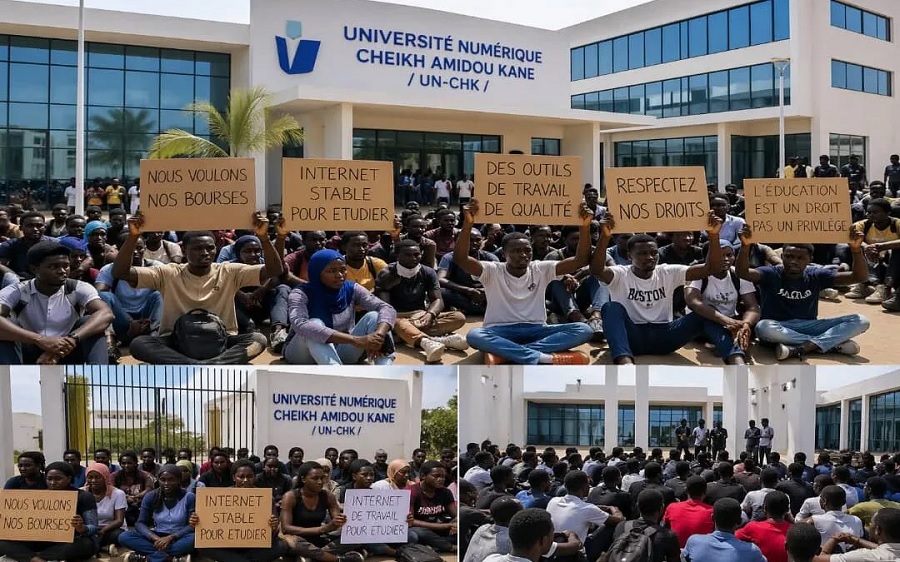
Students from the 10th cohort of the Université Numérique Cheikh Hamidou Kane (UN-CHK) have taken to the streets to demand the full payment of their scholarships. They report receiving only two years of financial support out of the three years promised for their undergraduate degree. The students have called on authorities to urgently resolve the situation and ensure timely disbursement of funds.
Conclusion: A month of discontent
From transport workers and state agents to students and private sector employees, Sénégal is witnessing a wave of protests across multiple fronts. The recurring unrest in May highlights deep-seated issues in governance, labor rights, and social justice that continue to challenge the country’s stability and progress.