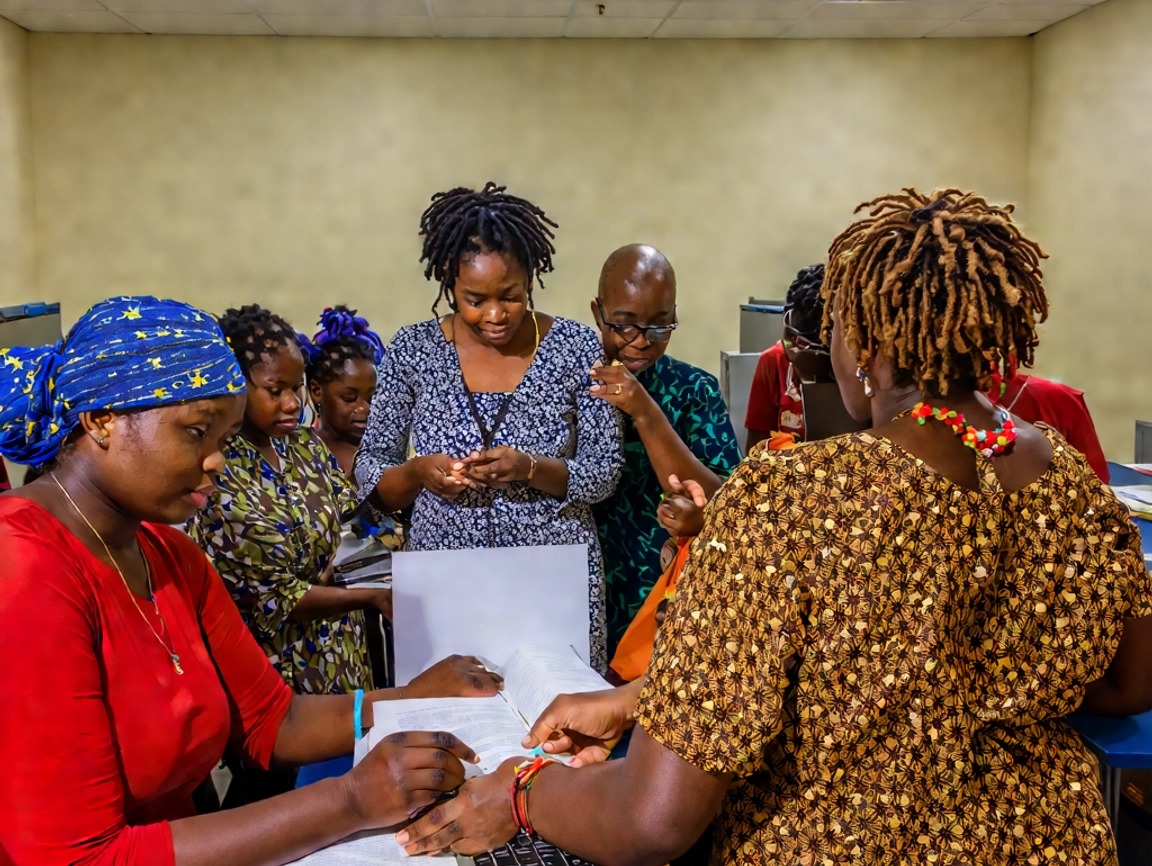
Women’s political leadership in Senegal took center stage at a high-level forum in Dakar earlier this month, where advocates warned that the nation’s democratic future cannot be fully realized without greater female participation in decision-making bodies. The call came as the Réseau des femmes leaders pour le développement (RFLD) convened a seminar focused on amplifying women’s voices in politics and governance.
The event, held at the heart of Senegal’s capital, drew attention to persistent gaps in female representation despite the country’s progressive legal framework. According to Bator Seck, RFLD President, the 2024 legislative elections exposed a troubling decline in women’s parliamentary presence, dropping from 44.2% to just 41%. Even more striking, only 13% of electoral lists were headed by women, underscoring systemic barriers to political inclusion.
Seck highlighted that women occupy only 18 out of 558 municipal leadership positions and lead just three of the 43 departmental councils. These figures, she argued, reflect deep-rooted structural challenges—cultural resistance, unequal access to political financing, and limited media visibility—that continue to marginalize women in public life.
Senegal’s legal strides and ongoing gaps
Senegal has long been regarded as a regional leader in advancing women’s rights, thanks to constitutional guarantees of gender equality, the 2010 parity law, and ratification of international human rights conventions. Yet behind these formal achievements, real-world progress remains uneven. The RFLD seminar emphasized that true democratic maturity demands more than policy on paper—it requires tangible representation at every level of governance.
Voices from the front lines
Mama Diouf Fall, representing the Ministry of Family, Social Action, and Solidarity, stressed that women’s political engagement is not just a matter of equity but a cornerstone of sustainable development, social stability, and effective governance. Echoing this sentiment, Fatoumata Guèye Ndiaye, honorary president of the Association of Senegalese Jurists, urged reforms to expand women’s access to executive roles and executive leadership within political parties. She also called for revisions to the parity law to strengthen its enforcement and broaden its scope.
In her closing remarks, Seck reiterated that Senegal’s future cannot be built for women—it must be built with them. The RFLD, a pan-African feminist network active in Senegal, Ghana, Gambia, and Benin, continues to advocate through legislative advocacy, grassroots organizing, and funding for local initiatives. Its work spans women’s rights, sexual and reproductive health, civic space protection, and climate justice—underscoring the interconnected nature of gender equality and broader societal progress.