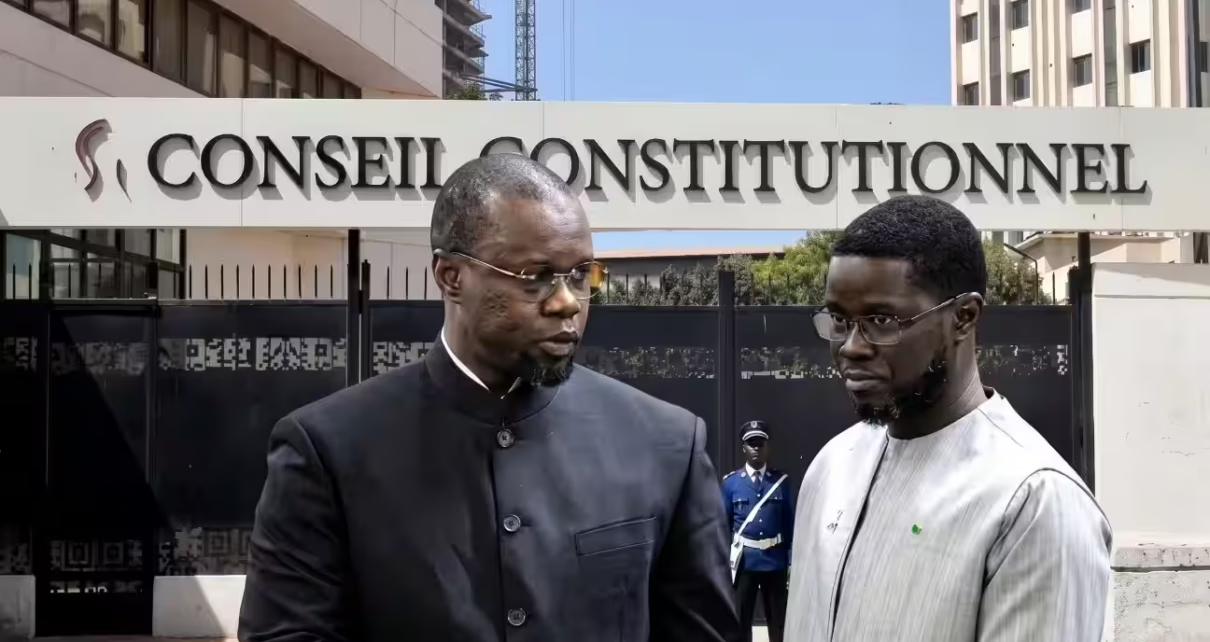
The recent ruling by the Constitutional Council regarding the reinstatement of Ousmane Sonko to the National Assembly has ignited intense debate and legal scrutiny across Senegal. Far from being a mere procedural decision, this landmark verdict has exposed deeper fissures in the country’s constitutional jurisprudence, raising questions about institutional consistency when faced with fundamental constitutional challenges.
Legal interpretations diverge on the council’s decision
The Constitutional Council’s ruling, delivered on June 17, 2026, continues to generate contrasting interpretations within Senegal’s legal community. While the official reasoning emphasizes procedural grounds—specifically the judge’s lack of jurisdiction—some constitutional experts detect a more nuanced shift in judicial philosophy. At the heart of this controversy lies the very credibility of Senegal’s highest constitutional authority. Critics point out that this decision appears to contradict a more assertive stance the Council had adopted in earlier years, particularly during the pivotal institutional moment of February 2024.
A tale of two constitutional moments
A closer examination of the June 17 verdict reveals a stark contrast between two distinct phases in Senegal’s recent constitutional justice. During the earlier period, the Council had positioned itself as an active regulator of institutional functioning, acting as a stabilizing force for the nation’s democratic framework. In stark contrast, the current decision seems to prioritize a restrictive interpretation focused narrowly on the legal technicalities of the contested act. This shift has left legal scholars questioning whether the Council is retreating from its previous expansive role.
The heart of the contested reasoning centers on the Council’s apparent abandonment of its earlier proactive posture. Where once it had demonstrated willingness to intervene in matters of institutional stability, the recent verdict appears to confine itself strictly to the letter of the law, potentially setting a precedent that could limit future judicial activism.