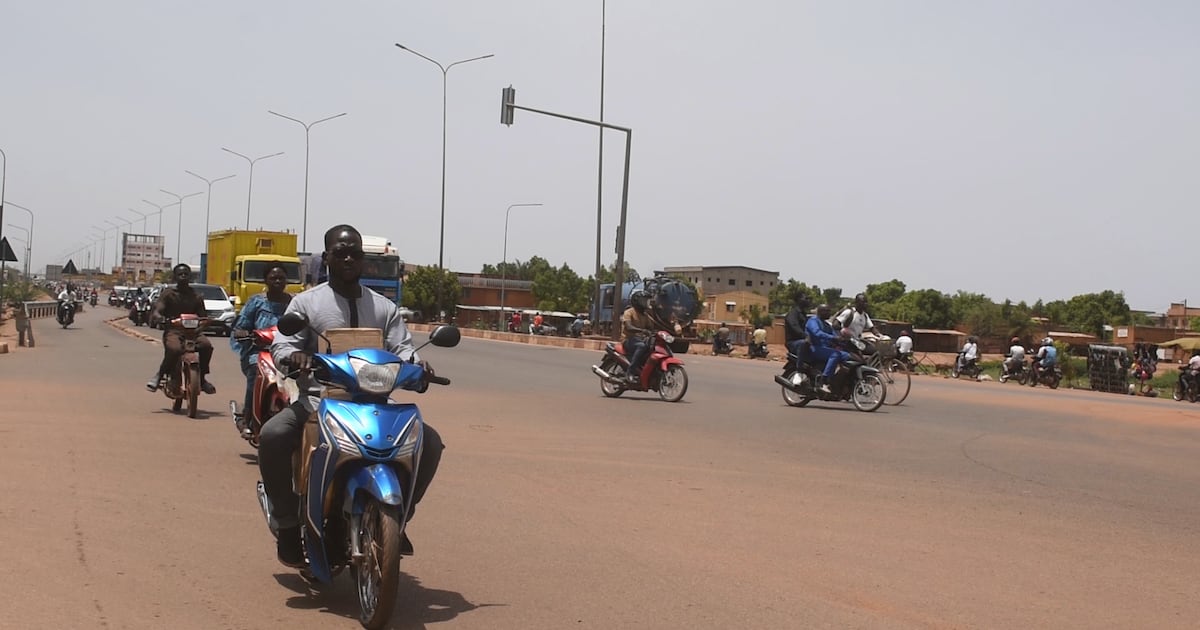
In Burkina Faso, a new traffic regulation allowing compact Mio motorcycles to share bicycle lanes has sparked mixed reactions. While some commuters praise the initiative as a step toward organized urban mobility, others voice concerns over safety and infrastructure limitations.
«It’s a logical move since traffic laws already regulate these vehicles. Assigning Mio motorcycles to bicycle lanes alongside smaller bikes is only fair,» shares Ben Ouattara, a delivery rider navigating the capital’s bustling streets daily.
The Mio motorcycles in question are lightweight, fuel-efficient two-wheelers favored for their affordability and maneuverability in congested city traffic. Authorities defend the measure as a strategy to ease pressure on main roads by redistributing smaller vehicles to designated paths. The goal? Smoother traffic flow and improved coexistence among road users.
Safety concerns amid urban mobility challenges
Critics argue that bicycle lanes, originally designed for pedal cycles, may struggle to accommodate the growing influx of motorized two-wheelers. «They might have had good intentions in protecting riders, but the current setup is problematic,» notes Sirina Ouédraogo, a daily commuter. «The lanes are too narrow to handle all the Mio motorcycles, which could lead to bottlenecks rather than solutions.»
Proponents, however, see potential benefits in the new rules. «Riding on bike lanes forces us to be more cautious. The confined space naturally reduces speed, lowering accident risks,» explains Abdoulaye Mané, another resident. Yet, he acknowledges that broader infrastructure upgrades are essential for long-term success.
Call for better infrastructure and public awareness
Many Burkinabè emphasize that widening bike lanes and educating riders on traffic regulations could enhance safety. «Most people don’t follow the rules. Some ride against traffic, others speed recklessly—even when using smaller lanes,» observes Sergène Yabré, highlighting common violations. Her comments underscore the need for both physical and behavioral adjustments.
The debate also touches on the broader issue of urban congestion in Burkina Faso. With two-wheeler numbers rising sharply, experts suggest that isolated policy tweaks won’t suffice. Comprehensive solutions—like expanding dedicated lanes and reinforcing driver education—could pave the way for sustainable traffic management in cities like Ouagadougou and beyond.