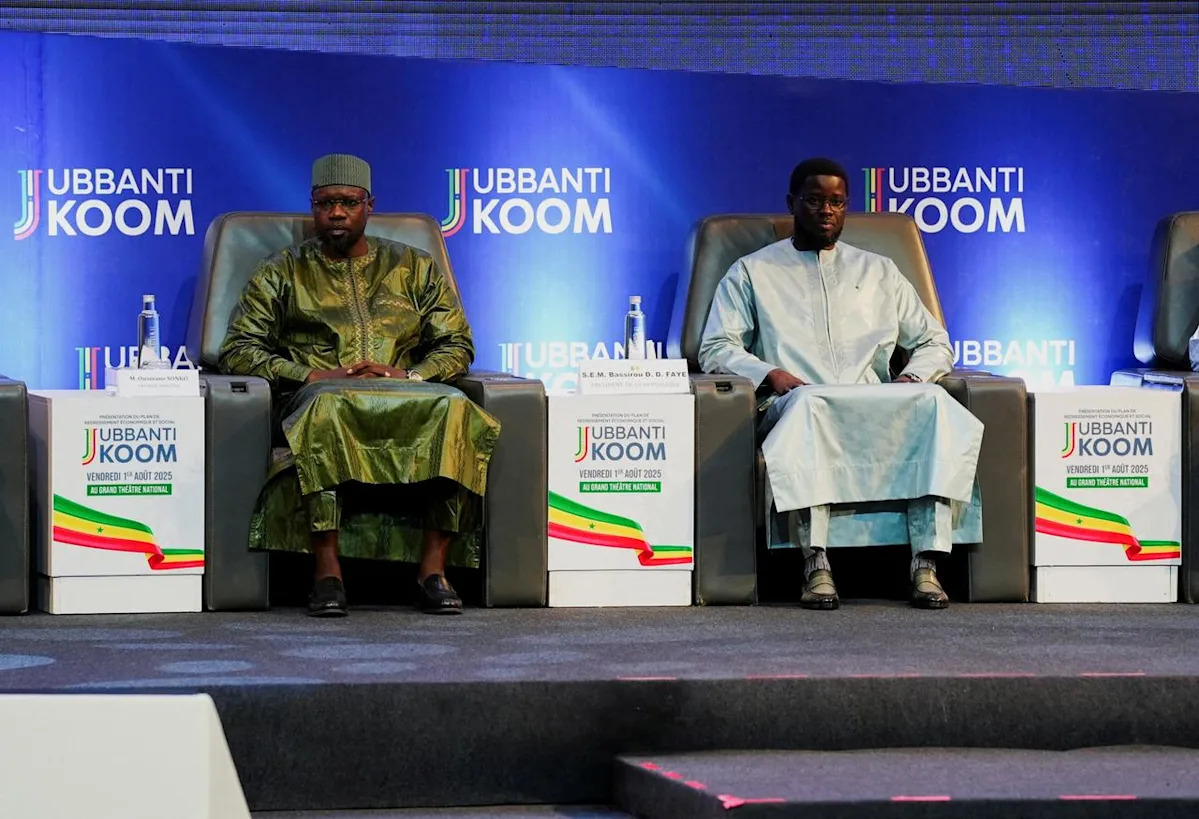
Senegal’s economic fault lines: why Sonko and Faye’s partnership collapsed
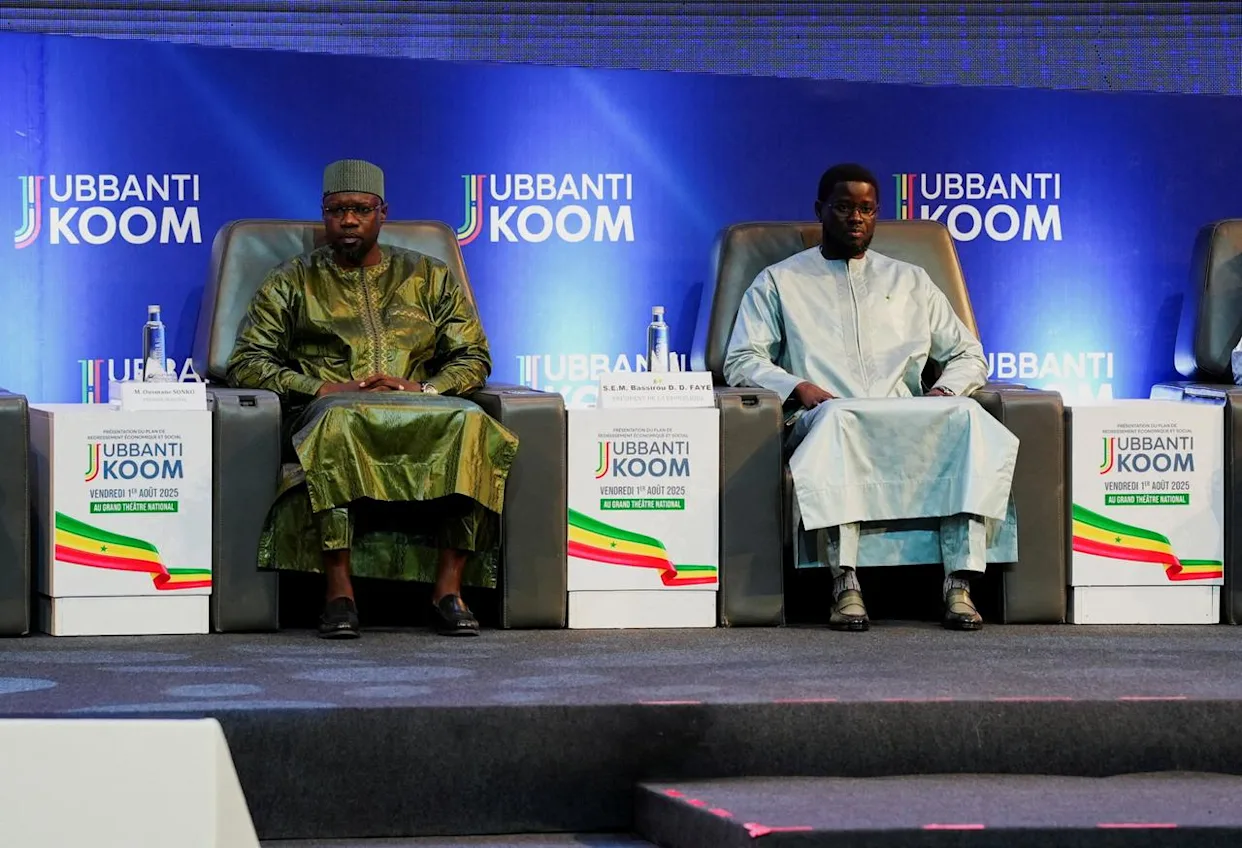
The dismissal of Ousmane Sonko by President Bassirou Diomaye Faye on May 23, 2026, wasn’t merely a clash of personalities—it marked the irreconcilable split between two fundamentally opposing economic visions that had long simmered beneath the surface of Senegalese politics. Two years after Faye’s historic April 2024 election victory, which saw Sonko appointed as Prime Minister, the alliance between the two leaders has fractured over the three most critical economic questions facing the nation: unsustainable debt levels, hydrocarbon exploitation, and the role of foreign capital in domestic policy.
Debt restructuring: the breaking point
The most glaring divergence centered on national debt. In September 2024, Sonko exposed nearly €7 billion in previously undisclosed debt accrued under former President Macky Sall’s administration. By March 2025, an IMF assessment confirmed the extent of the crisis, with total debt exceeding 100% of GDP. Annual debt servicing costs reached 5.5 trillion CFA francs (€8.4 billion), while annual refinancing needs approached 6 trillion CFA francs (€9.1 billion). The country’s sovereign credit rating had been downgraded three times in just twelve months.
Sonko’s approach rejected restructuring outright, positioning the revelation as a moral crusade against corruption. His strategy resonated with the diaspora, grassroots supporters, and opposition ranks, framing debt as a betrayal by the previous regime. Faye, however, pursued a pragmatic path, engaging directly with IMF representatives in November 2025 and initiating national dialogue in May 2026 to address the crisis. The president’s willingness to negotiate contrasted sharply with Sonko’s defiant stance, which prioritized political messaging over economic feasibility.
With a suspended €1.55 billion IMF program, closed international debt markets, and a looming sovereign default by 2028, Sonko’s position became economically untenable—yet politically indispensable for mobilizing the PASTEF (African Patriots of Senegal for Work, Ethics, and Fraternity) base he founded in 2014.