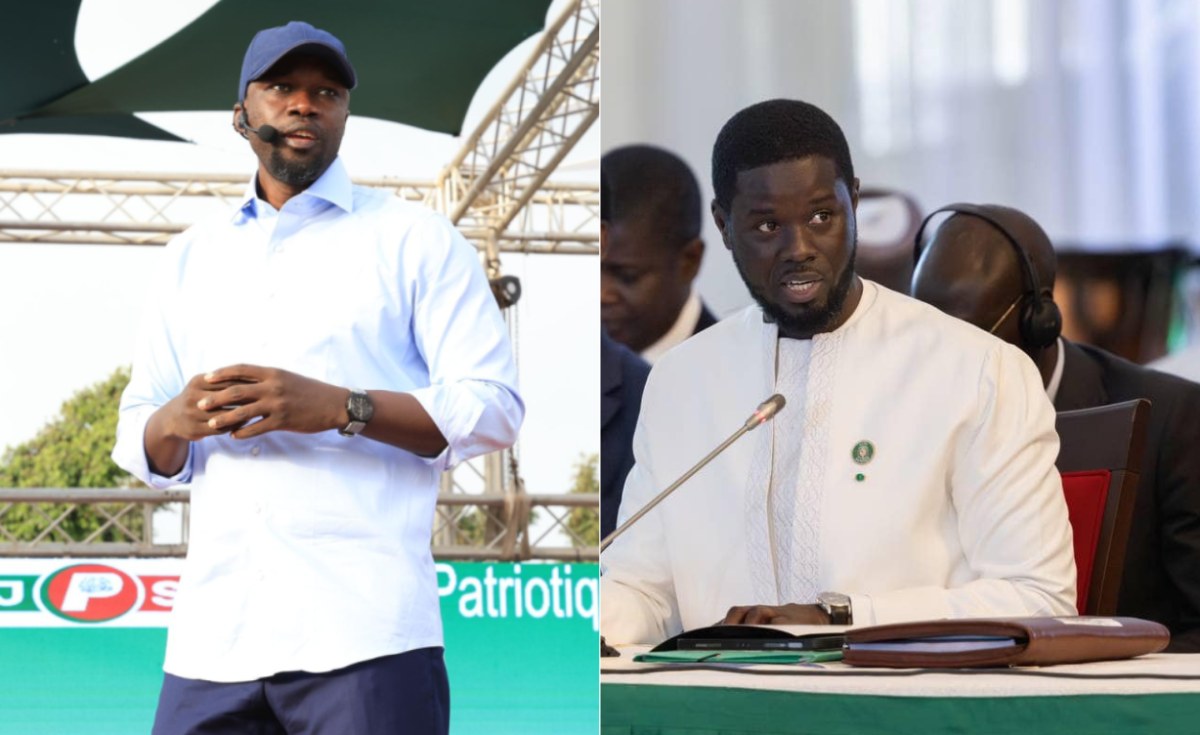
Senegal is currently navigating one of its most intricate political phases since the Bassirou Diomaye Faye – Ousmane Sonko partnership ascended to power in March 2024. While long regarded as the inseparable architects behind the Pastef party’s vision, recent events now reveal increasingly apparent differences between the head of state and the enduring historical leader of the political movement.
This unfolding situation arises amidst a distinctive backdrop. In 2024, Ousmane Sonko, facing judicial impediments that barred his own presidential candidacy, strategically endorsed Bassirou Diomaye Faye, who was also then incarcerated, to represent Pastef in the elections. The subsequent triumph of this duo was widely celebrated as the culmination of an extensive political struggle against the previous Macky Sall administration, signaling the dawn of a fresh political era for Senegal.
Yet, the realities of governance frequently reshape the dynamics forged during opposition. Over a year since the transfer of power, the relationship between these two prominent figures appears to be entering a fresh chapter. Ousmane Sonko’s recent public statements, characterized by overt criticism and disclosures regarding alleged political agreements that paved Pastef’s path to authority, clearly indicate an intent to reassert political initiative.
Just prior to the formal establishment of the new government, led by incoming Prime Minister Al Aminou Lo, the Pastef leader explicitly announced that no party members would join this fresh cabinet. This stance signifies a symbolic departure from the governance structure that emerged from the 2024 victory and hints at a gradual separation between the state apparatus and the party’s organizational framework.
Beyond individual personalities, the core of the current discourse revolves around the fundamental question of political legitimacy. On one side, President Bassirou Diomaye Faye derives his authority from universal suffrage and his role within the republican institutions. Conversely, Ousmane Sonko is still regarded by many activists as the primary architect of the Pastef movement’s ascent to power and the central figure around whom its momentum was built.
Such a duality is not unprecedented within the annals of African political history. Numerous movements that have achieved governance have subsequently faced rivalries between the holder of electoral legitimacy and the individual who maintains significant political authority within the party itself. When these two distinct power centers clash, the potential for institutional paralysis and political fragmentation inevitably rises.
At this juncture, it would be premature to declare a definitive rupture. Both figures continue to share a common electoral base and a political agenda whose core objectives still enjoy broad support among their followers. Nevertheless, the escalating tensions and increasingly assertive rhetoric suggest that a significant recomposition of power is currently underway.
The stakes now transcend mere personal ambitions. They pertain to Senegal’s capacity to safeguard its institutional stability while simultaneously advancing the economic and social reforms pledged to its citizens. In a nation frequently highlighted as a democratic exemplar in West Africa, the evolving dynamic between Bassirou Diomaye Faye and Ousmane Sonko could exert lasting effects on Pastef’s future and the broader national political equilibrium.
The coming months will be crucial in revealing whether this unfolding crisis culminates in a strategic reconciliation, a contentious cohabitation, or an overt political split between the two principal architects of the 2024 transition.