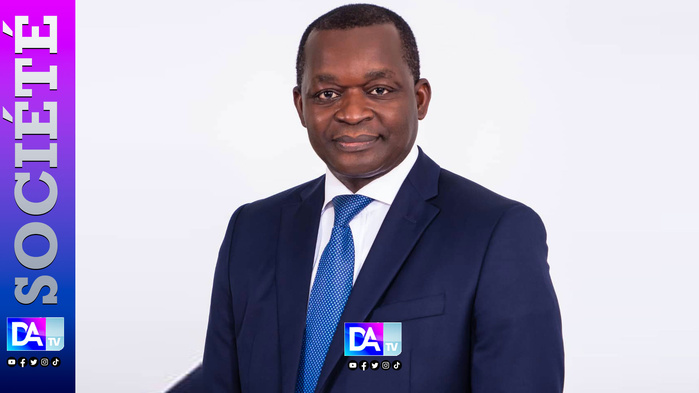
In a series of high-energy gatherings across France, Alioune Sarr, President of the Alliance for Senegal (Andando Ngir Senegaal), has outlined a bold vision for reshaping the nation’s development model. His message to the Senegalese diaspora was clear: « The future of our country is not decided in offices alone—it is built in our villages, towns, and cities. »
The Senegalese diaspora in France has long played a pivotal role in the country’s economy, but Sarr argued that their engagement must go beyond remittances. During stops in Paris, Massy, and Creil, he urged compatriots to become active partners in a new national pact—one that prioritizes territorial development, economic sovereignty, and collective progress.
Listening to the voices of the diaspora
The tour kicked off in the heart of Paris, where Sarr met with Senegalese families and community leaders at the Foyer Les Mûriers in the 20th arrondissement. The conversations were frank, focusing on the challenges facing Senegal—from job creation to infrastructure gaps—and how the diaspora could contribute meaningfully. In Massy (Essonne), he continued the dialogue, emphasizing the need for investments that spread prosperity beyond Dakar.
The momentum built in Creil (Oise), where Amy Faye, Sarr’s political representative in France, organized a well-attended gathering. The event brought together association leaders, entrepreneurs, students, and families, all eager to discuss how to turn Senegal’s potential into tangible progress. Faye underscored the importance of unity between the diaspora and local communities, stating, « We are not just observers—we are builders of this nation. »
A call for a new governance model
Sarr’s vision rejects the traditional top-down approach to development, arguing that decades of centralization have left many regions behind. « Dakar is the heartbeat of Senegal, but the territories are its lungs. A body cannot thrive with only one lung. He stressed that balanced growth requires empowering local governments, fostering entrepreneurship, and leveraging Senegal’s diverse resources—from land to human capital.
One of his boldest proposals? Rethinking land as a catalyst for progress. Sarr criticized the sale of undeveloped land as shortsighted, comparing it to exporting raw materials. « A hectare is not valuable because it’s sold—it’s valuable because it’s developed. He advocated for policies that encourage agricultural innovation, industrial zones, and smart cities, citing Notto Diobasse Smart City as a model for decentralized growth.
Diaspora as a driving force
Throughout the tour, Sarr positioned the Senegalese diaspora as a strategic partner in this transformation. He dismissed the idea of the diaspora as a mere source of funds, calling instead for investments, skills transfer, and long-term commitments. « The diaspora is not an ATM. It is an open ministry of development.
His three-pillar manifesto for Senegal’s future—strong territories, mobilized diaspora, and economic sovereignty—echoed in every room he entered. The response from attendees suggests a growing appetite among expatriates to move from passive support to active nation-building.
As the tour concluded, Sarr left the diaspora with a rallying cry: « We did not come to manage the future. We came to build it. »